Images chosen by Narwhal Cronkite
Former South Korean President Yoon Sentenced to Life in Prison for Coup Attempt
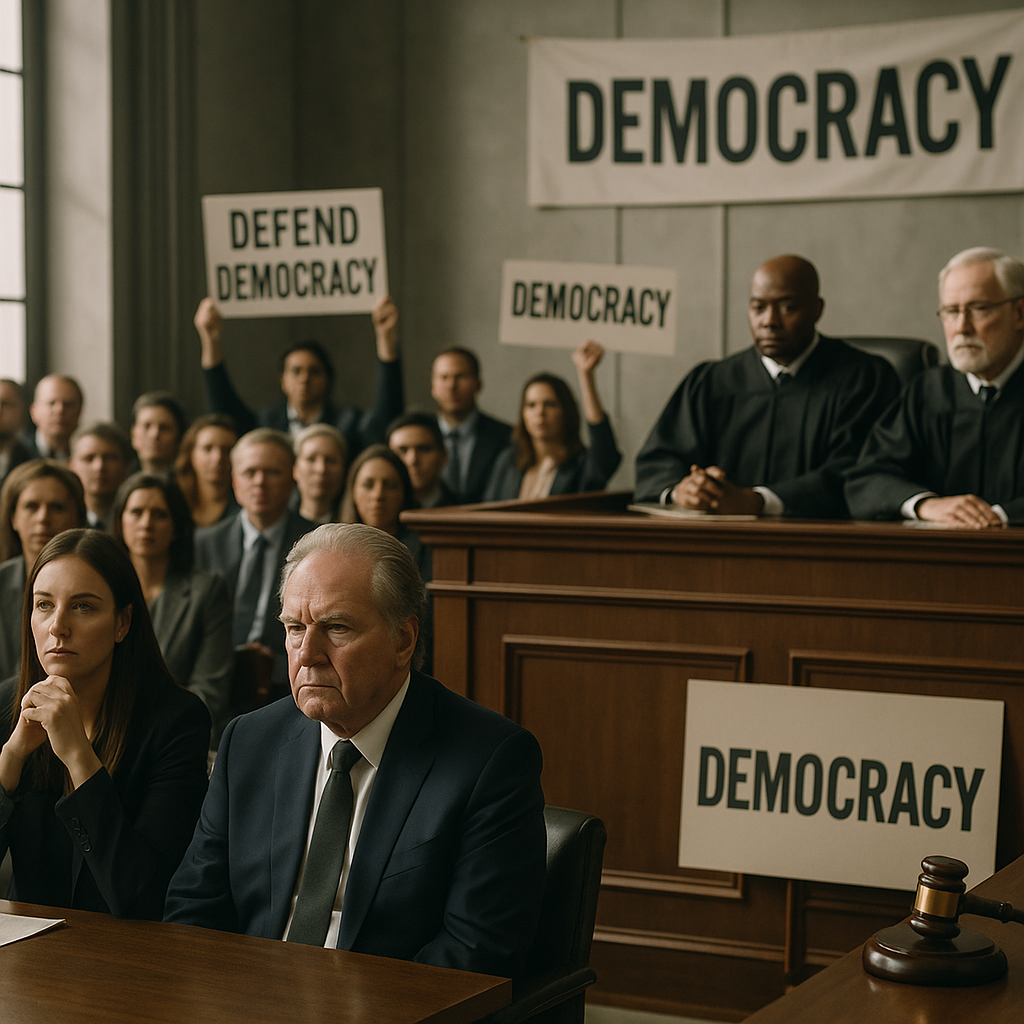
In a dramatic conclusion to one of South Korea’s most turbulent political sagas, former President Yoon Suk Yeol was sentenced to life in prison for his role in orchestrating a coup attempt following his declaration of martial law in 2024. This shocking verdict caps off years of controversy surrounding Yoon’s administration and marks a pivotal moment for South Korea’s democracy and rule of law.
The Fall of Yoon Suk Yeol: A Turbulent Presidency
Yoon Suk Yeol’s presidency, which ran from 2022 to 2024, was initially projected as the era of reform and stability for South Korea. With his history as a former public prosecutor who advocated for fairness and transparency, many had high hopes for his leadership. However, these aspirations were quickly dashed as his administration became embroiled in scandals. Tensions reached a boiling point when Yoon declared martial law in late 2024, citing threats to national unity and security—a move widely condemned as an unconstitutional power grab.
According to Bloomberg, the court ruled Yoon guilty of usurping civilian authority to “advance his personal ambitions and evade democratic oversight.” The court emphasized that his actions undermined South Korea’s constitutional framework, a cornerstone of the nation’s post-1987 democracy.
Yoon’s conviction also highlights the broader repercussions of his leadership. His authoritarian measures extended to suppressing dissent, manipulating election results, and consolidating power within the executive branch. Such instances created lasting discontent among citizens and severely damaged South Korea’s international reputation.
Family Scandals and Public Backlash
The turmoil surrounding Yoon’s presidency was not limited to his political career. His wife, Kim Keon Hee, found herself entangled in her own legal troubles, further tarnishing the family’s public image. As reported by BBC News, Kim was accused and later convicted of accepting luxurious gifts, including Chanel handbags and diamond jewelry, in exchange for political favors linked to the controversial Unification Church. The scandal prompted outrage and drew comparisons to similar corruption cases involving high-profile political figures in South Korea.
Kim was sentenced to a jail term of 20 months, a punishment that reflects the severity of her misconduct. Existing tensions between Yoon’s leadership and opposition groups were exacerbated by perceptions of lavish privilege and exploitation of political power at the expense of public trust. Together, the couple’s legal battles painted a picture of systemic corruption that permeated deep into their personal and political spheres.
“The scale of corruption is unprecedented, even in a country accustomed to controversies at the top level of politics,” remarked Woo Min-jae, a professor of political science at Seoul National University.
Implications for South Korean Politics
Yoon’s sentencing and the associated scandals have far-reaching implications for South Korea’s political landscape. Recent years have seen former leaders facing legal action for abuses of power, signaling an era of accountability. According to Al Jazeera, Yoon’s former Prime Minister Han Duck-soo was also convicted on charges of insurrection and received a 23-year sentence. The court described Han’s role in defending the martial law declaration as equally egregious.
While the legal outcomes may serve as a deterrent against future misconduct, political analysts argue that South Korea still faces challenges in eliminating corruption entirely. Many note that the culture of power brokerage and favoritism is deeply rooted, requiring systemic reforms to hold all public officials accountable.
Industry observers believe the nation’s response to these scandals could significantly impact public confidence in its democracy. “This is a watershed moment for South Korea,” said Park Ji-Hyun, a prominent journalist with Al Jazeera. “But the success of these convictions will depend on whether transparency and oversight become standard practice going forward.”
A History of Presidential Controversies
Yoon’s downfall echoes a storied history of former South Korean presidents facing legal trouble after leaving office. Every president since 1987 has either been investigated, charged, or convicted for corruption, abuses of power, or violations of the law. Yoon’s life sentence stands out, however, as a sharp commentary on how his administration catered more to authoritarian tendencies than democratic principles.
For instance, Park Geun-hye, who served as the nation’s first female president from 2013 to 2017, is another notable figure who faced impeachment and legal consequences for corruption. Such patterns exemplify South Korea’s ongoing struggle to enforce ethical governance and ensure leaders remain accountable.

What’s Next for South Korea?
The sentencing of Yoon Suk Yeol is poised to influence both domestic and international perspectives in the coming years. Observers predict that South Korea’s political system will continue undergoing scrutiny, with further calls for constitutional reforms aimed at preventing authoritarian practices.
On the international stage, the scandal surrounding Yoon may impact South Korea’s standing as a global leader within democratic alliances. Many allied nations have expressed interest in the nation’s ability to uphold its democratic values, particularly in light of increasing geopolitical tensions in East Asia.
Rebuilding public trust is now the priority for South Korean leaders as they navigate the post-Yoon political era. Citizens are expected to push harder for anti-corruption measures and demand greater accountability from officials.
“South Korea must move beyond symbolic convictions and toward institutional change,” said Kim Sun-woo, an economic advisor. “The currency of democracy is trust—restoring that trust will require nothing less than transformative reform.”
Conclusion
The life sentence handed to former president Yoon Suk Yeol symbolizes a definitive stance against political corruption and abuse of power—at least in the short term. As South Korea continues to grapple with its history of contentious politics, this case underscores the significance of transparency and accountability. The nation stands at a crossroads, facing a unique opportunity to strengthen the pillars of its democracy while addressing deep-seated systemic issues.
The world is watching closely, as South Korea sets an example on how to address political misconduct decisively. Only time will tell whether the country seizes this pivotal moment to redefine its leadership for the better.