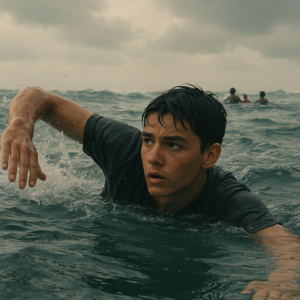
A 13-Year-Old Boy Swims for Hours to Save His Family Swept Out to Sea in Western Australia
When the McAllister family set out for a day at the beach in Western Australia, no one could have predicted the extraordinary tale of bravery that would unfold. But thanks to the strength, determination, and sheer willpower of 13-year-old Dylan McAllister, what might have been a tragic story became one of heroic resilience. Facing the vast ocean, Dylan swam for hours to save his family after they were swept out by a fierce rip current. His incredible feat offers a poignant reminder of human determination in the face of adversity and raises critical questions about ocean safety and preparation.
The Story of Survival: How a Teen Saved the Day
It all began on what appeared to be a typical sunny afternoon near the picturesque coastline of Western Australia’s Margaret River. The McAllister family, like many locals and tourists, was enjoying a leisurely swim off one of the region’s pristine beaches when disaster struck. Ocean conditions changed rapidly as an unseen rip current pulled Dylan, his younger brother Liam, and their father James far from shore. With their cries muffled by the sound of the waves, it quickly became apparent that they couldn’t swim back.
According to reports, Dylan displayed remarkable courage and focus. While his father managed to keep Liam afloat, Dylan decided to swim against the odds and reach shore alone to summon help. With nothing but his swimming skills and determination, this 13-year-old battled heavy waves for hours, propelled by thoughts of saving his family. It was an arduous journey, both physically and emotionally, but Dylan’s strength prevailed. Once onshore, he alerted beachgoers who promptly contacted emergency services. Lifeguards and local authorities rescued the remaining McAllister family members just in time, narrowly averting a tragedy.

Context: A Growing Danger on Australian Beaches
While Dylan’s heroics are nothing short of extraordinary, his story highlights a pressing issue: the hidden dangers of rip currents on Australian beaches. According to Surf Life Saving Australia (SLSA), rip currents account for approximately 90% of surf lifeguard rescues, with more than 20 drowning fatalities annually attributed to these deceptively strong pulls. Rip currents—narrow channels of fast-moving water that flow away from the shore—are often invisible to inexperienced swimmers, leading many to underestimate the threat they pose.
“Australia’s coastline is stunning, but it’s also extremely unpredictable,” said Claire Donovan, an expert from the Australian Coastal Safety Centre. “Even seasoned swimmers can find themselves in trouble when rip currents accelerate unexpectedly. This is why education and preparation are our best tools for prevention. Dylan’s story is incredible, but it also reminds us how much we rely on quick thinking and courage in emergencies.”
The Psychology of Survival: What Fuels Heroic Acts?
Dylan’s actions don’t just reflect physical endurance; they embody mental resilience and situational clarity under immense pressure. Survivors who triumph in life-threatening situations often share key psychological traits: adaptability, resourcefulness, and a refusal to give up. These characteristics are especially pronounced in youths, says Dr. Erica Mills, a child psychologist specializing in resilience.
“Children and teenagers frequently surprise us, not because they lack fear but because they don’t have the rigid boundaries adults build for what’s ‘possible,'” said Dr. Mills. “Dylan’s story demonstrates the unshakable belief that he could reach shore, despite the odds stacked against him. That unwavering determination is the cornerstone of survival psychology.”
Moreover, the support and responsibility instilled in close family bonds may have been a driving factor in Dylan’s endurance. “In high-stakes situations involving loved ones, people often find reserves of strength they didn’t know they had,” added Dr. Mills.

Lessons in Preparedness: Could This Have Been Prevented?
As inspiring as Dylan’s heroism is, the incident raises questions about what more could be done to prevent such near-death experiences. Experts unanimously point to education and awareness as the first line of defense. Knowing how to spot a rip current, practicing basic survival swimming techniques, and understanding beach hazard signage could mean the difference between life and death.
Furthermore, local councils and surf lifesaving organizations are calling for increased patrols and expanded safety programs in popular tourist areas. “Ideally, no one should have to endure what Dylan’s family went through,” said Claire Donovan from SLSA. “But we need continued investment in public safety infrastructure to make this possible. Simple measures like more visible warnings or creating designated supervised zones could save lives.”
Technology also presents promising solutions, with drone patrols increasingly being used to spot rip currents from above and alert swimmers. Local governments and tech developers in Western Australia have already piloted programs combining AI and aquatic drone technology to reduce risks.

What Dylan’s Heroic Swim Teaches Us About Community
Dylan’s actions didn’t just save his family—they reminded a global audience of the power of human resilience and youthful courage. This story, which first gained attention on platforms like Reddit, has resonated with thousands around the world. Comments on Reddit’s /r/news thread have ranged from praise for Dylan’s bravery to reflections on the importance of water safety education.
One Reddit user wrote, “This young man is an inspiration. His courage saved his family, but his story could save countless others by raising awareness about rip currents.” Another noted how they planned to take their children to swimming lessons after reading Dylan’s story, recognizing that survival skills are crucial in a country surrounded by water.
Beyond individual action, Dylan’s bravery has sparked a broader cultural conversation about community and interdependence. His selflessness, and the immediate help from strangers once he reached shore, underscores the importance of fostering a collective culture of care, especially in life-threatening situations.
Looking Forward: Turning a Heroic Moment Into Change
As Dylan McAllister’s story continues to circulate online and in the media, its larger implications are becoming clearer: the need for more education on beach safety, increased investment in lifesaving technology, and a better understanding of what makes individuals act heroically. It’s likely that organizations like SLSA will capitalize on this moment to amplify public awareness campaigns.
For families and outdoor enthusiasts, this serves as a stark reminder to respect the ocean and prepare for its unpredictability. And for the rest of us, Dylan’s story inspires a question: How can we foster courage and community in our own lives?
What’s clear is that this 13-year-old boy’s swim will have ripple effects far beyond the shores of Western Australia.