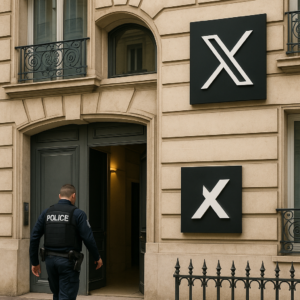
Paris Prosecutors Raid France Offices of Elon Musk’s X: Here’s What We Know So Far
In a dramatic development that underscores the growing scrutiny of tech giants, the Paris prosecutor’s office raided the French headquarters of X, Elon Musk’s social media platform, this week. The search was conducted by the office’s cyber-crime unit as part of an investigation into allegations ranging from unlawful data extraction to complicity in the possession of child pornography. The move has placed X, formerly known as Twitter, at the center of a heated legal battle that stretches across borders and raises critical questions about data ethics, platform accountability, and the regulation of artificial intelligence tools.

The Allegations: A Closer Look
The investigation into X first began in January 2025, when French authorities launched a probe into content allegedly promoted by the platform’s algorithm. Over the months, the scope of the inquiry expanded to include other controversial areas, notably allegations surrounding Grok, X’s artificial intelligence chatbot. Prosecutors are now reportedly investigating multiple allegations, including the organized distribution of sexual deepfakes and unlawful possession of child pornography via content hosted or shared on X.
Notably, the AI chatbot Grok—developed to interface with users in real-time—has also come under intense scrutiny. UK regulators had previously opened investigations in response to complaints regarding Grok’s potential for creating and sharing deeply troubling sexualized images. Industry analysts have voiced concerns about Grok’s ability to manipulate personal data to produce unauthorized deepfakes, often without the knowledge or consent of the individuals depicted.
Elon Musk and former X CEO Linda Yaccarino, both central figures in this unfolding drama, have been summoned to appear for hearings in April. Yaccarino, who left X last year, has publicly accused the French investigators of targeting American interests, calling the allegations a “political vendetta.”

Free Speech or Regulatory Overreach?
X has categorically denied all allegations, with the company releasing a statement accusing France’s Public Prosecutor’s Office of an “abusive act” that threatens free speech. In his response, Elon Musk took to his own platform to frame the raid as a “political attack,” while reiterating X’s commitment to transparency and lawful operations. However, critics argue that this case is emblematic of a larger issue—social media platforms struggling to address toxic content without stepping into legal controversies.
“This case challenges not just X but our broader understanding of how to enforce digital accountability while preserving freedoms,” noted Emma Raine, a digital governance expert at the University of Oxford. “On one hand, any accusation of enabling child exploitation must be treated with utmost seriousness. On the other hand, platforms like X argue that over-regulation could lead to suppression of lawful free speech and innovation.”
For Musk and X, the balancing act is proving especially precarious. Critics have argued that the company’s reluctance to actively moderate harmful content has left it vulnerable to regulatory crackdowns—not just in France, but globally, as the UK takes its own steps to investigate similar claims about Grok and the platform more broadly.
Regulatory Challenges Across Borders
This isn’t the first time X has found itself embroiled in a legal quagmire. Countries worldwide are ramping up efforts to regulate everything from data extraction to AI-enabled technologies like Grok. In the UK, for instance, both Ofcom and the Information Commissioner’s Office (ICO) have launched detailed inquiries into the alleged misuse of personal data in the generation of illicit deepfakes.
Although Grok has attracted much of the regulatory ire, the issue transcends a single AI tool. Many specialists claim that existing laws are not equipped to handle the ethical dilemmas presented by AI-generated images, especially when those images are sexual in nature. “We’re seeing a mismatch between the pace of technological innovation and legislative oversight,” explained Dr. Ashwin Malik, an AI ethics consultant. “Until regulators are given sharper tools, bad actors will always find loopholes to exploit.”
French authorities, in particular, appear to be making a concentrated effort to lead the charge in holding platforms accountable. The prosecutor’s office has not only expanded its investigation into X; it has also signaled its intent to explore broader patterns of non-compliance by global tech firms. This resonates with France’s traditional stance as a staunch advocate for consumer rights and digital privacy within the European Union, especially under the framework of the General Data Protection Regulation (GDPR).
What Lies Ahead for X and Grok?
With hearings scheduled for next spring, the legal and reputational stakes for Elon Musk and his company could hardly be higher. The allegations have put a spotlight on how X manages posted content, moderates AI applications, and protects personal data. For critics of the platform, the controversies surrounding Grok symbolize a broader culture at X, one that allegedly prioritizes innovation over responsibility.
Further complicating matters is X’s precarious financial situation. Analysts estimate that legal and regulatory hurdles could have lasting financial implications for the platform, particularly as advertisers seemingly grow wary of associating their brands with controversy. According to Reuters, ad revenue for X dipped sharply last quarter, highlighting the fragile balance between the platform’s promises to uphold free speech and its advertisers’ demand for a safer online environment.
The next few months promise to be pivotal. Should Musk or Yaccarino fail to provide satisfactory testimony in France, the company may face substantial penalties. Moreover, the outcome of the parallel investigation in the UK could potentially set the tone for how AI tools like Grok are regulated across the tech industry.
Implications for the Tech Industry
This isn’t merely a story about X’s stumbles—it’s a wake-up call for big tech. The investigations in France and the UK highlight the evolving challenges at the intersection of technology, legality, and ethics. Companies are no longer operating in a vacuum; rather, they are navigating a global landscape marked by a growing appetite for regulatory interventions. Whether it’s Europe’s progressive GDPR framework or the push for AI transparency in North America, the cracks in laissez-faire tech governance are visibly widening.
As Dr. Malik aptly stated, “The X investigation will undoubtedly set precedents, not just for social media but for responsible AI development and oversight. We’re witnessing the first real test of how authorities worldwide are willing to challenge the giants of the tech world.”
In the weeks and months ahead, all eyes will be on how Elon Musk and his team handle this mounting pressure. X’s ability to weather this storm may well determine its legacy as either a bastion of innovation or a cautionary tale about hubris in the age of scrutiny.