Images chosen by Narwhal Cronkite
Oracle’s Mass Layoffs Amid Surging Profits: A Sign of the Times in Big Tech
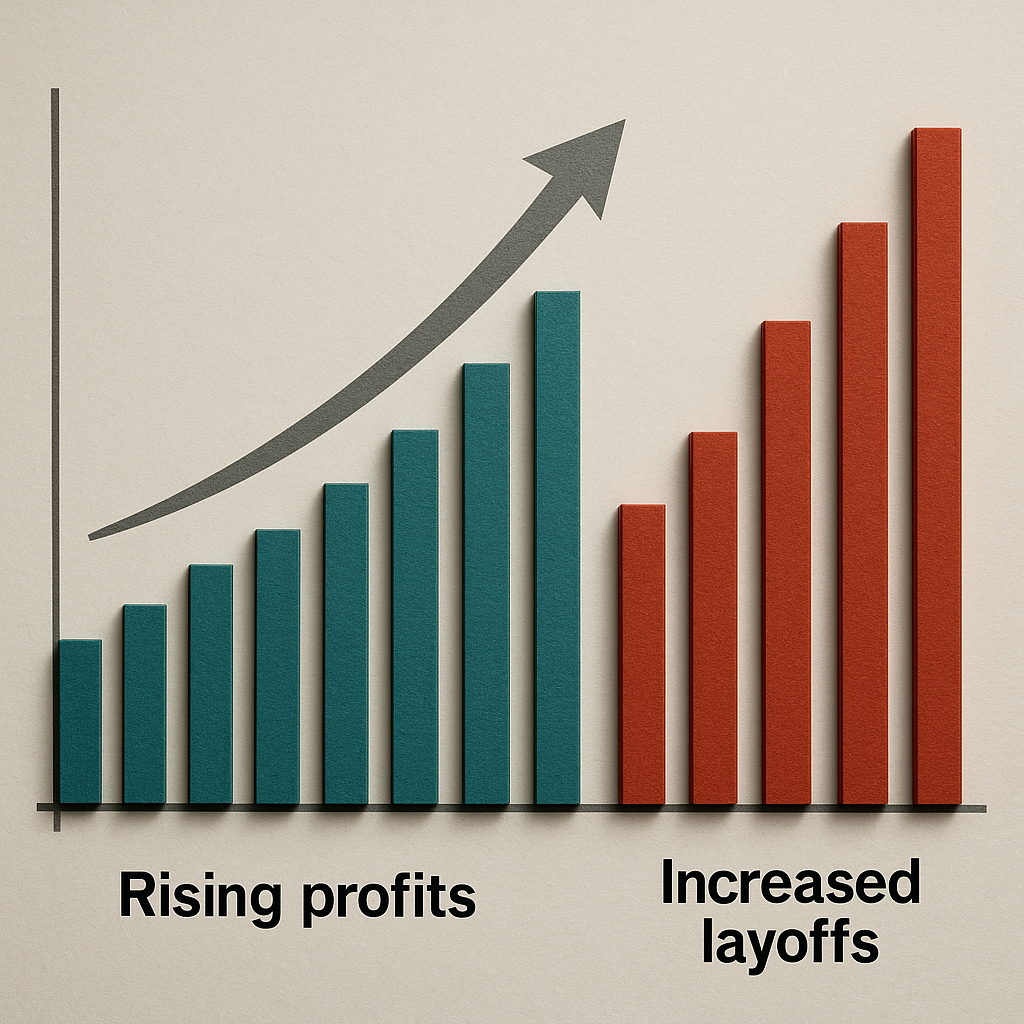
In a dramatic and controversial move, Oracle shocked the tech world by laying off up to 30,000 employees globally via email, even as it boasted a staggering 95% increase in profits. This decision underscores a paradox reverberating through the technology sector, where record earnings coexist with rampant job cuts. For an industry synonymous with innovation and growth, the question lingers: what does this disconnect mean for the future of tech employment?
A Profitable Giant’s Unprecedented Layoffs
Oracle’s performance in the past quarter was nothing short of impressive. A near doubling of profits, driven by booming AI and cloud infrastructure services, positioned the company as a dominant force in its industry. Yet, this financial success came alongside a brutal wave of cost-cutting, leaving tens of thousands of workers stunned and, in many cases, uninsured. As reported by The Times of India, employees worldwide were informed of their termination at 6 a.m. via email, with no prior notification. In India alone, 12,000 jobs were impacted.

“The early-morning email arrived like a punch to the gut,” said an affected employee who spoke to The Times of India. “After giving years of my life to this company, it felt like it all amounted to a form letter.” Among the casualties were reportedly workers undergoing lifesaving medical treatments, who abruptly lost their jobs—and, with them, their health insurance.
Jobs Lost, Futures Questioned: Industry-Wide Trends
Oracle is not an outlier in today’s tech ecosystem. Across the sector, companies are shedding nearly 1,000 jobs each day as they strive to balance profitability with efficiency. According to Yahoo Entertainment, giants like Meta, Amazon, and Google have also conducted sweeping layoffs in recent months, citing reasons that range from overhiring during the pandemic to recalibrating for future-focused initiatives like AI.
Notably, these cuts come even as many of these firms continue to post record revenues, raising concerns about corporate priorities in an era of apparent abundance. “There seems to be a growing pattern of divorcing profitability from employee well-being,” one industry analyst observed. “The current layoff spree reflects a shift toward organizational austerity at the expense of workforce stability.”
Oracle’s Balancing Act: AI Expansion and Workforce Reduction
A significant driver of Oracle’s profitability has been its aggressive investment in AI and cloud infrastructure. These efforts align with Chairman Larry Ellison’s vision of becoming a market leader in these rapidly expanding fields. However, as reported by The Times of India, Oracle filed over 3,000 petitions for foreign worker visas just days after the layoffs, sparking backlash. For many, this apparent outsourcing of opportunities runs counter to the company’s stated goals of innovation and excellence.
“It’s a delicate balancing act,” noted a Silicon Valley-based economist. “Oracle is trying to future-proof its business by investing in transformational technologies, but its methods—particularly the timing and execution of these layoffs—are creating a PR and workforce morale nightmare.” Critics argue that cutting tens of thousands of jobs may erode employee trust, lead to talent drain, and ultimately hinder the company’s ambitious goals.
The Human Cost Behind the Numbers
The fallout from Oracle’s layoffs extends far beyond shareholder meetings and balance sheets. Many affected employees have shared heartbreaking stories of personal and professional disruption. Families have reportedly been left struggling, with challenges that go beyond financial instability—some citing the immediate loss of health benefits as potentially catastrophic.
These mass layoffs also signal a broader pattern of instability in the tech labor market, leaving many questioning the sustainability of employment in the sector. While tech jobs were once considered among the most secure and lucrative, the current wave of cutbacks is unsettling workers and raising tough questions about what the future holds.

What This Means for the Tech Sector—and Beyond
The pace and scale of layoffs across the technology landscape suggest a seismic shift in how companies approach growth, talent, and risk. While many firms continue to tout AI, automation, and other disruptive technologies as a pathway to long-term profitability, those same innovations appear to be reshaping—and in some cases replacing—the workforce.
Looking ahead, industry observers caution that these trends may further accelerate inequalities in the labor market, as high-paying tech jobs become increasingly precarious. At the same time, companies like Oracle will likely remain under scrutiny, as stakeholders demand greater accountability for how they treat their employees, even during periods of record earnings.
For workers, these layoffs highlight the importance of long-term skill development and diversification, particularly in emerging fields like AI and machine learning. For companies, the challenge lies in achieving operational efficiency while preserving both trust and innovation. How well they navigate these competing pressures will go a long way in determining the industry’s trajectory for years to come.
What to Watch Next
Analysts predict that the tech layoff trend may not yet be over. If companies continue to prioritize profit margins over workforce stability, additional rounds of layoffs could follow in 2026, particularly as AI adoption accelerates. Meanwhile, investors are closely watching how Oracle and its peers communicate with employees and the public, as worker dissatisfaction could undermine productivity.
The dual priorities of profitability and corporate ethics will remain under the spotlight. Whether Oracle and other tech giants can strike a balance that satisfies investors, employees, and the public will serve as a key test for the industry’s future.