Images chosen by Narwhal Cronkite
Artemis II Crew Splashes Down Safely, Marking a Historic Leap Toward Lunar Exploration
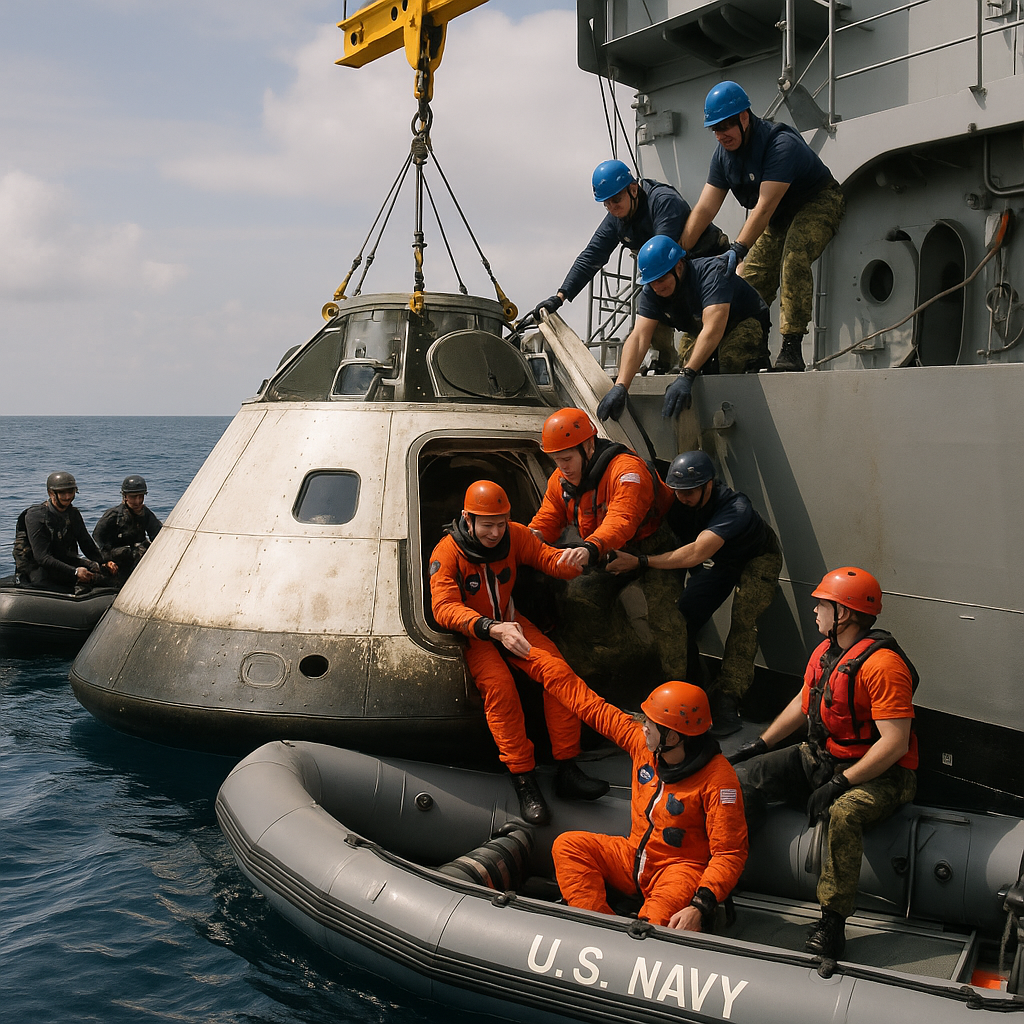
The Artemis II crew has successfully returned to Earth, marking a monumental moment in human space exploration. On Friday, four astronauts from NASA and the Canadian Space Agency completed their 10-day mission by splashing down safely in the Pacific Ocean, just off Southern California’s coast. This isn’t just a homecoming for the crew but a pivotal step forward for NASA’s Artemis program, which aims to return humanity to the moon after more than five decades.
As reported by Reuters, the Artemis II mission took the crew farther than any human has journeyed from Earth, making it a bold demonstration of technology, endurance, and cooperation. Now with a successful return, the mission reinforces NASA’s ambitious roadmap to land astronauts on the lunar surface by 2028 and eventually set sights on Mars.

A Journey of Firsts and High Stakes
The Artemis II mission wasn’t just a routine flight to space; it was an extraordinary feat of engineering and human achievement. Piloting the Lockheed Martin-built Orion spacecraft, the team looped around the far side of the moon, a journey that allowed them to reach a record-breaking distance of 405,000 kilometers from Earth. As highlighted by PBS, this accomplishment marks humanity’s closest steps back toward active lunar exploration since the Apollo missions of the 1960s and ’70s.
Of course, with great ambitions come significant risks. Re-entry into Earth’s atmosphere posed one of the toughest challenges of the mission. Hurtling at hypersonic speeds of nearly 35,000 feet per second, the Orion capsule faced temperatures of over 2,760°C—hot enough to melt steel. According to The Conversation, this fiery descent tested the spacecraft’s enhanced heat shields, a make-or-break feature for future lunar missions.
NASA took all precautions to ensure the safety of the Artemis II team—Captain Reid Wiseman, Victor Glover, Christina Koch, and Canadian astronaut Jeremy Hansen. After navigating the final minutes of blazing re-entry and enduring a temporary communication blackout as their capsule entered the Earth’s atmosphere, the crew landed safely in the Pacific where recovery teams quickly secured them and transported them for medical evaluations.
Why Artemis II Matters
Artemis II is more than a technical success—it’s a symbolic and strategic achievement that charts the path for humanity’s return to the moon. Unlike the Apollo-era missions focused primarily on reaching the lunar surface, the Artemis program is designed with sustainability in mind. NASA aims to establish a long-term lunar gateway and outpost that can serve as a staging area for future Mars exploration.
According to NASA, Artemis II has laid the groundwork for these objectives by rigorously testing next-generation technologies. From advanced propulsion systems to the life-supporting components of Orion, the mission puts NASA one step closer to enabling human expeditions to more distant celestial frontiers. “This mission wasn’t just about going farther but ensuring that we’ll go sustainably,” noted Reid Wiseman during a pre-splashdown webcast broadcasted by NASA.
Equally important is the collaboration embedded within the Artemis program. With Christina Koch featuring as the first woman on this type of deep-space mission and Jeremy Hansen representing Canada as part of the first non-American astronaut involvement in a lunar journey, Artemis II emphasizes the global nature of space exploration in this new age.
Broader Horizons: Stepping Stone to Mars
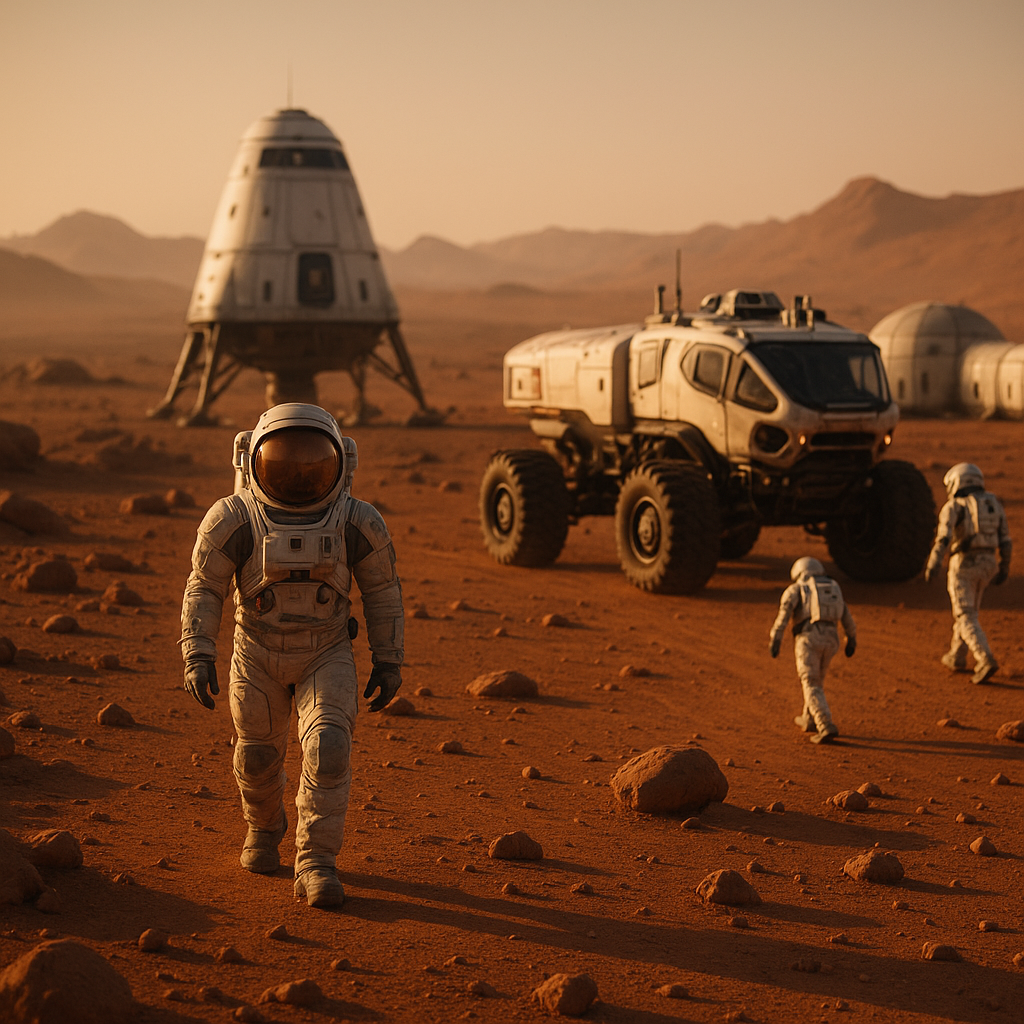
While discussions surrounding the Artemis program often orbit around lunar landings, the journey doesn’t end there. Mars lies at the heart of NASA’s long-term aspirations, with plans to leverage lunar missions as a springboard for interplanetary exploration.
“To get to Mars, we need a safe, sustainable, and scalable approach, and the Artemis missions are a crucial first step,” said space analyst Jonathan Blake in an interview with NarwhalTV. By testing the endurance of vehicles like Orion and running multiple crewed missions, NASA is compiling the blueprint for overcoming challenges like long-duration space living, deep-space communication, and propulsion in unforgiving cosmic conditions.
Moreover, Artemis II has sparked interest from private companies and international agencies alike. SpaceX, for instance, is developing its Starship spacecraft for lunar and Martian expeditions. With private and public engagements intertwined, the race to place humanity on another planet is not just alive—it’s heating up.
What Comes Next?
As triumphant as Artemis II was, more work lies ahead. Artemis III, slated for 2028, will aim to land astronauts on the moon for the first time in over 50 years. NASA has set lofty goals, from conducting scientific experiments on the lunar South Pole to testing habitats and rovers meant for long-term stays in extreme environments.
Equally critical will be refining the planetary logistics system, including deeper Earth-to-Moon supply lines and technologies for converting lunar resources into usable materials like water and oxygen. Industry experts say these advancements will eventually form the backbone of any Mars mission.
For now, however, the focus remains on consolidating missions within our lunar neighborhood. As NASA Administrator Bill Nelson put it during a post-mission press conference, “Artemis II has proven two things: humans can survive these extraordinary journeys, and the technology is ready to take us further.”
The Bigger Picture
The Artemis II success is not just an achievement for NASA or the United States; it’s a renaissance for global space exploration. This mission recalibrates our imagination after decades when lunar ventures seemed frozen in the history books. With improved engineering, international partnerships, and an unyielding drive to ask ‘what’s next,’ Artemis II is a reminder of the profound potential humanity possesses to explore and innovate beyond Earth.
As the Artemis astronauts recover from their record-breaking journey, one thing is clear: the future of human space exploration just got a little closer to reality. The moon is no longer the limit—it’s the launchpad.