A Russian general killed in a Moscow car bomb attack early Monday has been identified by Russian investigators as Lt. Gen. Fanil Sarvarov, a senior officer in the General Staff of the Russian armed forces.
Russia’s Investigative Committee said Sarvarov died when an explosive device planted under the bottom of a car detonated on Yaseneva Street in Moscow. The committee said it opened a criminal case and is pursuing multiple lines of inquiry.
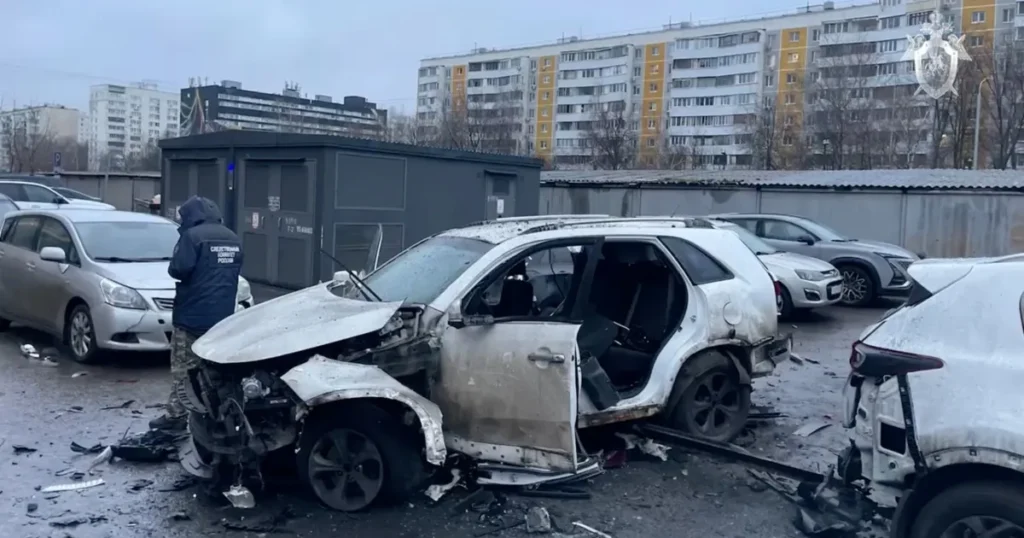
Russian officials did not immediately provide details on who planted the device or how it was triggered. The Investigative Committee released a video from the scene showing a heavily damaged white vehicle in what appeared to be a residential area.
Who Sarvarov was
The Investigative Committee described Sarvarov as the head of the operational training directorate (also described as the operational training department) of the General Staff. Russian state messaging around the case emphasized his senior rank and position within the military hierarchy.
Russian authorities have not released a full biography, and they did not immediately provide details about Sarvarov’s recent duties. The Defense Ministry did not issue a detailed statement in the initial official updates referenced in early reporting.
What investigators are saying about possible motives
In its statement, the Investigative Committee said investigators were considering whether the killing was connected to Ukrainian special services. Russian officials have frequently pointed toward Ukraine in high-profile attacks inside Russia since the war began, though public attribution often remains contested, and Ukraine does not always comment.
No group immediately claimed responsibility for the bombing, and Ukraine did not issue an official statement in the hours after the incident in reports published Monday. The Investigative Committee said investigators were working to establish the full circumstances of the attack.
Authorities said forensic work and evidence collection were underway. Officials have not said whether any suspects were identified or whether any arrests had been made.
What is known about the blast location
The committee said the device was placed under the car and detonated on Yaseneva Street, an area in southern Moscow. Video released by investigators showed the vehicle badly damaged, consistent with an explosion concentrated beneath or alongside the car.
Investigators did not immediately say whether the bomb was planted while the car was parked or whether it was affixed in another way. Officials also did not say whether surveillance footage from nearby buildings was available, or whether they believe the suspects were following Sarvarov.
Russian authorities have not released information about additional casualties or injuries connected to the blast. The committee’s initial statement focused on Sarvarov’s death and the opening of the case.
A pattern of targeted attacks on senior Russian figures
Sarvarov is the third high-ranking military figure reported killed in and around Moscow since late 2024. The string of attacks has fueled concerns among Russian officials and commentators about security vulnerabilities in the capital and surrounding region.
In December 2024, Lt. Gen. Igor Kirillov, head of Russia’s Radiological, Chemical and Biological Protection Forces, was killed in an explosion along with his assistant as they left a residential building in Moscow. Investigators said the explosive device in that case was concealed on an electric scooter left near the building.
In April 2025, Lt. Gen. Yaroslav Moskalik was killed by a car bomb in Balashikha, a suburb east of Moscow, according to reporting on the incident and prior statements from Russian investigators.
The repeated nature of the attacks has drawn attention because they involve senior officers and methods designed to strike in public or semi-public spaces. Russian investigators have often described such incidents as “murder” and treated them as high-priority cases.
What remains unclear
Key questions about Monday’s bombing remained unanswered in initial official statements. Authorities did not identify any suspects, describe the explosive device in detail, or say whether investigators believed Sarvarov was specifically targeted at that moment or attacked as part of a broader pattern.
Russian officials also did not release details about Sarvarov’s movements leading up to the blast, including whether he was commuting, parked near his residence, or traveling to another location. The Investigative Committee’s statement did not indicate whether additional explosive devices were found nearby.
As with previous high-profile cases, investigators are expected to rely on forensic evidence, witness accounts, and video surveillance to reconstruct the bombing and identify those responsible. It was not clear when authorities might release further details.
Why the case matters
The killing is likely to intensify scrutiny of security arrangements for senior Russian military officials. It also adds another flashpoint in the information war surrounding the Russia-Ukraine conflict, where attribution and claims of responsibility can carry strategic weight.
For Moscow, the fact that such attacks have occurred in the capital and its suburbs has repeatedly raised questions about counterintelligence and domestic security measures. For Ukraine and its supporters, targeted strikes against Russian officials have often been framed—when acknowledged—as part of a broader campaign against individuals linked to the war.
For now, Russian authorities say the case remains under active investigation, and they have not provided a timeline for updates.
Sources:
Al Jazeera – “Car bomb kills Russian general in Moscow, investigators say”
ABC News – “Car bomb kills senior Russian general in Moscow, officials say”