Pope Leo XIV used his annual year-end meeting with Vatican cardinals and senior officials to deliver a familiar message with a new tone: set aside office politics and recommit to the Church’s mission. In Pope Leo XIV’s Christmas greeting on Monday, he asked whether real friendship is possible inside the Roman Curia, the Holy See’s central bureaucracy.
“Is it possible to be friends in the Roman Curia?” Leo said, urging those who run Vatican departments to examine their relationships and motivations. He warned that bitterness can build when entrenched dynamics tied to power, rivalry, or personal interests “are slow to change.”
Leo’s remarks came as he continues to shape his leadership style after succeeding Pope Francis, who was known for sharper public critiques of dysfunction in Vatican culture.
“Mission” and “communion” as the framework
Speaking in the Vatican’s Hall of Benediction, Leo grounded his message in two themes he called fundamental to the Church: mission and communion. He said the Curia’s structures should support evangelization rather than slow it down, arguing that Church offices must become “more mission-oriented” and responsive to real pastoral and social challenges.
Leo linked internal reform to outward credibility. The Curia, he said, cannot operate like an inward-facing institution focused on routine administration, but should serve local churches and their pastors while keeping the Gospel’s dynamism at the center.
He also urged Vatican officials to resist falling into rigidity or ideology—patterns he said can fuel conflict in internal dynamics and in how questions of faith, liturgy, and morality are handled.
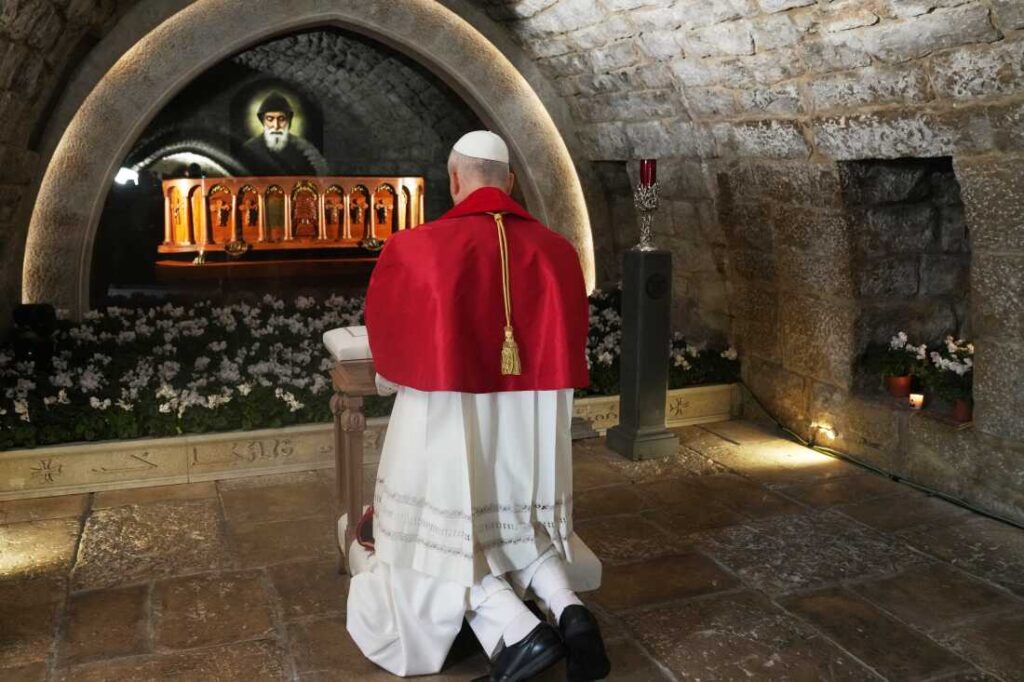
Friendship, trust, and the cost of power struggles
Leo’s most personal reflection centered on workplace culture. Drawing on St. Augustine, he said people often discover how rare trustworthy friendship can be, especially in environments shaped by competition and influence.
He described how disappointment can take root after years of service when colleagues see persistent patterns connected to “the exercise of power,” the desire to prevail, or the pursuit of personal interests. He urged Vatican officials to build relationships where “masks fall away,” no one is used or sidelined, and competence is respected—conditions he said can prevent resentment and dissatisfaction.
Leo framed this as more than a management lesson. He said such relationships require personal conversion so that Christ’s love can be visible within the Church’s leadership.
A gentler echo of Pope Francis’ Christmas tradition
Leo’s address followed a well-established Vatican ritual: Christmas greetings with the Roman Curia that often double as a public examination of conscience for the Church’s leadership. Pope Francis frequently used the occasion to denounce corruption, ambition, cliques, and gossip, at times using biting language that drew worldwide attention.
Leo did not repeat Francis’ most famous barbs—references to “spiritual Alzheimer’s,” the “cancer” of cliques, and the corrosive effects of gossip. Instead, he offered a more constructive tone while keeping the underlying critique intact: if the Vatican’s leaders cannot model fraternity, it becomes harder to persuade a fractured world that the Church can foster unity.
That shift in style aligns with Leo’s broader effort to calm internal tensions after years in which Francis’s reforms and blunt language sometimes alienated critics inside and outside the Vatican.
Remembering Francis and signaling continuity
Leo told Curia officials he wanted to remember “my beloved predecessor, Pope Francis,” noting that Francis “concluded his earthly life” this year. He praised Francis’ “prophetic voice,” pastoral style, and emphasis on mercy, saying it helped drive renewed evangelization and a more welcoming Church attentive to the poor.
At the same time, Leo’s speech suggested he intends to govern differently in tone, even if he keeps key priorities. Rather than focusing on institutional failures in the harshest terms, he framed reform as a practical spiritual task: turning daily work into a witness of communion.
Leo also pointed to major Church texts, including Francis’ Evangelii Gaudium, to underscore that missionary purpose should shape Vatican offices. He argued that the Curia’s work must be evaluated by whether it helps the Church “go forth” rather than becoming an obstacle to momentum.
From internal culture to global conflict
Leo expanded the scope of his message beyond Vatican offices, connecting Curia culture to a wider world “wounded by discord, violence and conflict.” He warned that aggression and anger are growing forces, often amplified by digital life and politics.
In that context, he said Christmas is a summons to be “a prophetic sign” of peace and universal fraternity. The Curia, he added, cannot be a self-contained world, but must see itself as part of a wider mission aimed at reconciliation among peoples, religions, and cultures.
Leo closed with a traditional Christmas wish, asking God for humility, compassion, and peace—both within the Vatican and beyond it.
Sources:
Reuters – “Pope Leo urges joyful, welcoming Church in speech to Vatican cardinals”