Finnish authorities have arrested two individuals in connection with the damage to an undersea telecommunications cable in the Gulf of Finland that occurred earlier this week between the capitals of Finland and Estonia, police announced on Thursday.
The rupture was discovered early Wednesday in Estonia’s exclusive economic zone. The cable belongs to Finnish telecommunications provider Elisa and is considered critical underwater infrastructure.
Helsinki police have opened an investigation into aggravated criminal damage, attempted aggravated criminal damage, and aggravated interference with telecommunications. Two additional people have been placed under travel bans, police said.
Authorities have not released the suspects’ nationalities or other identifying details. Police also stated that the individuals’ connections to the ship were not immediately clear.
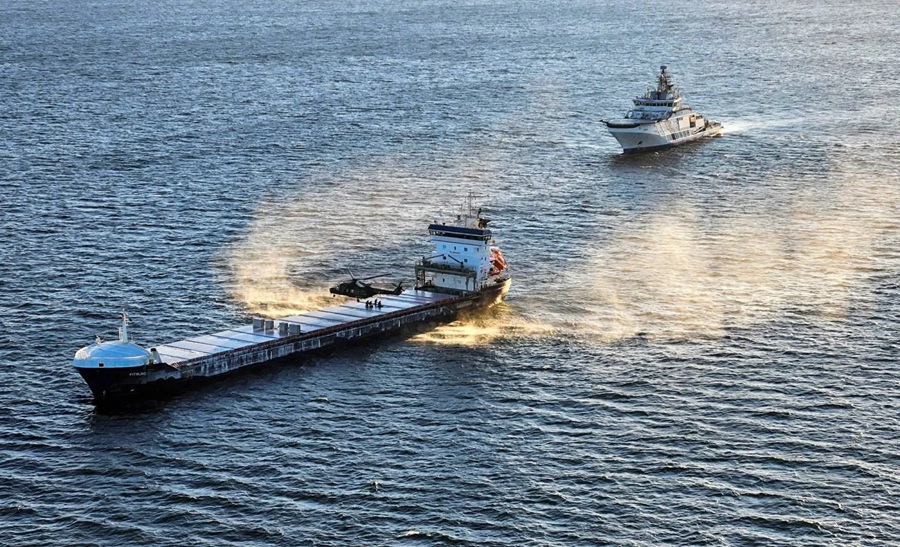
Fitburg is detained as authorities examine anchor activity and cargo
The vessel linked to the case, the Fitburg, is flagged in St. Vincent and the Grenadines and had been traveling from Russia to Israel. Finnish authorities detained the ship’s 14 crew members, who are from Russia, Georgia, Azerbaijan, and Kazakhstan.
Finnish National Police Commissioner Ilkka Koskimäki said earlier this week that the ship was dragging its anchor for hours when it was discovered in Finland’s exclusive economic zone. He added that investigators are not speculating on whether a state-level actor was behind the damage.
Finnish Customs also reported finding structural steel in the ship’s cargo that originated in Russia and falls under European Union sanctions. Customs said importing such sanctioned goods into the EU is prohibited under EU sanctions rules, and the agency is investigating the sequence of events and how sanctions legislation applies to the case.
Broader concerns over Baltic Sea seabed infrastructure
Undersea cables and pipelines crisscross one of Europe’s busiest shipping lanes, linking Nordic, Baltic, and central European countries. The connections support trade and energy security and, in some cases, reduce reliance on Russian energy resources.
The case follows earlier incidents involving seabed infrastructure in the region. Finnish authorities last year charged the captain and two senior officers of a Russia-linked vessel, the Eagle S, over damage to undersea cables between Finland and Estonia on Christmas Day in 2024. Finnish officials have also described the Eagle S as part of Russia’s so-called shadow fleet—aging vessels with unclear ownership structures used to bypass Western sanctions during the war in Ukraine and often operating without Western-regulated insurance.
The Kremlin previously denied involvement in damaging infrastructure that provides power and communications for large numbers of Europeans. For Western countries, incidents like these are widely viewed as part of a broader pattern of suspected sabotage in Europe following Russia’s full-scale invasion of Ukraine in 2022.
Sources:
AP News / Police in Finland arrest 2 in connection with damage to undersea telecom cable
Reuters / Finland seizes ship sailing from Russia after suspected cable sabotage in Baltic Sea