Surveillance company Flock Safety pitched a plan that would have turned roughly 350,000 Uber, Lyft and delivery vehicles into a roaming license plate reader network, according to a document obtained through a public records request.
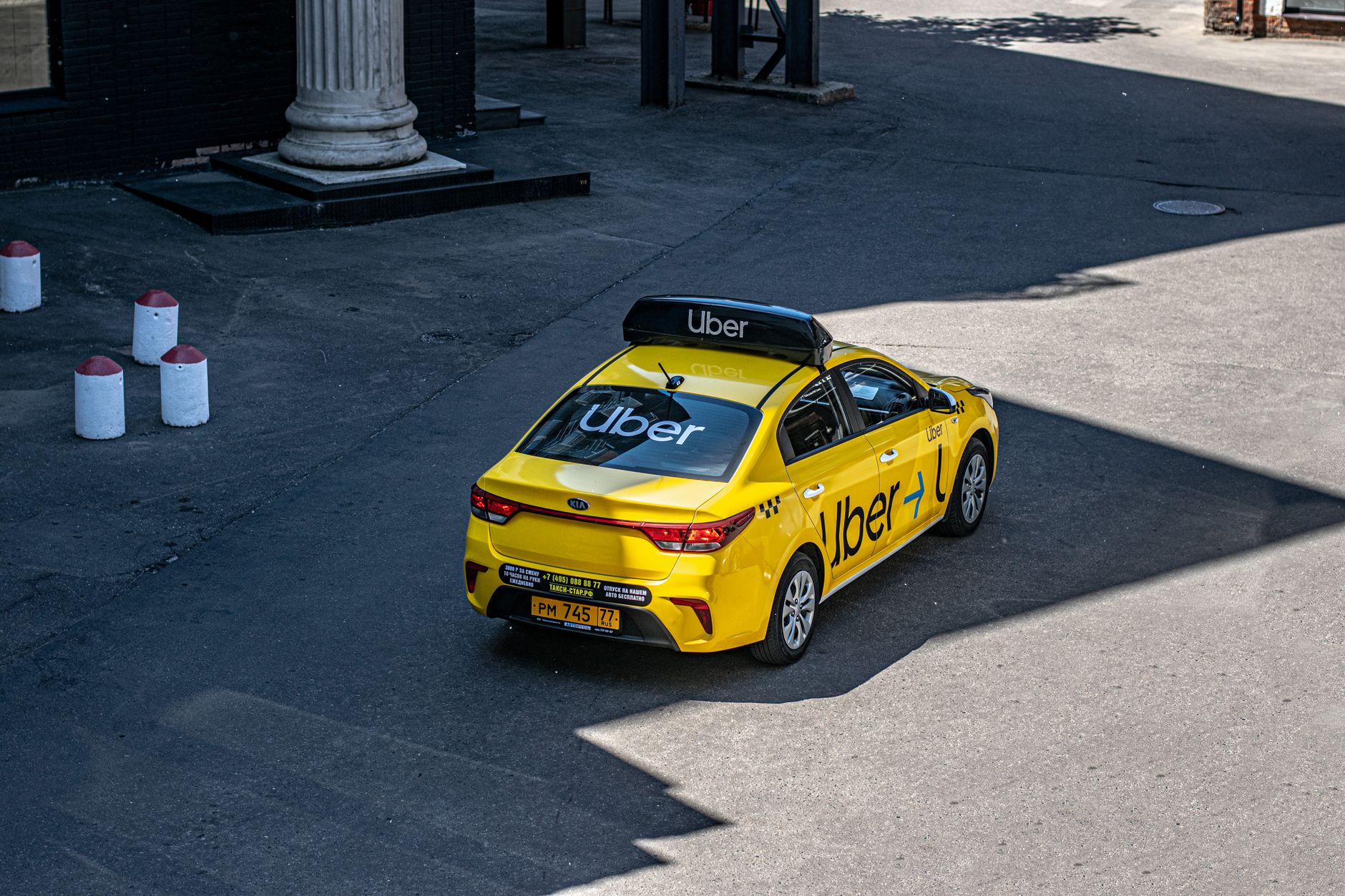
The plan centred on a partnership with Nexar, a dashcam manufacturer that markets its cameras to rideshare drivers and commuters. Flock told reporters that it never executed the partnership.
What the document says
The presentation was written by Flock for the Georgia Office of the Attorney General and delivered in August 2025. It was obtained by Jason Hunyar, a resident of Dunwoody, Georgia, through a public records request, and reported by Joseph Cox at 404 Media on August 7, 2026.
In the document, Flock described a network that would include “350k Uber/Lyft and other delivery service devices” collecting license plate data. Nexar cameras are marketed on their ability to provide clear license plate capture with Full HD video — the exact capability that makes a consumer dashcam viable as a plate reader.
The same presentation noted that hundreds of commercial businesses and homeowners’ associations in Georgia were already part of Flock’s network, a reminder that the company’s coverage extends well beyond police-purchased cameras.
Why mobile changes the math
Flock’s existing model is a fixed one: cameras mounted on poles at intersections and entrances, each capturing plates that pass a known point. That produces a network of checkpoints. Given enough of them, movement between checkpoints can be reconstructed — but coverage is bounded by where cameras were installed, and communities can see them, debate them and vote on them.
A dashcam fleet inverts every one of those properties.
Rideshare and delivery vehicles do not sit at intersections. They circulate continuously through residential streets, apartment complexes, parking lots and cul-de-sacs — places no municipality would ever authorise a fixed camera. Coverage becomes a function of where people order rides and food, which is to say everywhere, without any installation decision to approve or reject.
The plates captured would not only be moving vehicles. A dashcam driving down a residential street at night photographs the parked cars, which is a record of who is home. Repeat that nightly across a city and the resulting dataset describes household patterns, not traffic.
The privacy objection
Critics of plate reader networks make a consistent argument, and mobile capture sharpens it considerably. Aggregated location data reveals sensitive information that no individual scan does: visits to medical clinics, places of worship, union halls, attorneys’ offices, protests, and relationships inferable from which vehicles are repeatedly parked overnight at which addresses.
Bystanders are the other half of the problem. A driver who consents to a dashcam for insurance purposes consents on their own behalf. Every plate their camera captures belongs to someone who was never asked and has no way to know they were recorded, no notice, and generally no route to request deletion.
There is also the question of who the drivers would have been in this arrangement. Gig workers are classified as independent contractors, not employees — meaning the surveillance capacity would ride on vehicles owned and insured by workers with limited bargaining power over the terms, and it is not clear from the document whether drivers would have understood their dashcam was feeding a law enforcement data network.
A pattern of walked-back plans
This is not the first Flock initiative to be abandoned after it became public. The company previously dropped plans to build a people lookup tool using hacked data, following media coverage and internal pressure.
The recurring shape is worth noting: an expansive capability is designed and pitched, it surfaces through reporting or a records request, and the company confirms it was never implemented. Each individual denial may be accurate. Taken together, the documents describe a product roadmap that consistently reaches further than the company’s public positioning suggests, and that is checked mainly by disclosure rather than by internal limits.
The wider backlash
The revelation lands amid the roughest period in Flock’s history with its customers. More than 20 local jurisdictions have moved toward cancelling contracts over surveillance concerns, and the opposition has been notably bipartisan, uniting civil liberties advocates with conservatives sceptical of expansive state monitoring.
Several of those disputes have turned on control rather than capability. In Littleton, Massachusetts, the town moved to cancel its contract after discovering Flock had reactivated cameras the Select Board had ordered switched off. Cambridge terminated its contract after cameras were installed without notification, and Evanston, Illinois issued a cease-and-desist after a similar incident.
What this means for policy
The Nexar plan, executed or not, exposes a gap in how communities regulate this technology. Local ordinances and contract terms govern cameras a municipality buys and installs. They say nothing about a private dashcam network whose data a vendor aggregates and sells access to — no procurement vote, no public hearing, no pole to point at.
Regulating that requires shifting the object of the rules from devices to data: limits on retention, on cross-jurisdictional sharing, on querying without a documented predicate, and on commercial aggregation of location records regardless of which camera produced them. Until that shift happens, a plan like this one only fails when someone files a records request.