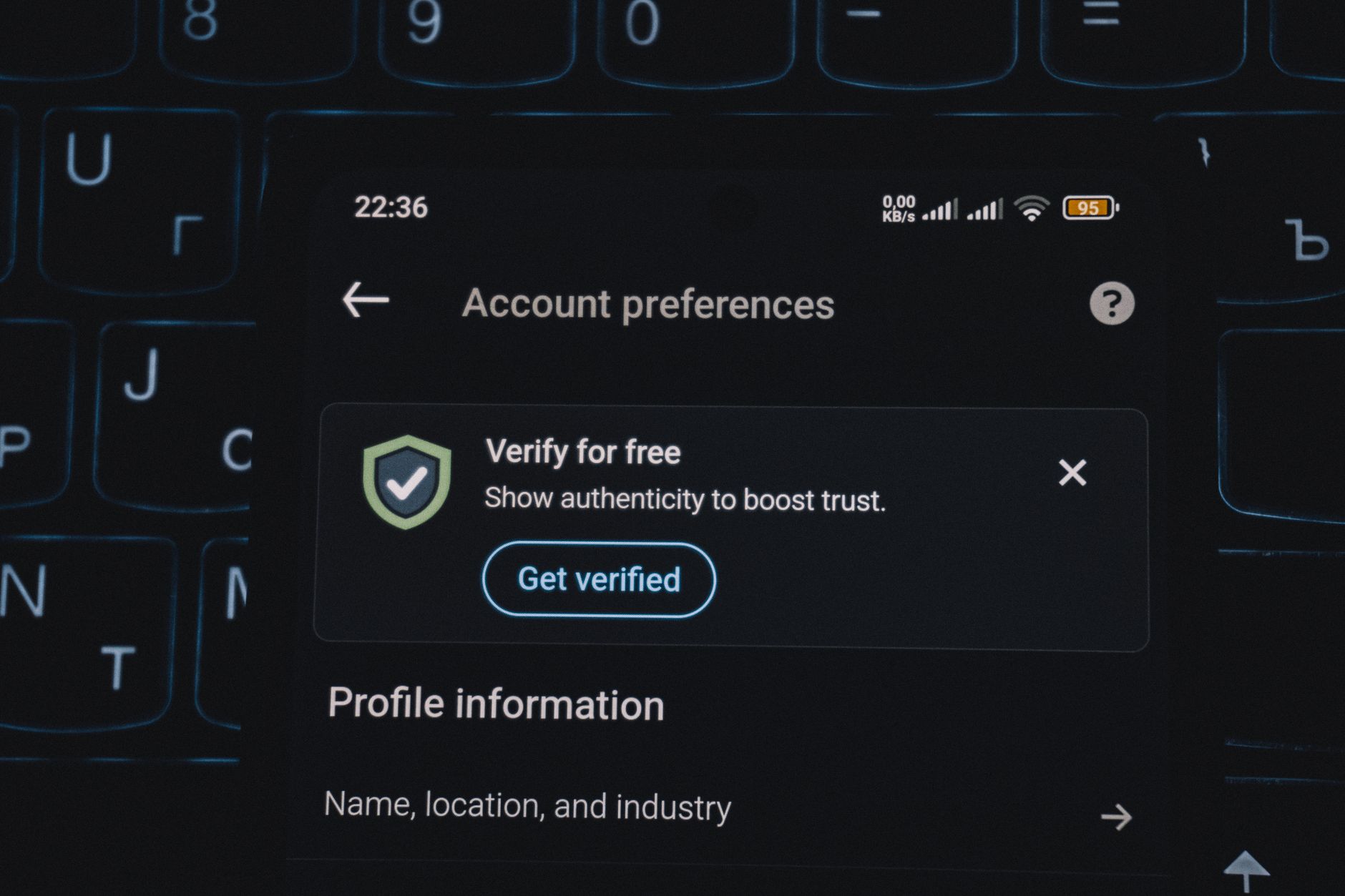
Discord is expanding age verification across its platform, shifting to what the company describes as a teen-by-default model in which adult content and several ordinary account settings sit behind a proof-of-age check. The rollout, reported by Gadget Review, is currently enforced where local laws require it, with a full global deployment pushed to the second half of 2026.
Four actions that now trigger a check
Verification is not required to use Discord. It is required to do four specific things:
- Unblur sensitive content or turn off the content filter.
- Enter age-restricted channels, servers or app commands.
- Change Message Request Inbox settings, which control who is allowed to send direct messages.
- Speak on Stage channels.
The first two are what most people expect from an age gate. The second two are the more consequential design choices. Message request controls are a safety setting – a teenage account left at the restrictive default cannot be opened up to unsolicited DMs without proving adulthood. Stage channels are Discord’s live audio rooms, where speaking, unlike listening, is now an adult-verified action.
Four ways to prove it
Discord offers a choice of methods, and they differ sharply in how much data leaves the device:
- Video selfie, processed by the vendor k-ID. Discord says the analysis runs on-device, the video is deleted immediately, and Discord receives only an estimated age – not an image, not a document.
- ID scan: a government-issued document paired with a selfie, checked through a third-party vendor.
- Google Wallet: a passport ID pass, with Google transmitting the birthdate to Discord.
- Credit card: processed through k-ID and Stripe, with Discord stating it retains no card details.
The gap between the first option and the rest is the whole privacy story. Face-estimation that returns a number and discards the footage creates almost nothing worth stealing. An ID scan creates a copy of a passport or driver’s licence somewhere in a vendor pipeline, and that copy exists for as long as the vendor’s retention policy says it does.
That distinction is not hypothetical for Discord users. The company disclosed in 2025 that a breach at a third-party customer support provider exposed government ID images that users had submitted in connection with age appeals – a reminder that the risk in identity verification usually sits with the contractor rather than the platform.
Why platforms are doing this now
The shift is regulatory, not voluntary. The United Kingdom’s Online Safety Act, a growing list of US state age-verification statutes, Australia’s restrictions on under-16 accounts and comparable measures elsewhere have converged on the same requirement: platforms serving adult or high-risk content must know, with some reliability, who is a minor.
Building that check once and applying it where the law demands is cheaper than maintaining a different product in every jurisdiction. It also means users in countries with no such requirement eventually encounter the same prompts, because the default becomes the global one.
The unresolved trade-off
Age assurance sets two goods against each other. Keeping adult content away from thirteen-year-olds is a legitimate aim that platforms handled badly for a decade. Requiring identity documents to use a chat application creates a permanent record linking a real name to an account, and shifts a class of harm from minors to everyone whose documents end up in a breach.
Face-estimation is the compromise most companies have landed on, and it is a reasonable one where it works – returning a rough age band without retaining an image. It is also least accurate precisely at the boundary that matters, around the late teens, which is why the fallback options exist at all.
Discord says it is adding further verification options and documentation before the broader rollout. For users, the practical advice is unchanged: if a face scan is offered, it is the option that leaves the smallest trail. The other three all end with a copy of your identity in someone else’s system.
What happens if you decline
Refusing to verify does not lock anyone out of Discord. It leaves the account in the teen-by-default state: content filters stay on, sensitive media stays blurred, age-restricted servers stay closed, message request settings stay at their most restrictive, and Stage speaking stays unavailable. Everything else – servers, direct messages with people you already know, voice chat, screen sharing – works as before.
For a large share of users that is a perfectly usable product, which is the quiet logic of the design. By attaching verification to a handful of specific actions rather than to account creation, Discord keeps the check off the path of anyone who never needed it, while satisfying regulators who care about exactly those actions. Whether that balance holds through the global rollout depends on how many additional features end up behind the same wall.