A child in the United States has died from rabies after waking to find a bat resting on his face, according to a BBC report published this week. The case was confirmed by public health officials, who warned that the boy’s family did not seek medical treatment after the incident — a decision that proved fatal.

The non-obvious detail that makes this case so alarming: bat bites are often too small to see or feel. Health officials stress that physical contact with a bat — even without a visible wound — should be treated as a potential exposure. The family reportedly believed no bite had occurred because there was no obvious mark on the child’s skin.
How a Bat Encounter Becomes a Rabies Emergency
Rabies is almost always fatal once symptoms appear. The virus attacks the central nervous system, and by the time a patient develops fever, confusion, or the characteristic fear of water, treatment can no longer save them. That window between exposure and symptom onset — which can range from weeks to several months — is the only opportunity to intervene.
The intervention is called post-exposure prophylaxis (PEP): a series of rabies vaccine doses, sometimes paired with rabies immune globulin injected near the wound site. When started promptly after bat exposure, PEP is essentially 100% effective at preventing the disease. It costs money and requires multiple clinic visits, but it works. Skipping it, as this family did, leaves no safety net.
Bats are the leading source of rabies deaths in the United States. Unlike dog-transmitted rabies in many other countries, bat rabies cases in the US are sporadic and easy to underestimate. The Centers for Disease Control and Prevention consistently lists bats as the animal most commonly found to be rabid in the country, responsible for the vast majority of domestic human rabies fatalities over the past two decades.
Why “No Visible Bite” Is Not a Safe Conclusion
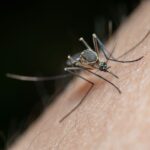
Bat teeth are so fine that their bites can go completely unnoticed — no pain, no bleeding, no mark. Public health guidelines reflect this: if a person wakes up to find a bat in the room, or if a bat is found near an unattended child or sleeping adult, officials recommend treating it as a potential exposure and contacting a doctor or local health department the same day.
Children and elderly people face compounded risk. They may not recall being bitten, may not be able to describe a bite clearly, and may not recognize the early, flu-like symptoms of rabies as anything unusual. By the time encephalitis sets in, the disease is beyond treatment.
If a bat is found indoors, health authorities advise capturing it without touching it — using heavy gloves or a container — so it can be tested. A negative test on the bat can rule out exposure. Releasing or killing the bat destroys that option and forces a precautionary decision about whether to start PEP.
Rabies Prophylaxis Is Covered — and Accessible
One underreported barrier is cost. A full course of rabies PEP in the US can run into thousands of dollars without insurance. However, most state and county health departments maintain emergency rabies vaccine supplies and can provide or subsidize treatment for uninsured patients. Calling 911 or the local health department after a bat encounter does not require the family to pay out of pocket first.
For families navigating other unexpected health-related costs, it’s worth knowing that major changes to student loan repayment took effect July 1, 2026, which may affect how younger adults budget for medical expenses in the months ahead.
What To Do If a Bat Touches You or a Child
- Do not release or kill the bat. Contain it safely for testing if possible.
- Wash any contact area immediately with soap and water for at least 15 minutes.
- Call your doctor, urgent care, or local health department the same day — do not wait for symptoms.
- Assume exposure if you woke up to a bat in the room, even with no visible bite mark.
- Do not let cost stop you from calling. Public health departments can authorize emergency PEP.
Rabies kills roughly 59,000 people globally each year, the vast majority in Africa and Asia where dog vaccines are scarce. In the US, deaths are rare — often under five per year — precisely because PEP exists and works. This boy’s death represents a preventable tragedy, and public health officials are using the case to push awareness ahead of summer, when bats are most active and people are most likely to sleep with windows open.
Local health departments in the affected state are expected to issue renewed public guidance on bat exposure in the coming days, with a focus on reaching rural and low-income households where medical follow-up after wildlife contact is least likely to happen.