July’s full Buck Moon reached peak brightness in the early morning hours of July 29, 2026, and skywatchers across the United States got an added bonus: a mini planet parade lighting up the pre-dawn sky at the same time. The moon remains nearly full and highly visible tonight, July 30, giving stargazers another chance to catch the show.
According to Space.com, the alignment paired the year’s seventh full moon with a rare cluster of visible planets, turning an ordinary summer night into one of the more notable skywatching events of the season.
Why It’s Called the Buck Moon
Every full moon in the modern American almanac tradition carries a nickname tied to seasonal changes observed by Indigenous peoples and early colonial almanacs. July’s full moon is known as the Buck Moon because it coincides with the time of year when male deer begin regrowing their antlers, which shed each winter and return larger with each passing season.
Other regional names for the July moon include the Thunder Moon, tied to the frequency of summer storms, and the Salmon Moon, used by some Indigenous communities in the Pacific Northwest to mark the salmon run. Regardless of the name, the astronomy behind it is the same: a full moon occurs when the sun, Earth and moon align so that the moon’s face is fully illuminated from our perspective on Earth.
A Mini Planet Parade Joins the Show
What set this year’s Buck Moon apart was the accompanying planet parade. In the hours before dawn, skywatchers with a clear view of the eastern and southern horizon were able to spot several planets clustered in the same stretch of sky as the moon.
- Venus — blazing as the brightest point of light, easily visible even with light pollution.
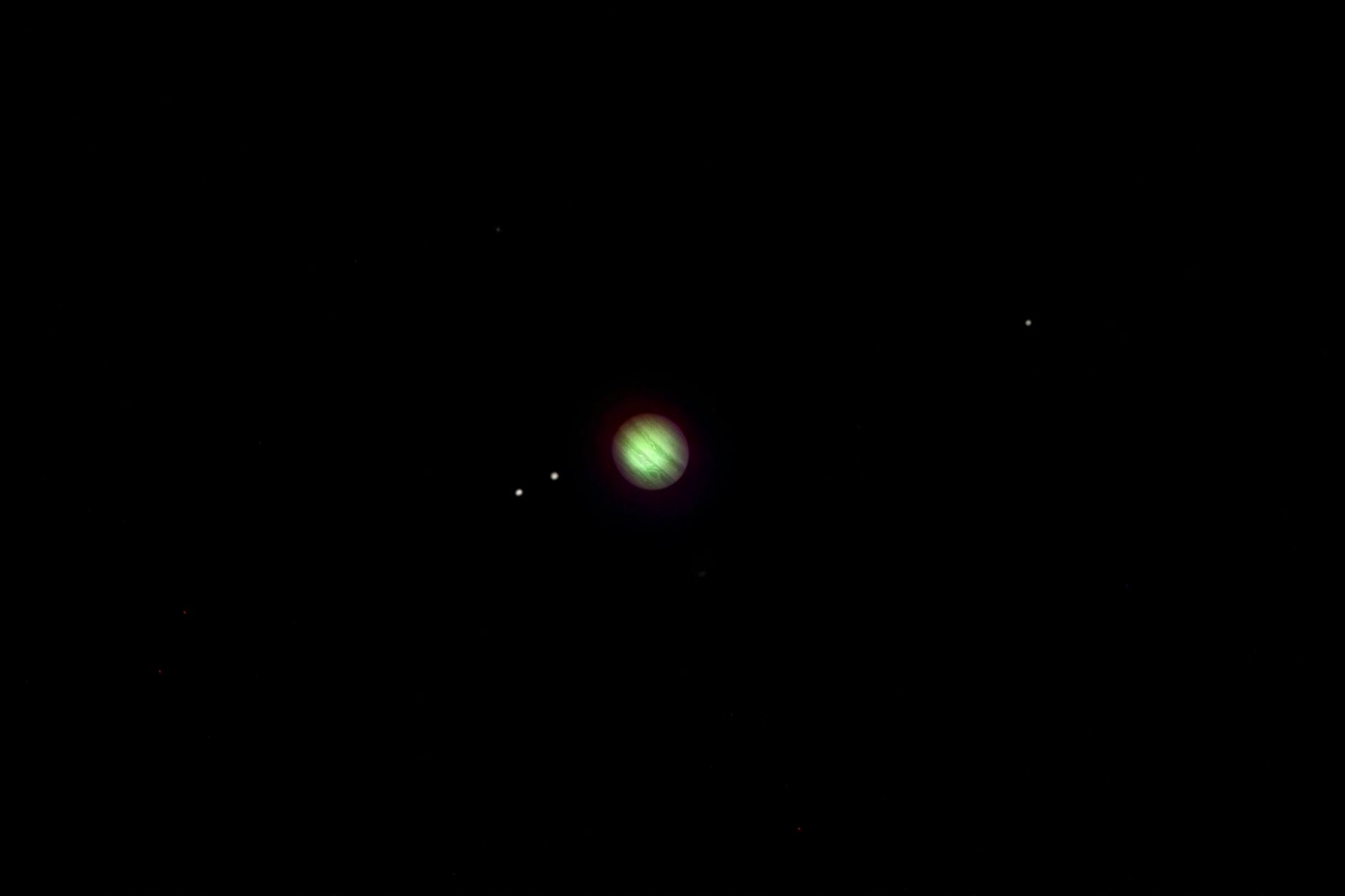
- Jupiter — the second-brightest planet in the lineup, visible to the naked eye without any equipment.
- Saturn — fainter than Venus and Jupiter, but visible in the pre-dawn sky and much sharper through binoculars or a small telescope.
- Mars — recognizable by its faint reddish tint low on the horizon.
- Mercury — the most challenging to catch, appearing low near the horizon just before sunrise.
Astronomers describe a “planet parade” as any period when three or more planets are simultaneously visible in the sky without the aid of a telescope. True alignments, in which planets appear in a tight visual line, are less common than loose parades where several planets are simply above the horizon together, which is what skywatchers experienced this week.
Best Viewing Conditions
For those hoping to catch the tail end of the display tonight, astronomers recommend finding a location away from city lights with an unobstructed view of the horizon. The hour just before sunrise typically offers the clearest look at the planetary lineup, while the moon itself remains prominent through the night thanks to its near-full illumination.
A pair of binoculars can help resolve Saturn’s rings or bring out additional detail on the lunar surface, though all the planets in this week’s parade were visible without any equipment under clear skies. Cloud cover and humidity remain the biggest obstacles for viewers on the East Coast and in the Midwest, where summer storm systems have been more frequent this month.
Part of a Busy Summer for Skywatchers
The Buck Moon and planet parade follow closely on the heels of June’s Strawberry Moon, which also drew widespread public interest when it peaked earlier this summer. That event, detailed in NarwhalTV’s coverage of June’s Strawberry Moon peak, set the stage for a summer season packed with lunar and planetary highlights.
Skywatchers won’t have to wait long for the next opportunity. August’s full moon, commonly called the Sturgeon Moon, is expected to bring its own viewing conditions, and astronomers say the current run of visible planets should remain at least partially observable into the coming weeks as Earth continues its orbit relative to its neighboring planets.
What Comes Next
NASA and independent observatories continue to track the positions of the visible planets, which shift gradually night to night as Earth and its neighbors move along their respective orbits. Saturn is approaching a period of increased visibility later this year, while Venus will remain a dominant fixture of the pre-dawn sky through much of August.
Astronomers note that while the term “planet parade” has become a popular way to describe these events, the phenomenon itself is a normal and recurring part of the solar system’s mechanics rather than a rare cosmic anomaly.
For now, anyone hoping to catch a glimpse of the fading Buck Moon alongside its planetary companions has a narrow window left this week before the moon begins to wane and the early morning planetary cluster gradually disperses across the sky.