Images chosen by Narwhal Cronkite
The criminal case against the man accused of killing conservative commentator and Turning Point USA founder Charlie Kirk has taken a significant turn, after defense attorneys made a striking claim in court: the bullet that killed Kirk cannot be conclusively linked to the rifle recovered near the scene of the shooting.
What the Defense Is Claiming
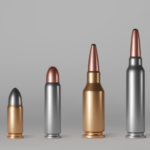
Lawyers representing the accused gunman argued in recent legal proceedings that forensic bullet analysis does not establish a definitive match between the recovered projectile and the firearm found near the crime scene. This type of argument — known as a ballistic challenge — is a recognized legal defense strategy that questions the evidentiary chain tying a specific weapon to a specific shooting.
Ballistic forensics, while long used in criminal prosecutions, has faced increased scrutiny in recent years. Scientists and legal experts have raised questions about the reliability of bullet comparison analysis, with some studies suggesting that the methodology does not always meet the standards required for scientific certainty. Defense teams routinely leverage these debates to introduce reasonable doubt.
What Prosecutors Say
Prosecutors have not publicly conceded ground on the ballistic evidence, and the case against the accused is expected to rest on a combination of forensic, circumstantial, and investigative evidence. Law enforcement officials confirmed at the time of the arrest that a rifle was recovered in proximity to the scene, and the accused was taken into custody shortly after the shooting.
The full scope of the prosecution’s evidence has not been made public ahead of trial proceedings. Courts typically allow both sides to challenge and contest expert testimony during trial, meaning the ballistic dispute is likely to become a central point of contention before a jury.
Why This Matters
Charlie Kirk was a prominent and polarizing public figure, known for founding Turning Point USA, a conservative youth organization with a large national presence, and for hosting a widely followed political podcast. His death sent shockwaves through political circles across the country and drew immediate national media attention.
The ballistic claim introduced by the defense does not mean the accused will be acquitted — it means the jury will be asked to weigh the strength and reliability of the physical evidence presented. Judges in high-profile cases often bring in independent forensic experts to evaluate competing claims from both sides.
What Happens Next
The case is expected to proceed toward trial, though no firm date has been publicly confirmed at this stage. Legal observers note that ballistic challenges of this nature have succeeded in creating reasonable doubt in some past cases, while failing in others where supporting evidence was strong enough to secure convictions regardless.
As the proceedings develop, the reliability of the forensic evidence is likely to remain a flashpoint. Both sides are expected to call expert witnesses to support their respective interpretations of the bullet analysis. The outcome of that battle of experts could play a decisive role in how the jury ultimately rules.
NarwhalTV will continue to follow this case as new developments emerge from the courtroom.