Images chosen by Narwhal Cronkite
Democratic-backed Chris Taylor Wins Wisconsin Supreme Court Race, Growing Liberal Majority
In a closely watched contest, Wisconsin’s judicial leanings shift left
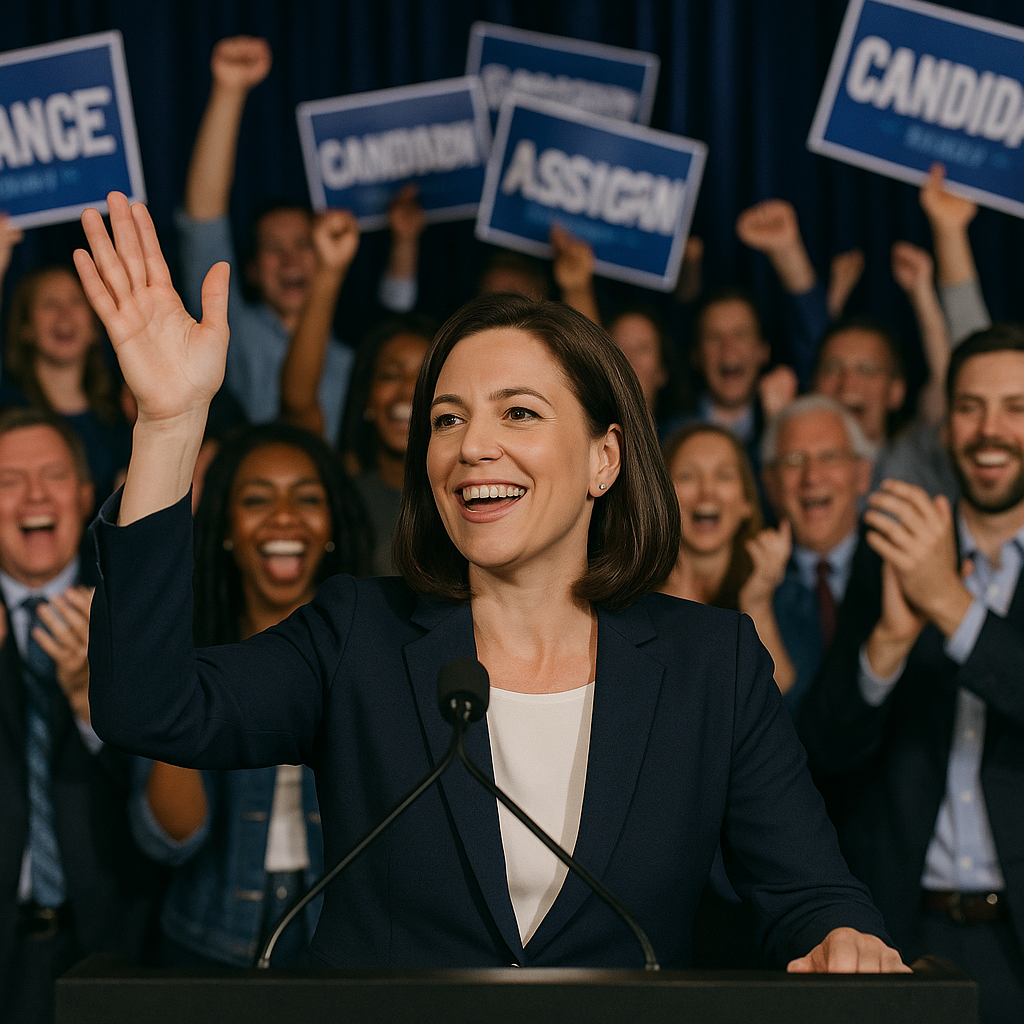
The state of Wisconsin held its breath as results from the highly anticipated Supreme Court race poured in. When the final ballot was counted, Chris Taylor, a Democratic-backed candidate, emerged victorious over her opponent, Maria Lazar, cementing a crucial 5-2 liberal majority on the state’s highest court. This outcome has far-reaching implications, not just for Wisconsin, but also for the broader national conversation on judicial politics and the balance of power. Taylor’s victory signals a continued trend of judicial elections becoming a battleground for ideological struggles.
The evolving high-stakes nature of judicial elections
Traditionally, state Supreme Court elections were subdued affairs, often lacking the polarization seen in other branches of government. However, recent years have shown a departure from this norm. As reported by Ms. Magazine, “Wisconsin’s Supreme Court election has become emblematic of high-stakes political warfare.” The 2026 race drew unprecedented attention and money, signaling how judicial contests are increasingly viewed as proxy battles for national issues.
Industry observers noted that Taylor’s campaign raised sizable funds from Democratic-aligned organizations, mirroring efforts by Republican groups supporting Lazar. These financial pipelines indicate the escalating costs of such races and underscore how courts are now perceived as vital players in advancing or blocking partisan agendas.

What Chris Taylor’s win means for Wisconsin
Chris Taylor brings both political and legal acumen to the bench. A former Democratic lawmaker in the Wisconsin legislature and an attorney with years of advocacy experience, she enjoyed robust grassroots support throughout her campaign. The court’s new liberal majority stands poised to influence major state policies, from redistricting and abortion rights to voting laws.
According to Ms. Magazine, this race garnered attention not only for its intrinsic impact but also as a bellwether for upcoming national elections. “The implications for voter access in a potentially contested 2028 presidential election cannot be overstated,” the publication emphasized. Wisconsin, long considered a battleground state, now has a judiciary that leans more firmly toward progressive interpretations of the law, potentially shaping the outcomes of legal disputes tied to national politics.
A broader discussion on the politicization of the judiciary
The Taylor-Lazar race also raises critical questions about the broader trends in American democracy. Increasingly, ostensibly nonpartisan offices such as judicial seats are becoming extensions of political battles.
Political analyst Anita Rodriguez, speaking to NarwhalTV, noted, “This isn’t unique to Wisconsin. We’re seeing similar dynamics play out across the U.S., where courts are being tasked not just with legal adjudication but also with rendering decisions that carry immense political weight.”
This trend carries both risks and responsibilities, according to analysts. While a politically engaged judiciary ensures representation of diverse ideological perspectives, it also threatens the perception of courts as impartial arbiters. The infusion of partisan funding further exacerbates fears of eroded judicial independence.
Looking ahead: The implications for 2026 and beyond
As the dust settles on Wisconsin’s Supreme Court race, all eyes turn to the effects this will have on state governance and the national stage. Taylor’s appointment solidifies a judicial environment conducive to revisiting recent controversial rulings. The liberal majority is expected to significantly influence policy debates. For instance, issues like environmental regulations, education funding, and healthcare access could see legal challenges reaching the now-liberal court.
Moreover, Wisconsin has often found itself embroiled in disputes related to election laws. It’s worth noting how the court might handle new challenges to gerrymandering, absentee ballot access, and voter ID laws—issues with monumental implications for both state and federal elections in 2026 and 2028.
Nationally, Wisconsin’s court race is a litmus test for the growing phenomenon of judicial political alignment. It remains to be seen if the trajectory set by this election will inspire similar outcomes in other states or trigger a reckoning on the need for judicial reforms to safeguard impartiality.
Final thoughts: A pivotal moment in Wisconsin and beyond
The election of Chris Taylor marks a significant moment for Wisconsin’s judicial landscape. Beyond local and state boundaries, it serves as a reflection of the current state of American democracy, where even judicial elections have become deeply polarizing. The liberal majority’s decisions in the coming years will undoubtedly be scrutinized not just within the state’s borders, but across the nation. For voters, activists, and policymakers alike, Wisconsin’s legal system is now a microcosm of broader ideological battles that define present-day politics.
As we look ahead to 2026 and 2028, Wisconsin’s Supreme Court race serves as a reminder of how even nonpartisan institutions can influence the ideological direction of the country. With this judicial lens, many will be watching not only the decisions made within Wisconsin’s courtrooms but also the ripple effects they send across a politically divided America.