Images chosen by Narwhal Cronkite
Hungary’s Prime Minister Orban Congratulates Magyar on Election Victory
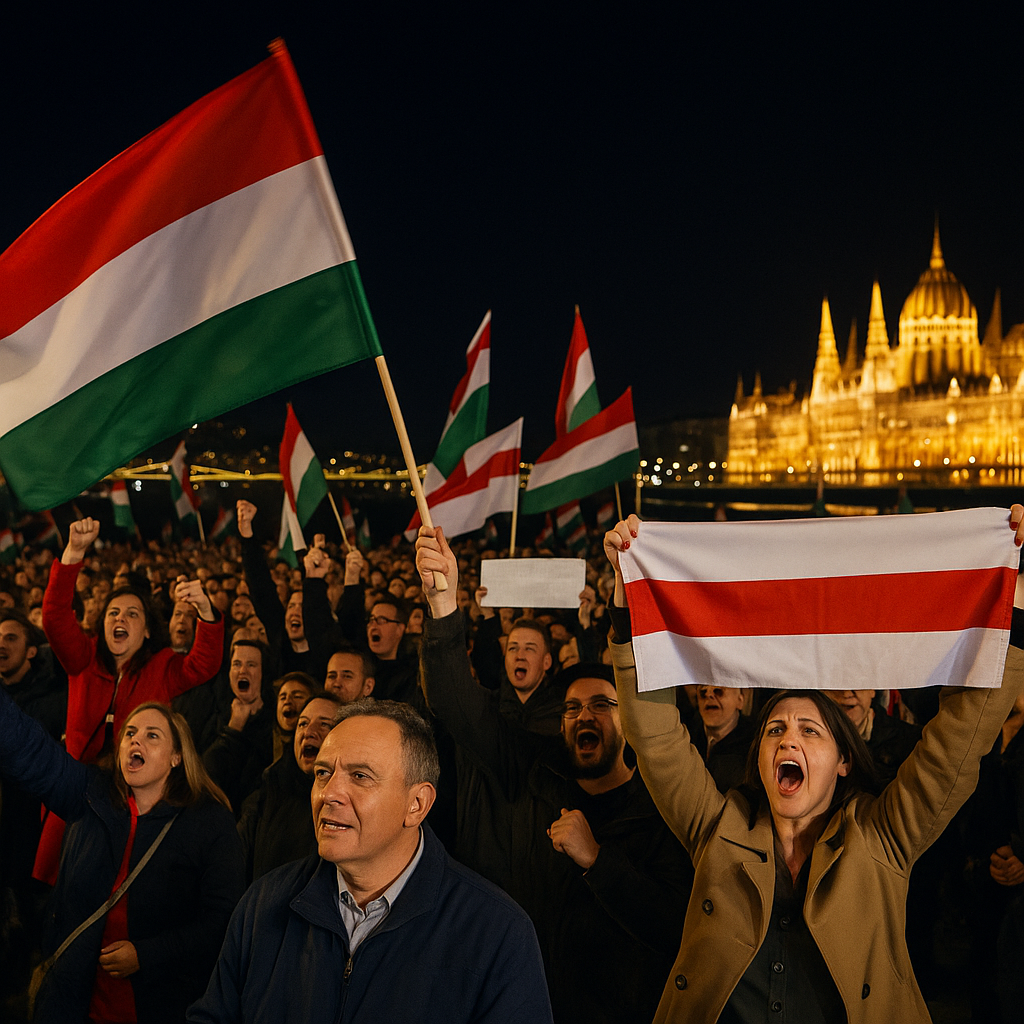
In a historic moment for Hungary’s political landscape, Prime Minister Viktor Orbán has formally conceded defeat to opposition candidate Imre Magyar, leader of the Tisza Party, as preliminary results from the April 2026 Hungarian parliamentary elections indicate a decisive win for Magyar’s coalition. This marks the end of Orbán’s 16-year grip on power and signals a significant shift in the nation’s governance, with implications for Hungary’s domestic and international policies.
A Resounding Victory for the Opposition
Early election results, with over half of the votes counted, have projected the Tisza Party gaining 136 seats in Hungary’s 199-member parliament, a majority that will enable Magyar to form a government unchallenged. In contrast, Orbán’s Fidesz Party is expected to secure just 56 seats, a sharp decline from its previous dominance in parliament. Analysts attribute this landslide victory to growing dissatisfaction with Orbán’s policies, particularly regarding issues such as judicial independence, media freedom, and economic inequality, which became central themes of the Tisza Party’s campaign.
Magyar, largely seen as a centrist reformist, ran on a platform promising to restore democratic norms, foster greater EU cooperation, and implement economic policies aimed at reducing inflation and improving social services. Speaking to supporters after the preliminary results were announced, Magyar described the outcome as “a triumph of hope over fear” and vowed to work toward uniting a divided Hungary.
The End of an Era for Orbán
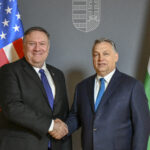
Viktor Orbán’s tenure as prime minister was defined by his nationalist and populist policies, which frequently put him at odds with the European Union. Under his leadership, Hungary experienced sweeping constitutional changes, tightened control over media and judiciary systems, and a strong emphasis on preserving national sovereignty. While his supporters credited him with stabilizing Hungary’s economy and pushing back against external pressures, critics accused him of undermining democratic norms and fostering corruption.
Orbán’s concession speech struck a conciliatory tone. “The Hungarian people have spoken, and we respect their decision,” Orbán said, urging his supporters to accept the outcome. Political observers note that this marks a rare, peaceful transfer of power in Hungary’s polarized political environment.
However, the political challenges for Orbán and Fidesz are far from over, as the party will now navigate its role as the parliamentary opposition. According to Klara Horvath, a political analyst based in Budapest, “This defeat presents an opportunity for Fidesz to recalibrate and rebuild, but it also reflects the public’s overwhelming desire for change.”

What Led to the Tisza Party’s Success?
The Tisza Party’s victory can be attributed to multiple factors that converged to create what some are calling a ‘perfect storm’ for political change. Chief among these is a rapidly growing youth voter base that aligned with the party’s progressive messaging on climate change, digital innovation, and education reform. Magyar’s charismatic leadership and pragmatic approach won the confidence of both rural and urban voters, a rare feat in Hungary’s traditionally divided electorate.
The handling of Hungary’s economic challenges under Fidesz, particularly in the face of soaring inflation and stagnant wages, also played a pivotal role. According to a pre-election poll conducted by Hungarian market research company Median, 62% of respondents identified economic conditions as their top voting issue. Tisza’s promise of fiscal responsibility and targeted welfare initiatives resonated strongly with these voters.
Internationally, Magyar has already drawn attention for his pro-European Union stance, which stands in stark contrast to Orbán’s cautious approach to EU integration. Some experts believe this alignment with European ideals may pave the way for smoother relations between Hungary and Brussels going forward.

Implications for Hungary and Beyond
Magyar’s victory could herald a new chapter in Hungary’s relationship with both its citizens and its European allies. First and foremost, his administration will face the arduous task of delivering on campaign promises. Tackling entrenched issues like judicial reforms, media freedoms, and geopolitical alliances will require considerable political capital and public support.
For the European Union, Magyar’s leadership represents an opportunity to mend strained relations with Hungary. EU officials have long expressed concerns about rule-of-law issues within the country under Orbán’s government. Returning to greater alignment with EU policies under Magyar could unlock significant funding and investment opportunities for Hungary.
Domestically, the transition of power might also serve as a test case for the resilience of Hungary’s democratic institutions. While peaceful transitions are a cornerstone of democracy, the deeply polarized nature of Hungarian politics will pose challenges for national unity in the months ahead.
What Comes Next?
As Imre Magyar prepares to take office, the road ahead is fraught with both challenges and opportunities. Key benchmarks to monitor include Hungary’s economic roadmap under the new government, its approach to constitutional reforms, and its interactions with EU institutions. Magyar’s ability to maintain the fragile coalition that propelled him to victory will also be closely scrutinized.
For Viktor Orbán, the loss is undoubtedly a moment of reckoning. Whether Fidesz re-emerges as a formidable opposition force or succumbs to internal divisions will largely depend on how the party navigates its post-defeat strategy. This election, while closing one chapter of Hungary’s history, opens another that promises to reshape its political landscape for years to come.
All eyes now remain on Budapest, as the global community watches how Hungary’s political transformation unfolds and what lessons it might hold for nations navigating their own democratic crossroads.