Images chosen by Narwhal Cronkite
Do Insects Have Consciousness? Emerging Research Challenges Long-Held Beliefs
The idea that consciousness is a phenomenon reserved for large brains has been a cornerstone of human understanding for decades. However, 2025 research published in Philosophical Transactions of the Royal Society B presents compelling findings suggesting that even insects, such as bees, may experience subjective states like emotions, attention, and cognitive bias. Could this shift our understanding of the evolutionary functions of consciousness and provoke deeper inquiry into the minds of small creatures?

Consciousness Beyond Large Brains
Consciousness, defined as subjective awareness, has often been studied in humans and larger animals capable of complex cognitive tasks. Traditionally, researchers linked consciousness to the presence of large brains capable of housing intricate neural networks. However, scientists have begun to explore the possibility that smaller-brained animals, especially insects, might possess forms of awareness supported by simpler but equally effective cognitive mechanisms.
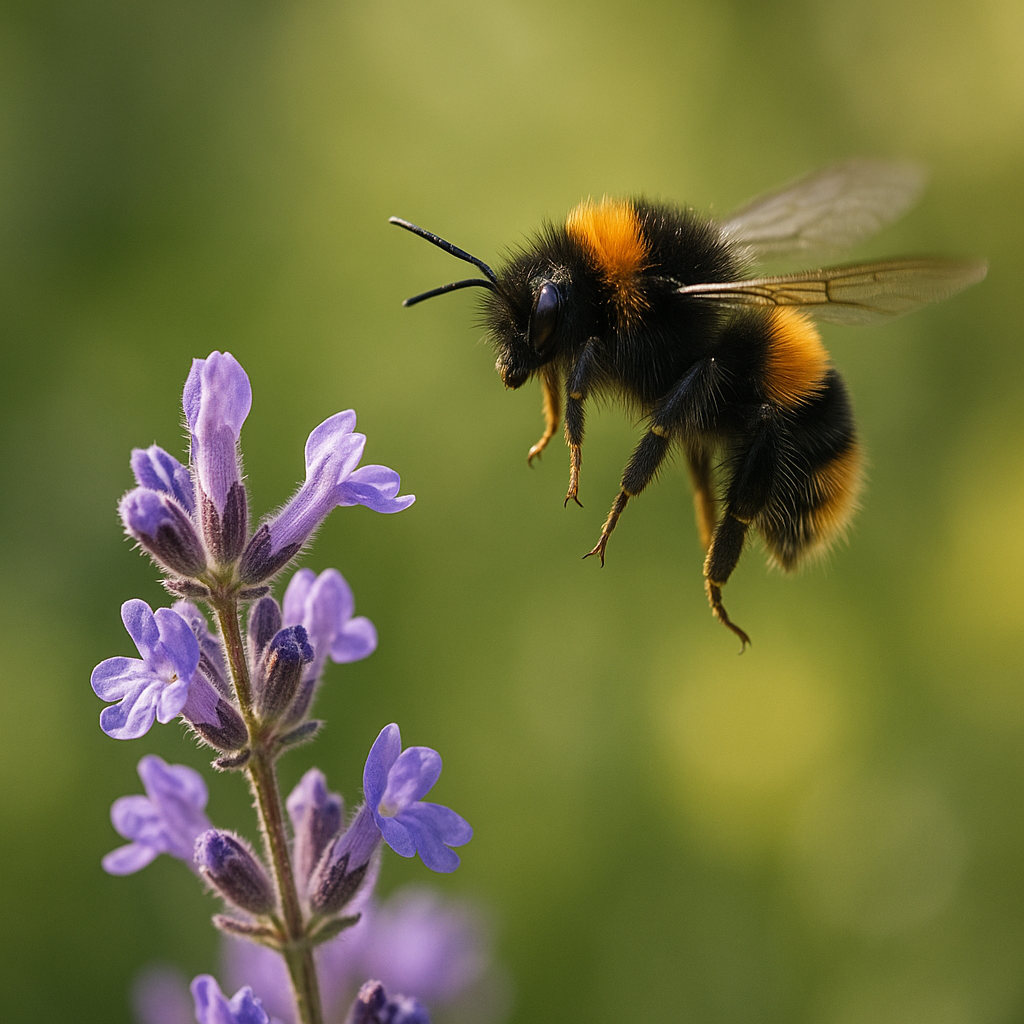
According to the Royal Society review, insects like honeybees and bumblebees demonstrate behaviors suggestive of emotional states and cognitive bias. For example, trained bumblebees exhibit elevated caution when approaching flowers after learning to avoid robotic crab spiders hidden in simulation environments. Their hesitation and scanning behavior could indicate an ability to anticipate danger—a trait commonly tied to subjective experience.
Cognitive Abilities in Tiny Brains
One of the key areas highlighted by the review was attention—the ability to selectively focus on relevant stimuli while filtering out distractions. Experiments outlined in the study demonstrated honeybees failing to distinguish camouflaged objects until guided by a more intuitive training process. Once trained, these insects could accurately differentiate objects that had previously baffled them. This suggests an adaptive learning mechanism akin to attention-based cognitive processing observed in larger animals.

Emotions, too, play a vital role. Researchers have noted signs of stress-like states in insects when faced with simulated threats or poor environmental conditions. For instance, bees subjected to predation simulations were more likely to exhibit avoidance behaviors and false alarms. Such reactions hint at a rudimentary form of emotional awareness—an experience typically thought to coexist with consciousness.
Selfhood and Sleep: The Bigger Picture
Beyond attention and emotion, the study investigates broader cognitive phenomena like selfhood and active sleep. Distinguishing between self and others provides a critical foundation for subjective experience, and some insect behaviors, such as self-recognition in mirror tests, have sparked debate on this front. While definitive conclusions remain elusive, preliminary findings hint that insects may be engaged in basic forms of self-reflection.
Furthermore, active sleep in insects appears to mirror restorative sleep functions observed in humans, where neural activity is linked to memory consolidation and preparation for future tasks. Sleep behavior in bees and flies may offer clues about how their brains process information, adapt to changes, and achieve foundational levels of perceptive awareness.
What This Means for Evolutionary Understanding
If insects indeed possess forms of consciousness, the implications for evolutionary biology could be profound. As noted by scientists in the review, understanding consciousness in insects may provide insights into the building blocks that gave rise to complex cognition in animals, including humans. The research challenges the notion that a large brain is strictly necessary for subjective experience, reshaping assumptions about the origins of awareness.
Moreover, the findings offer potential applications in robotics and artificial intelligence, where understanding minimal cognitive strategies could inspire more efficient and adaptive designs. Robots with bee-like attentional mechanisms, for instance, could learn to optimize tasks under resource constraints—mirroring nature’s economy.
The Challenges Ahead
Despite these exciting breakthroughs, proving consciousness in insects remains a significant challenge. As the Royal Society review acknowledges, scientists have yet to establish definitive criteria for pinpointing subjective experience in humans, let alone insects. Functional similarities alone cannot definitively confirm shared consciousness between species.
Commenting on the state of research, industry observers emphasize the need for multi-disciplinary efforts. “This is biology meeting philosophy at its finest,” said one entomology analyst. They argue that integrating technological advancements, such as advanced neural imaging tools, with philosophical frameworks could drive progress in understanding animal cognition across all taxa.
Looking Ahead
What might the future hold for this new frontier of consciousness research? Scientists, philosophers, and technologists alike aim to deepen inquiry into the behaviors and neural functions of insects. As researchers continue to probe how cognition evolves, they will likely uncover lessons not only about insects but also about the broader mechanisms underpinning life itself.
Ultimately, whether insects are conscious may remain unanswered for now, but the accumulated evidence suggests that the question itself deserves consideration. As the study outlines, further exploration of insect cognition may reshape humanity’s understanding of the intricacies of consciousness—a domain historically reserved for humans and higher mammals.
For now, the debate remains open, but one thing is clear: even the smallest beings might harbor deeper minds than we ever imagined.