Images chosen by Narwhal Cronkite
NASA Launches First Crewed Lunar Mission in Half a Century
Florida’s Space Coast roared to life today as NASA launched the highly-anticipated Artemis II mission, marking humanity’s first crewed journey to the Moon since Apollo 17 in 1972. This groundbreaking step not only rekindles the world’s fascination with lunar exploration but also paves the way for a new era of scientific advancements and international collaboration. Despite significant challenges and reshuffling within the Artemis program, today’s launch symbolizes NASA’s resilience and ambition to return humans to the lunar surface—and beyond.
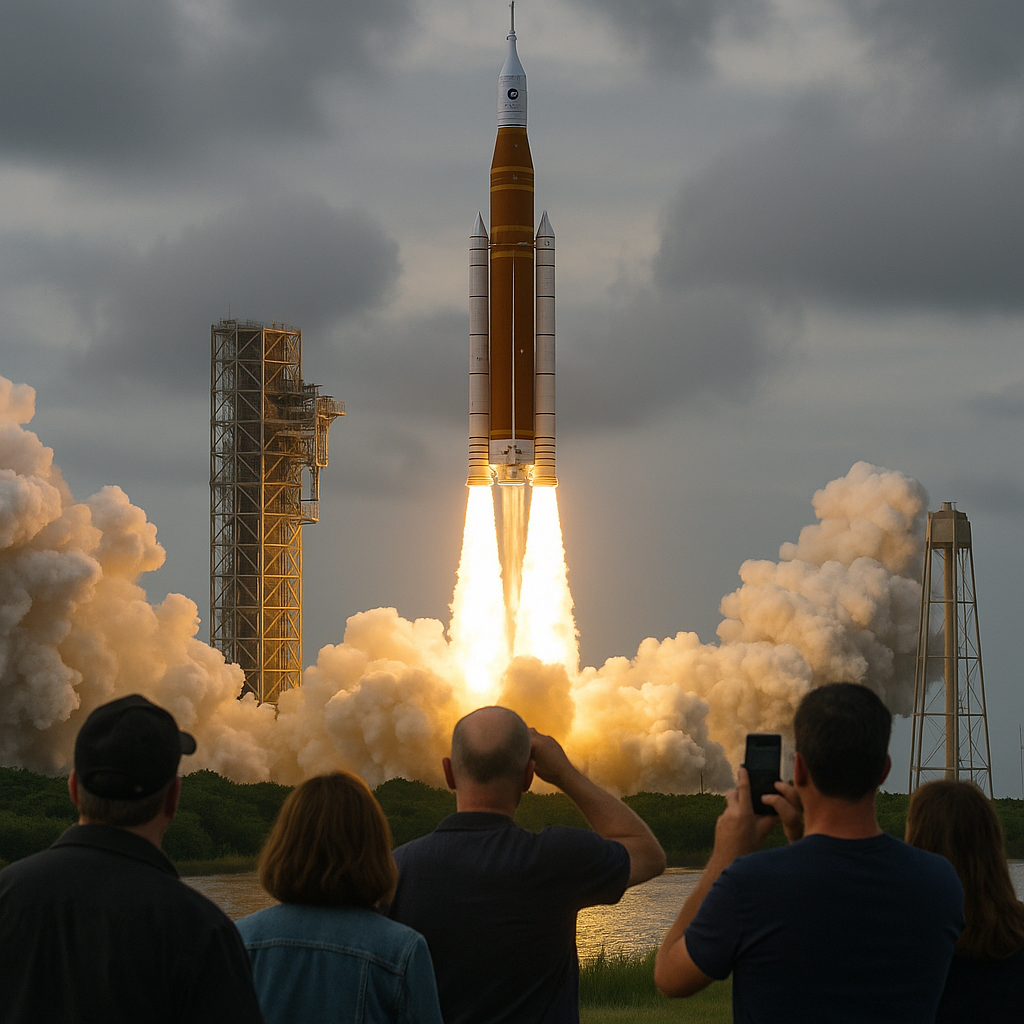
The Journey Back: Artemis II and Its Role in Lunar Exploration
The Artemis II mission, which is carrying a crew of four astronauts, represents a defining moment for NASA as it tests its ability to send humans deeper into space once again. The mission will conduct a flyby of the Moon—serving as a critical step in NASA’s long-term goals to establish a sustainable lunar presence by the 2030s. According to a report by Reuters, the Artemis II crew includes astronauts from NASA and the Canadian Space Agency, emphasizing the program’s commitment to international partnerships.
“This mission solidifies our resolve to explore the Moon, not as a destination, but as a proving ground for technologies that will one day take us to Mars,” NASA Administrator Bill Nelson said during a pre-launch press conference.
Experts, however, caution that the Artemis program faces logistical and technical hurdles. A recent report from NASA’s Office of Inspector General, highlighted by Gizmodo, raised concerns about delays and oversight issues within the Human Landing System (HLS) program. Efforts to develop the Moon landers—led by teams from SpaceX and Blue Origin—have faced scrutiny for operational risks that could jeopardize future crewed landings.
Economic and Cultural Ripples from the Launch
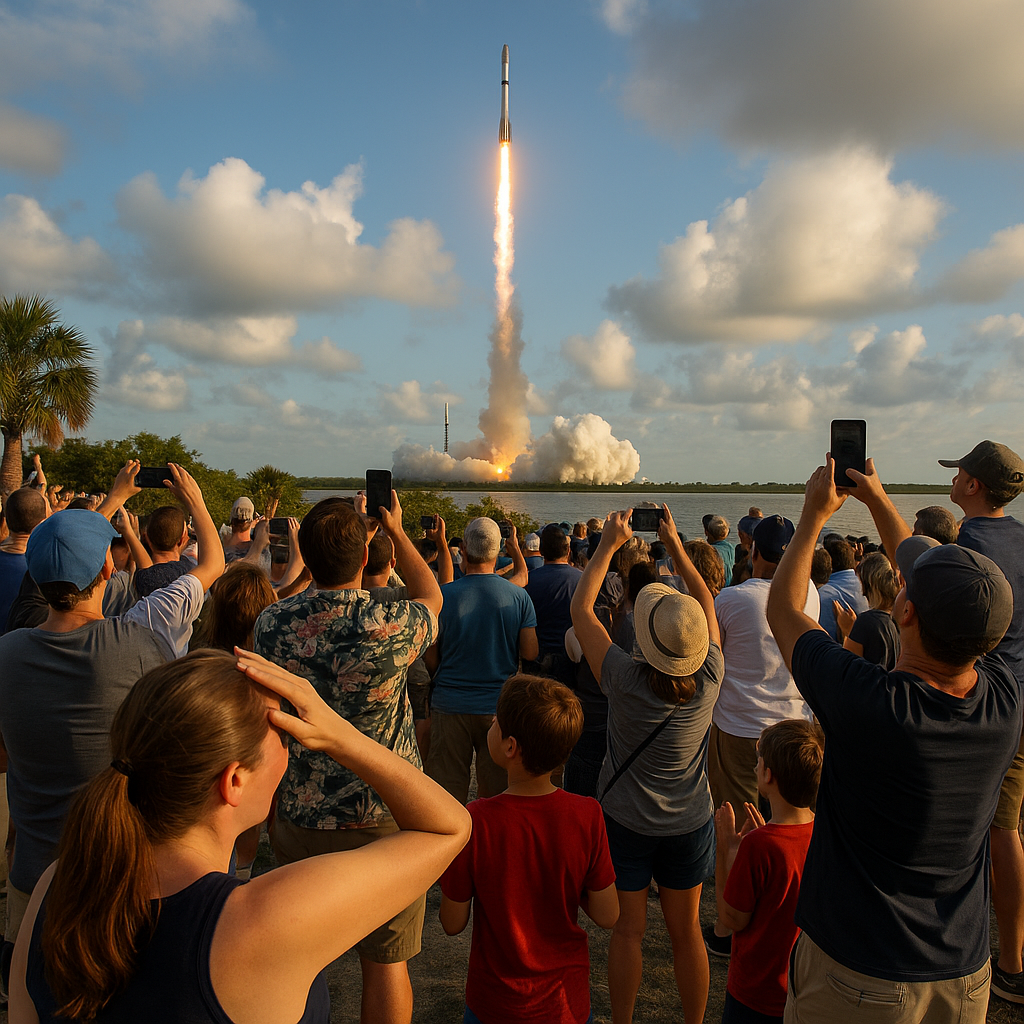
Beyond its scientific significance, Artemis II is generating substantial economic excitement, particularly in Florida’s Space Coast. According to Florida Today, the launch is expected to draw nearly 400,000 visitors to Brevard County, infusing approximately $160 million into the local economy. The influx highlights how the renaissance of human space exploration can provide tangible benefits to communities tied to the aerospace industry.
The cultural impact extends globally as well. The launch has resurrected a sense of wonder that characterized the Apollo era, inspiring a new generation of aspiring scientists, engineers, and space enthusiasts. Analysts note that the Artemis program carries symbolic importance, particularly at a time when international players—including China and private organizations—are ramping up their space exploration ambitions.
Challenges and Adjustments: A Closer Look at the Artemis Program
While today’s launch is a remarkable achievement, the Artemis program has not been without its growing pains. NASA recently announced a reshuffling of its Artemis missions, as reported by The Register. Artemis III, originally planned to include the first crewed lunar landing of the modern era, has been restructured to conduct more comprehensive in-orbit equipment tests. The first human landing is now expected during Artemis IV in 2028.
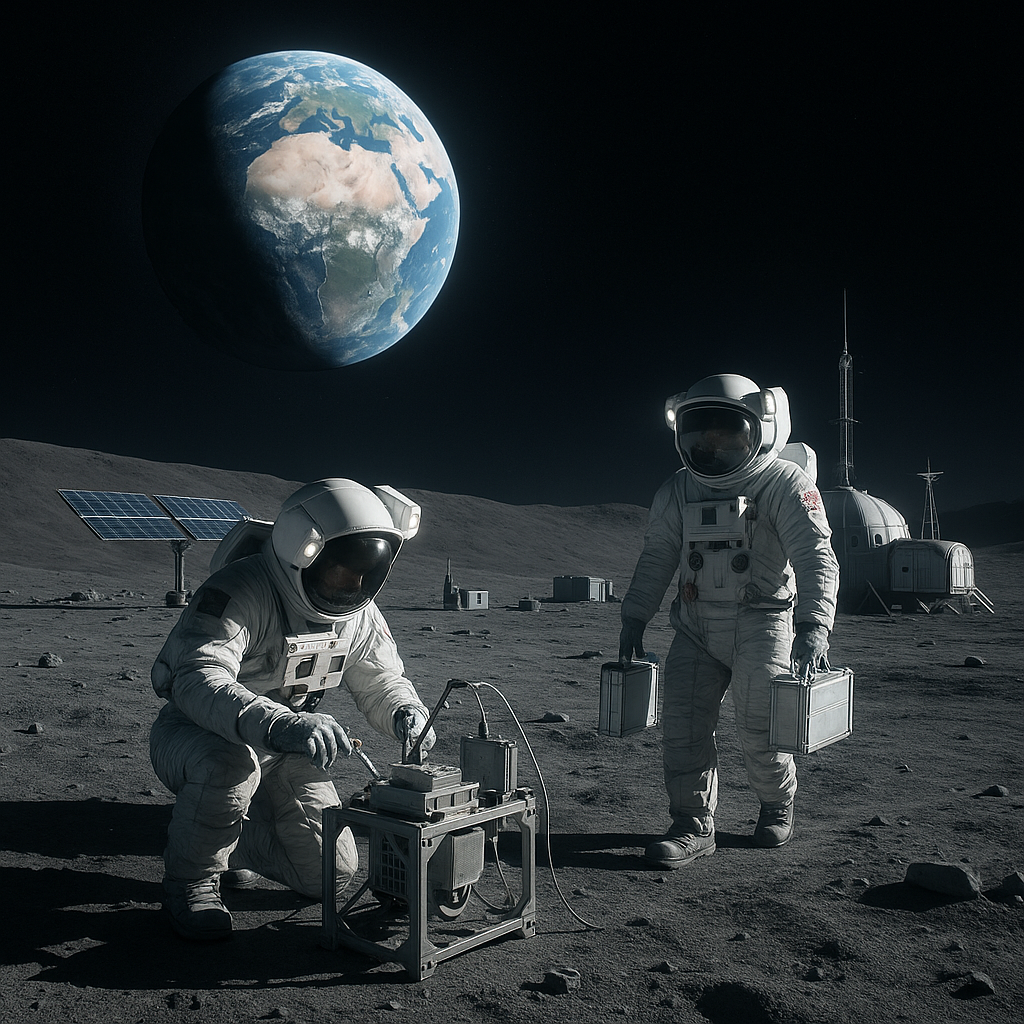
NASA’s ambitious $30 billion roadmap to establish a lunar base by 2036, unveiled earlier this year via Scientific American, underscores the complexity of the endeavor. The moon base is envisioned as a stepping stone for Mars exploration, requiring innovations in resource utilization, habitat construction, and sustainable energy generation. As the program evolves, NASA must strike a delicate balance between innovation and mitigated risk—alongside managing tight budgets and geopolitical pressures.
What’s Next for Lunar Exploration?
With Artemis II successfully on its way, the world now turns its attention to NASA’s next milestones. How seamlessly the mission returns its crew to Earth will likely influence the timeline and scope of future Artemis missions. Key challenges in the near term include expediting progress on lunar landers, expanding international collaborations, and securing consistent funding from the U.S. Congress.
Observers also point out that NASA faces increasing competition in low-Earth orbit and deep-space exploration. China’s Chang’e program has made significant strides, while private companies like SpaceX and Blue Origin continue to vie for positioning in the burgeoning commercial space industry. This competitive landscape adds to the urgency for NASA to deliver on its ambitious Artemis objectives.
Implications for Humanity and Beyond
As Artemis II takes its place in history, its broader implications are profound. This mission is much more than a technological achievement or an economic stimulus: it is a statement about humanity’s collective potential. By venturing back to the Moon, NASA is not merely revisiting old territory; it is redefining the possibilities for scientific discovery, international unity, and new frontiers of exploration.
Yet the path forward is fraught with challenges. The Artemis program must maintain its momentum amidst mounting scrutiny, competition, and budget uncertainties. As today’s liftoff demonstrates, however, NASA’s enduring vision for lunar exploration continues to inspire—and chart a course toward untapped horizons. The world will undoubtedly be watching.