Images chosen by Narwhal Cronkite
Pilot May Have Found Amelia Earhart’s Long-Lost Plane Using Google Earth
One of aviation’s greatest mysteries may be closer to resolution thanks to the efforts of pilot Justin Myers, who believes he has discovered the wreckage of Amelia Earhart’s Lockheed Electra—missing since 1937—through Google Earth satellite images. Myers’ claim, published in a March 15 blog post and supported by his analytical work, has sparked renewed interest in the fate of Earhart and her navigator, Fred Noonan, whose disappearance during their ambitious round-the-world flight left generations captivated.

Following the Trail: How a Chance Investigation Unfolded
According to Myers, his curiosity was sparked after watching a documentary by National Geographic about Earhart’s final flight. Leveraging his expertise as a pilot, Myers decided to retrace potential paths Earhart’s aircraft might have taken using Google Earth imagery. His methodical search led him to Nikumaroro Island in the South Pacific, where evidence suggested a crash-landing could have occurred on the northwestern reef flat.
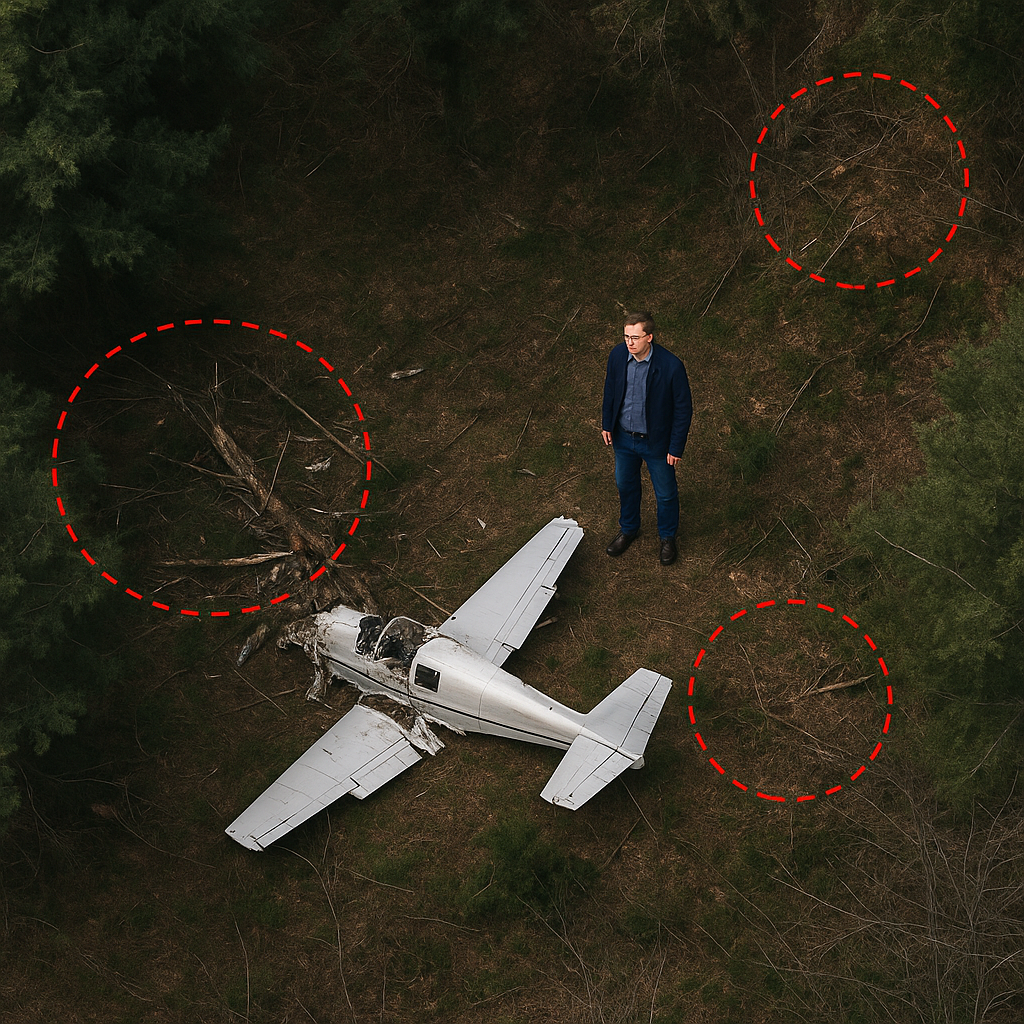
On Google Earth, Myers noticed several intriguing objects in a sandy section of the island, including a straight, dark-colored feature that resembled part of an aircraft fuselage. Measurements aligned with the dimensions of Lockheed Electra 10-E NR16020, Earhart’s iconic airplane. Myers went further in his analysis, identifying what seemed to be portions of a radial engine and a partially exposed wheel—components consistent with the Electra.
“I was struggling to see this as anything but the debris of a lost vintage aircraft hidden away for decades,” Myers shared in his blog post. While his observations are purely speculative without physical confirmation, they align with existing theories suggesting Earhart may have attempted to land on the reef, a scenario reinforced by the work of Dr. Richard Pettigrew, an archaeologist specializing in evidence-based investigations of historical anomalies.
The Nikumaroro Theory: Piecing Together the Evidence
Nikumaroro Island has played a central role in many theories about Earhart’s disappearance. The low-lying atoll in the Pacific, now uninhabited, has long been suspected as a potential crash site. According to Popular Mechanics, items like human bones (possibly Earhart or Noonan’s remains), remnants of campfires, and tools have been uncovered on the island over the years, hinting at attempts by stranded individuals to survive after a forced landing.
Dr. Pettigrew elaborated on the theory in his public statements, suggesting that the plane likely sank shortly after landing due to rising tides and waves. His archaeological team, working in collaboration with researchers and historians, has documented sediment layers and debris that may point to the presence of an aircraft. “We try to account for the evidence objectively—I believe we’re on the right track given what we’ve uncovered,” Pettigrew said.
Why This Discovery Matters
Finding tangible evidence of Earhart’s final moments would represent one of the most significant historical breakthroughs of the 21st century. Her legacy as a pioneer—attempting to become the first woman to fly around the globe—is tightly interwoven with modern aviation history, women’s rights movements, and advancements in flight technology.
Many observers note that solving the mystery goes beyond historical curiosity; it could shed light on the methods and resilience of explorers navigating the unknown. As reported by Fox News, uncovered traces of the Electra on Nikumaroro’s reef would lend credibility to survival-focused theories, including speculation that Earhart lived temporarily after the crash only to face fatal challenges on the unforgiving island.
Some commentators also highlight the potential synergy between satellite technology and traditional investigative tools. Myers’ discovery illustrates how open-source platforms like Google Earth can complement fieldwork and academic research. “This approach democratizes archaeology and encourages fresh perspectives from everyday individuals and experts alike,” said a technology analyst familiar with the case.
Challenges to Verification and the Road Ahead
While Myers’ findings are compelling, multiple challenges remain before any definitive conclusion can be reached. First and foremost, on-site investigation is required to confirm the presence of the supposed aircraft components on Nikumaroro Island. This requires significant logistical efforts, funding, and permissions, as the area is remote and protected as part of the Phoenix Islands Protected Area.
Additionally, skepticism persists within the scientific community. Experts argue that identifying potential wreckage through satellite images alone is prone to misinterpretation. Some analysts caution that Myers’ observations could merely represent geological formations or unrelated debris.
A solution to Earhart’s disappearance would likely require collaboration across disciplines: aviation historians, archaeologists, engineers, and marine researchers. Major institutions, such as The Archaeological Legacy Institute and The International Group for Historic Aircraft Recovery (TIGHAR), are among the organizations actively investigating Earhart’s case.

A Legacy of Curiosity and Exploration
Amelia Earhart remains a cultural touchstone, celebrated for her courage and determination as much as for her achievements in aviation. Her mysterious disappearance adds a layer of intrigue to her legacy, inspiring countless theories, books, documentaries, and investigations over decades.
Justin Myers’ potentially groundbreaking discovery is a testament to this enduring fascination. While no definitive proof has yet emerged, the renewed focus on Nikumaroro Island highlights the importance of innovative investigative techniques, from satellite imagery to ground-based archaeology.
What’s next? Observers will be closely watching whether this discovery garners the funding and institutional support needed for an expedition to confirm Myers’ satellite findings. For history enthusiasts, aviation experts, and anyone captivated by mysteries, a resolution to Earhart’s disappearance would not only fill gaps in a historical narrative but also serve as an inspiring reminder of humanity’s drive to explore.