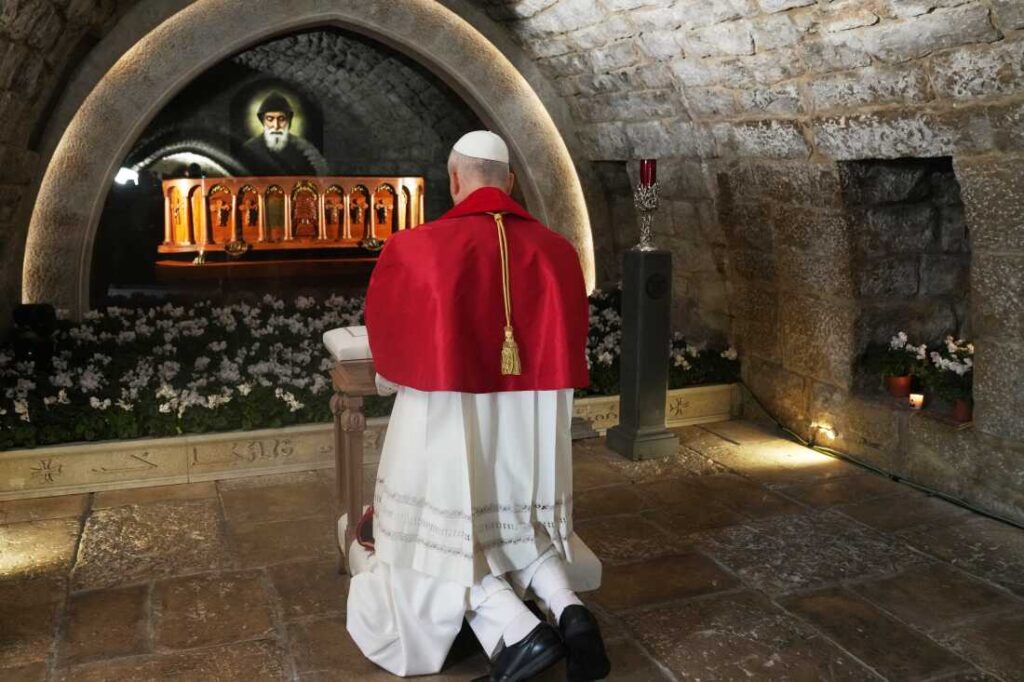
Pope Leo XIV ended his first overseas trip with a stark image that summed up much of Lebanon’s recent history. At the ruined port of Beirut, where a 2020 explosion killed 218 people and devastated entire neighbourhoods, he stood in silence before a monument to the dead while families held up photographs of their loved ones.
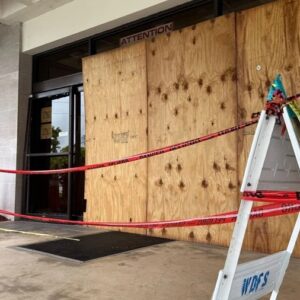
The scene unfolded beside the scorched shell of the last standing grain silo and piles of burned-out cars, still bearing the scars of the blast. The explosion, triggered by hundreds of tons of ammonium nitrate stored in a warehouse, caused billions of dollars in damage and became a symbol of official negligence and impunity.
After praying, Leo moved slowly along a line of relatives, grasping their hands and listening briefly to their stories. For many, the gesture was both a moment of consolation and a public reminder that their campaign for justice is far from over.
Families still waiting for answers
Five years after the port disaster, no senior official has been convicted. The judicial investigation has been stalled repeatedly by political maneuvering and challenges from those it implicated, fuelling public anger and deepening mistrust in state institutions.
Relatives of the victims used the visit to press their case. Some carried banners accusing authorities of blocking the truth. Others simply clutched pictures and small signs demanding accountability.
“The explosion was a crime,” said one sister of a man killed in the blast. “Lebanon has to end impunity and ensure justice is served.” Another mother, whose teenage son died at home when the shock wave tore through their building across from the port, said the country cannot heal while those responsible remain untouched.
She welcomed the pope’s prayer and attention, but made clear that it would not replace a proper trial. The anger, she said, might soften for a time, but would not truly fade “until justice is served.”
A waterfront Mass for a wounded country
Immediately after visiting the port, Pope Leo celebrated Mass on the Beirut waterfront before an estimated crowd of 150,000 worshippers. Flags from across Lebanon’s religious and political spectrum waved in the sea breeze as he spoke about a people worn down by crisis.
He listed the burdens: economic collapse, the shattered lives left by the blast and the lingering fear of renewed war. It was normal, he said, to feel “paralyzed by powerlessness in the face of evil” and overwhelmed by so many hardships at once.
But he urged the country not to surrender to despair or retreat into factionalism. “Let us cast off the armor of our ethnic and political divisions,” he said, calling on Lebanon’s religious communities to open themselves to “mutual encounter” and revive “the dream of a united Lebanon” where peace and justice go hand in hand.
“Lebanon, stand up!” he cried. “Be a home of justice and fraternity. Be a prophetic sign of peace for the whole of the Levant.”
A quiet stop with the ‘forgotten souls’
Earlier in the day, Leo visited De La Croix hospital, which specialises in mental health care. The stop was quieter than the waterfront Mass but no less charged with emotion.
Children greeted him dressed as Swiss Guards, cardinals and even a miniature pope. Inside, the mother superior described the patients as “forgotten souls, burdened by their loneliness” — people who rarely appear in political speeches or economic plans.
Leo used the moment to warn against a society that “races ahead at full speed” pursuing a narrow idea of well-being while ignoring those who are most fragile. A country, he suggested, is judged not only by its monuments and markets but by how it treats those who are easiest to overlook.
For many families and staff, the visit felt like a rare public acknowledgement that the psychological toll of crisis and war is part of Lebanon’s story, too.
A message to the south and a warning against war
The Pope Leo Lebanon visit did not include a trip to the country’s south, where communities are still recovering from last year’s war between Hezbollah and Israel and live under the threat of continued airstrikes. That absence disappointed some Christians in the region, but Leo addressed them directly in his farewell speech at Beirut airport.
He greeted all the regions he had been unable to reach — Tripoli and the north, the Beqaa valley and the south — describing Sidon and Tyre as “biblical places” now facing “conflict and uncertainty.” He called for an end to attacks and hostilities, insisting that “armed struggle brings no benefit”, while negotiation, mediation and dialogue build something lasting.
Lebanon’s president thanked him for the visit, calling the Lebanese “a faithful people who deserve life” and asking the pope to keep the country in his prayers. As Leo departed, many were left with a double impression: an image of a pope praying amid the wreckage of the port, and a challenge to turn that symbolism into concrete steps toward justice and peace.