A volunteer researcher sifting through records at a British archive has discovered a rare original copy of the United States Declaration of Independence — a find that historians are calling one of the most unexpected American document discoveries in years. The copy was unearthed in the UK, far from the halls of Philadelphia where the document was first adopted on July 4, 1776, and reported by the BBC as a genuinely rare parchment-era version of the founding text.
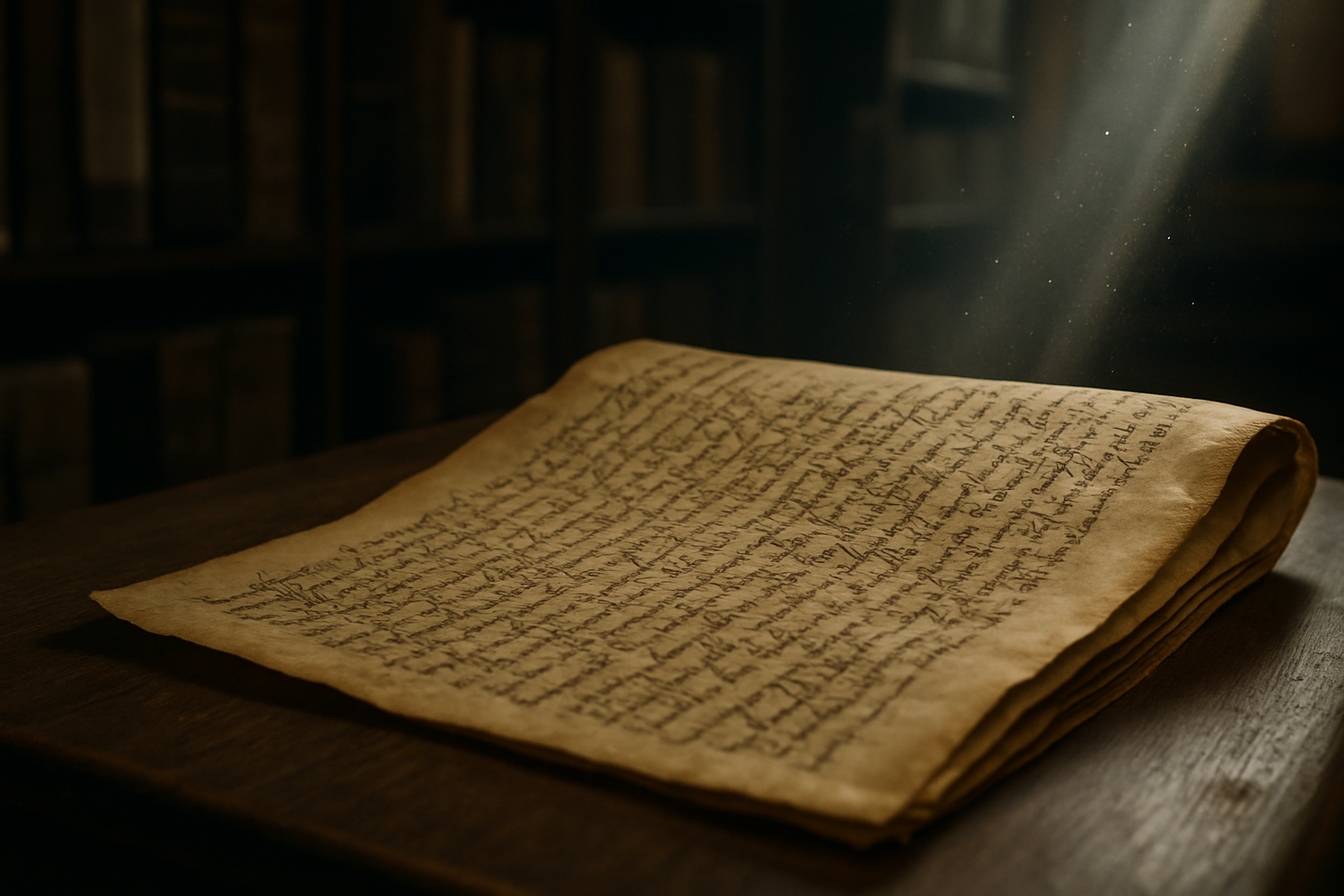
The non-obvious detail that sets this apart: researchers believe the copy may date to 1776 itself, making it a near-contemporary reproduction of the original — not a later facsimile printed for public circulation. That distinction matters enormously for authentication and potential valuation.
How a Volunteer Made the Find in a UK Records Room
The discovery was made not by a professional archivist but by a volunteer — the kind of unpaid history enthusiast who logs hours in dusty stacks and occasionally changes what we know about the past. The document was found within a UK archive, which is itself a reminder that American revolutionary history scattered across the Atlantic in real time, carried by loyalists, diplomats, and merchants who moved between the colonies and Britain during and after the Revolution.
Archivists confirmed the document’s existence after the volunteer flagged it. Experts have since begun the process of formally examining the copy to determine its precise age, origin, and chain of custody — steps that will determine whether it ranks among the handful of known 1776-era copies still in existence.
Only a small number of authenticated contemporaneous copies of the Declaration are known to survive worldwide. The most famous — the engrossed parchment held by the National Archives in Washington, D.C. — is the one bearing the signatures of 56 delegates. But Congress ordered hundreds of printed copies, called the “Dunlap broadside,” distributed in July 1776, and a small number of those have surfaced at auction over the decades, fetching millions of dollars each.
Why This Copy’s Age and Location Change the Story
Finding a potentially 1776-dated copy in a British archive adds a layer of historical irony that scholars will be unpacking for some time. Britain was, of course, the sovereign power the Declaration was written to formally reject. Documents from that era sometimes ended up in British hands through official channels — intercepted dispatches, loyalist couriers, or copies sent to the Crown as evidence of colonial rebellion.
If the provenance can be confirmed, the copy could offer new insight into how widely the Declaration circulated in Britain immediately after its adoption — a question that gets at how quickly the message of American independence reached its intended audience across the Atlantic.
The timing of the announcement, landing on July 4, 2026 — the 250th anniversary of the Declaration’s adoption — gives the find an almost theatrical quality. America is marking its semiquincentennial this year with celebrations nationwide, and the emergence of a previously unknown copy from a British records room is about as fitting a historical footnote as any anniversary could produce.
What Happens to the Document Now
Authentication is the immediate next step. Experts will examine the ink, parchment, and typeface to establish whether the document is consistent with 18th-century production methods. Handwriting analysis and carbon dating may also be employed. The process can take months.
Once authenticated, questions of ownership and custody become central. Because the document was found in a UK archive, it is held under British jurisdiction — raising the possibility of diplomatic or institutional discussions about where it ultimately belongs. American institutions, including the National Archives, have in the past expressed interest in repatriating founding-era documents held abroad, though such negotiations are rarely swift.
For context on how rare document discoveries reshape our understanding of history, consider that scientists working in other fields have shown similar patience pays off — much like researchers who spent years perfecting cartilage regeneration before a single breakthrough changed the field entirely. Painstaking archival work runs on the same logic: the find only happens because someone kept looking.
The volunteer who made the discovery has not been publicly named. Whoever they are, they just handed historians and the American public a 250th birthday gift that nobody saw coming — and one that could, depending on what the authentication reveals, rewrite a small but real corner of the story of how the Declaration spread across the world in the summer of 1776.
Formal authentication results are expected to be released by the archive later this year. If the copy is confirmed as an original 1776 printing, it will immediately become one of the most closely watched founding documents outside the United States — and a very complicated conversation between two old allies about who gets to keep it.