Images chosen by Narwhal Cronkite
U.S. Detects Iran’s Moves in the Strait of Hormuz: What’s at Stake?
The Strait of Hormuz, a critical chokepoint for global oil trade, has once again become the focus of geopolitical tension. According to a report from CBS News, U.S. intelligence has detected signs indicating that Iran may be preparing to lay mines in the Strait. This potential escalation raises concerns about regional security and the global energy market’s stability.
As one of the world’s most strategically significant waterways, the Strait of Hormuz has long been a flashpoint in global politics, often serving as a barometer for tensions between Iran and Western powers. But what could these recent developments mean for the broader geopolitical landscape, and how might this affect the global economy?
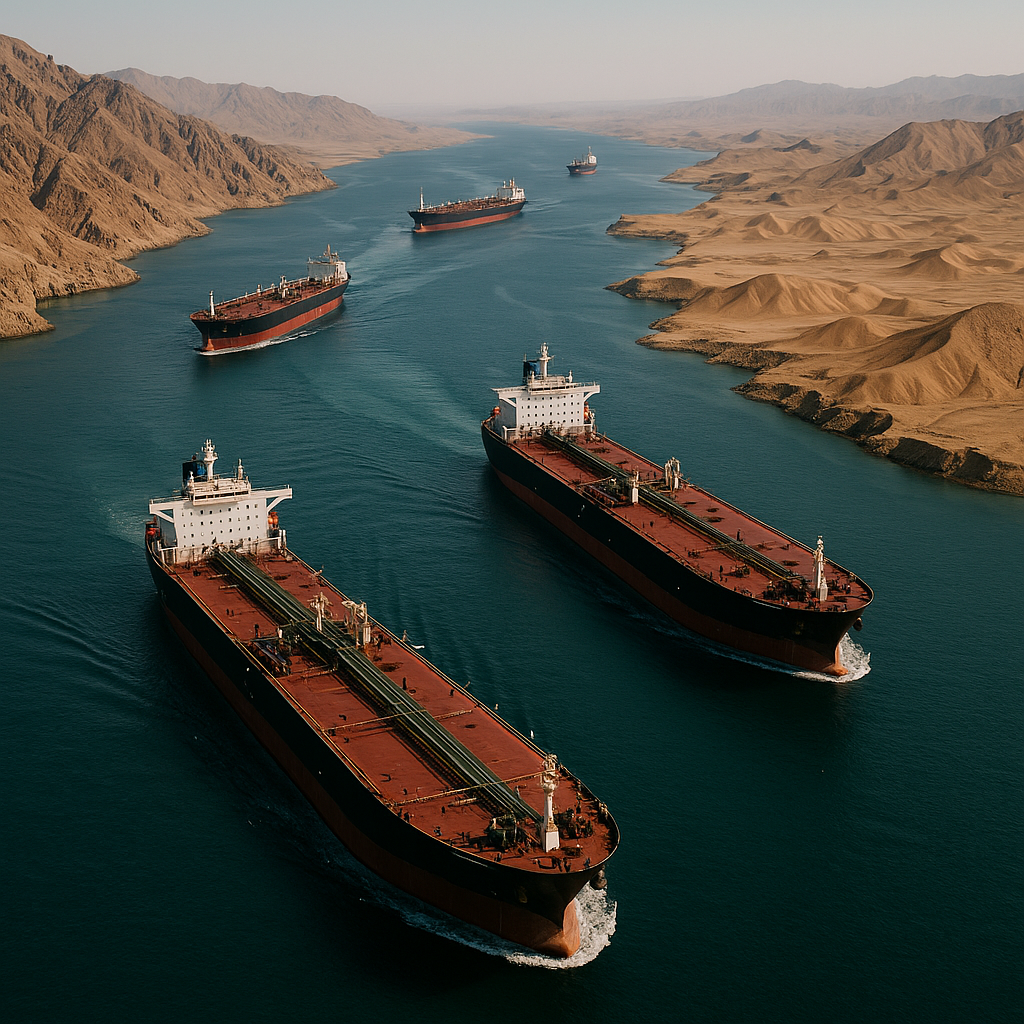
Why the Strait of Hormuz Matters
Situated between the Persian Gulf and the Gulf of Oman, the Strait of Hormuz is a narrow passage through which roughly 20% of the world’s petroleum products pass. This amounts to nearly 17 million barrels of oil per day, according to estimates from the U.S. Energy Information Administration (EIA). Any disruption in this maritime corridor could have profound repercussions for global oil prices, supply chains, and regional dynamics.
“The Strait of Hormuz is essentially the heartbeat of global energy commerce,” commented Dr. James Porter, an energy analyst from the London-based Institute for Global Energy Studies. “A blockade or a perceived threat in the region sends immediate ripples through oil futures markets. We’ve seen this time and time again.”
While the presence of naval forces, including the U.S. Fifth Fleet, has historically ensured relative stability in the region, the threat of new mines represents a concerning shift. If mines are deployed, the cost of securing shipping lanes will likely increase, resulting in higher shipping insurance premiums and, inevitably, costlier crude.
Iran’s Strategy: A Symbolic or Serious Threat?
Iran has a history of using mine-laying tactics in the Persian Gulf during times of high tension, especially when its economy is under pressure from sanctions. Past incidents during the 1980s Iran-Iraq War demonstrated that just a handful of mines could dramatically alter the security landscape in the region. However, some experts suggest that Iran’s recent activity may be more symbolic than operational.
“Iran often employs such moves as a means of signaling its displeasure toward U.S. policies or sanctions,” said Dr. Nazanin Farzaneh, a Middle East expert at Georgetown University. “The goal may not always be to follow through with overt acts of aggression, but to remind the world—and especially its adversaries—of the leverage it can exercise via the Strait of Hormuz.”
This latest intelligence report comes at a time when Iran continues to reel under heavy economic sanctions. If confirmed, the mining effort could represent an attempt to leverage its geographic advantage by threatening disruptions to one of the world’s most vital transportation corridors.

Implications for Regional and Global Security
In the event of mining in the Strait, a heightened military response is almost certain. U.S. naval forces, already stationed in the Gulf region, would have to conduct extensive mine-clearing operations, which could further escalate tensions with Iran. Neighboring countries, particularly Gulf Cooperation Council (GCC) states reliant on oil exports through the region, might also bolster their naval efforts or call upon international assistance.
Regional players like Saudi Arabia and the United Arab Emirates are likely monitoring the situation closely. Both nations have previously sought to diversify their oil export routes, such as constructing pipelines that bypass the Strait entirely. However, these alternatives are limited in capacity and wouldn’t be able to fully offset a prolonged disruption.
Either way, the geopolitical stakes are high. “The danger isn’t just in the immediate disruption to oil flows,” remarked Michael Kennedy, a former U.S. Department of Defense official. “It’s how quickly an incident in the Strait of Hormuz can spiral into a broader military or economic conflict.”
Economic Ripple Effects: Oil Markets on Edge
The global oil market is incredibly sensitive to Middle East tensions, and even the fear of disruption can send prices soaring. Indeed, Brent crude climbed significantly during previous incidents in 2019 when attacks on tanker vessels, which were attributed to Iranian forces, unsettled markets.
If Iran proceeds with its mine-laying efforts, analysts expect an immediate surge in oil prices. “Even the suggestion of mines in the Strait could set off speculative trading,” noted Angela Marsh, a commodities strategist with Gulf Energy Partners. “We are already seeing fragile balances between supply and demand due to ongoing production cuts by OPEC+. The timing here couldn’t be worse.”

What’s Next? Scenarios and Global Responses
The coming weeks will be critical in determining how this situation evolves. For now, the U.S. and its allies will likely maintain a watchful eye on Iranian activities in the Strait. Diplomatic channels may also see increased activity as oil-importing countries push for a peaceful resolution to avoid disruptions.
On the international stage, the U.S. could use this intelligence to rally global support for tightening enforcement of sanctions on Iran. Meanwhile, Tehran may seek backing from its allies, such as Russia or China, to stave off additional economic or political isolation.
Observers note that technological advancements, such as the use of drones and autonomous underwater vehicles (AUVs), have created new avenues for both surveillance and mine-clearance capabilities. “If Iran persists, we may see an unprecedented level of international collaboration in deploying these technologies to ensure safe passage in the Strait,” said William Rowe, a maritime security expert.
Conclusion: A Tense Road Ahead
The Strait of Hormuz remains a linchpin in the global energy landscape, and even perceived threats to its security are enough to send shockwaves across the geopolitical and economic spectrum. Whether Iran’s latest moves are meant to project power or signal discontent, the ripple effects are already being felt.
As tensions simmer, stakeholders across energy markets, security sectors, and national governments are bracing for what comes next. For now, the world watches with anticipation, knowing that the smallest miscalculation could have outsized consequences.
Stay tuned as this developing story unfolds, and keep an eye on oil prices—often the canary in the coal mine for trouble in the Middle East.