Creepy, zany, and obviously fake content now has an official label in the dictionary: “slop.”
Merriam-Webster has picked slop as its 2025 word of the year, updating the term from its older meanings—soft mud or something of little worth—to a new definition: “digital content of low quality that is produced usually in quantity by means of artificial intelligence.”
Greg Barlow, Merriam-Webster’s president, said editors kept seeing the word surge in lookups as AI-generated material spread across social feeds and search results. For many people, “slop” has become a shorthand for low-effort AI output: fake news stories that look real, jumbled AI-written books, surreal ads and bizarre mash-up videos.
AI tools, memes, and a Pentagon turtle
The rise of the Merriam-Webster word of the year slop is tied directly to the explosion of generative AI tools. Video systems like OpenAI’s Sora can now spin up startlingly realistic clips from a few lines of text, while image generators and writing bots flood platforms with endless synthetic content.
That capability has obvious upsides for creators, but also serious downsides. Social networks are awash in doctored clips of celebrities and dead public figures, raising alarms over deepfakes, misinformation, and copyright abuse.
The problem is no longer theoretical. Last month, Defense Secretary Pete Hegseth shared a manipulated image based on the Canadian children’s show Franklin, turning its gentle turtle protagonist into a grenade-carrying fighter to defend U.S. military actions in Venezuela. The original cartoon is meant to teach preschoolers empathy and kindness; in Hegseth’s post, the six-year-old character became a propaganda device.
For critics, that kind of meme is textbook slop: a viral, emotionally charged AI remix that muddies the line between entertainment, politics, and reality.
A word that signals both dread and defiance
“Slop” is not a pretty word. It calls up images of pigs crowding around a trough or an unappetizing bucket of leftovers. The new AI sense leans into that same unease—algorithmic mush, stitched together from biased training data, often offensive, incoherent or simply pointless.
But Barlow argues the word also points to something hopeful. If people are looking up “slop,” he said, it’s because they’ve become more aware of what feels fake or shoddy online and are hungry for the opposite: work that is real, carefully made, and obviously human.
In that sense, the Merriam-Webster word of the year slop functions as a kind of protest. It’s a way of rolling your eyes at AI overreach and insisting that not every creative act can—or should—be automated.
How Merriam-Webster picks its word of the year
Merriam-Webster has been choosing a single word of the year since 2003. The process is data-driven but not entirely robotic: editors pore over spikes in search traffic and track which words keep surfacing in news coverage, social media, and cultural debates. Then they argue their way to a consensus on which term best captures the mood of the year.
Some words are constant lookup magnets—“ubiquitous,” “paradigm,” “albeit,” even much-debated “irregardless”—but they are usually filtered out because they don’t define a specific moment.
By contrast, slop joins a short list of time-stamped choices: “polarization” in 2024, reflecting deep political division; “authentic” in 2023, amid worries about AI and identity; and “gaslighting” in 2022, for the spread of manipulative truth-bending.
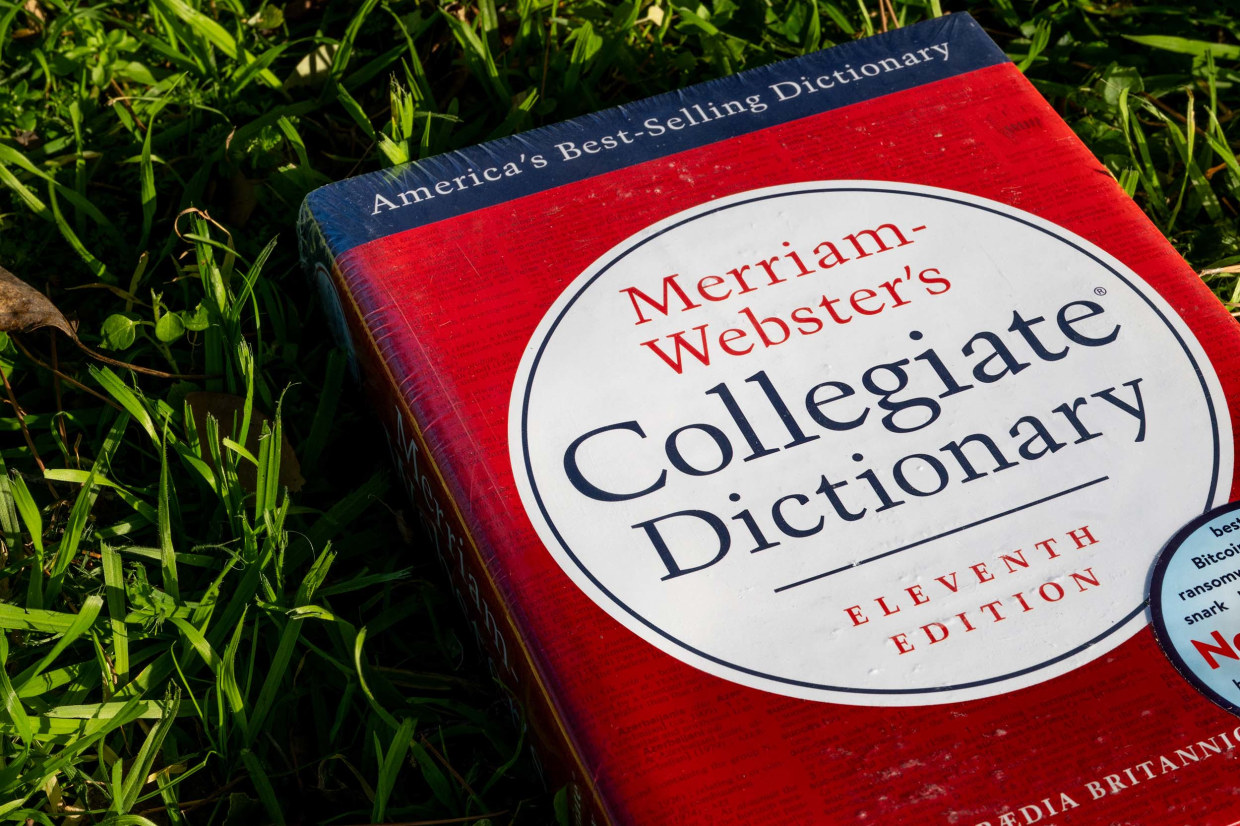
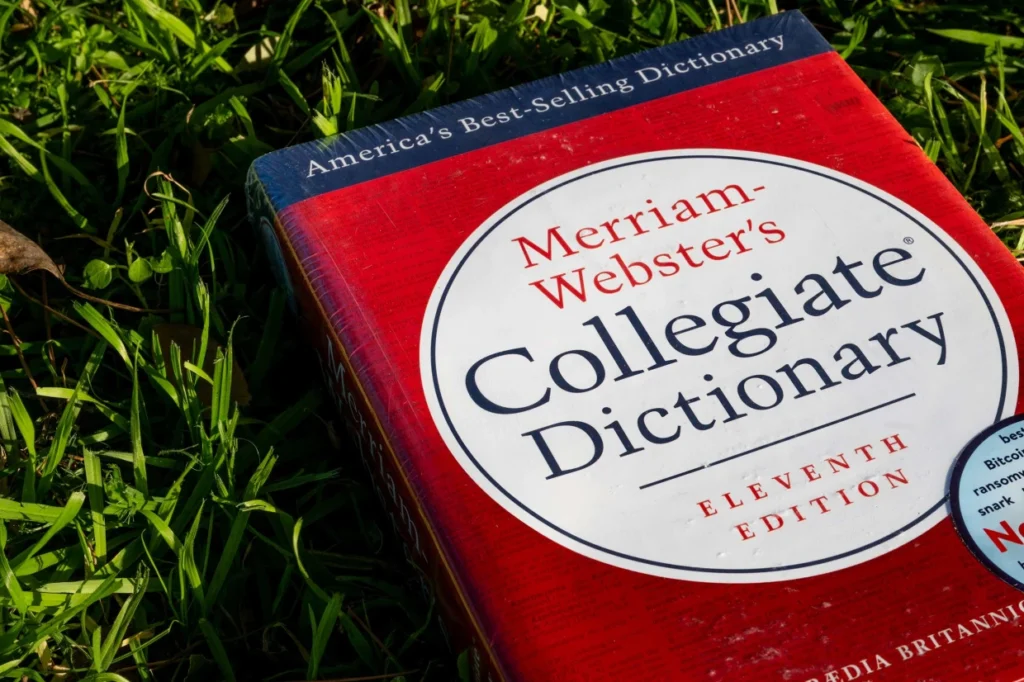
Merriam-Webster also just finished a major overhaul of one of its most popular print dictionaries, adding more than 5,000 new entries—a rare, full-scale revision that underlines how fast English is evolving in the AI era.
The other words that defined 2025
“Slop” may have taken the crown, but several other words rose high enough in the data to earn a place on Merriam-Webster’s 2025 list:
- A viral nonsense term tied to rapper Skrilla’s 2024 track “Doot Doot (6 7)” became an in-joke online, spreading largely through social media. Editors say it was everywhere for a while, but too self-referential to define the whole year.
- Performative gained new life in phrases like “performative male,” used to describe men who feign interest in women’s hobbies or causes to win trust, and in broader complaints about shallow “kindness content” or political grandstanding.
- Gerrymander spiked as Republicans and Democrats battled over redistricting maps ahead of the 2026 midterms, with fights intensifying in states such as Texas, Indiana, and California.
- Touch grass, an internet phrase meaning to step away from the screen and re-engage with the real world, reflected a growing desire to escape digital overload and “AI slop” by going outside—literally.
- Conclave drew attention when cardinals assembled behind locked doors to elect Pope Leo XIV, the first American pope, sending people racing to look up the term’s origin in the Latin for “with a key.”
- Tariff returned to the spotlight as President Donald Trump touted duties on imports as a way to protect U.S. industries and even fund possible “tariff dividends,” despite economists noting that tariffs still make up only a small share of federal revenue and have not closed a roughly $1.8 trillion deficit.
- And then there’s Lake Chargoggagoggmanchauggagoggchaubunagungamaugg, a Massachusetts place name that baffled and delighted online players of the game Spelling Bee! and sent lookups soaring, even though locals simply call it Webster Lake.
Taken together, the list reads like a snapshot of 2025: a year of AI hype and backlash, online burnout, bruising political fights, a new pope and an old lake with an unforgettable name.
Sources:
AP News – “‘Slop’ is Merriam-Webster’s 2025 word of the year”