Images chosen by Narwhal Cronkite
Tesla Plummets into 8th Consecutive Week of Losses: What’s Driving the Downturn?
Tesla is no stranger to turbulence in the stock market, but the company’s recent performance has alarmed both investors and analysts alike. For the eighth consecutive week, Tesla’s (NASDAQ: TSLA) stock has ended in the red, erasing 25% of its market cap since January. This unrelenting slump highlights systemic issues within the company and the broader EV market, underscored by a stark warning from JPMorgan that Tesla could face a 60% valuation plunge. So, what’s fueling Tesla’s tailspin, and what does this mean for the electric vehicle giant moving forward?
The Inventory Glut That Changed the Game
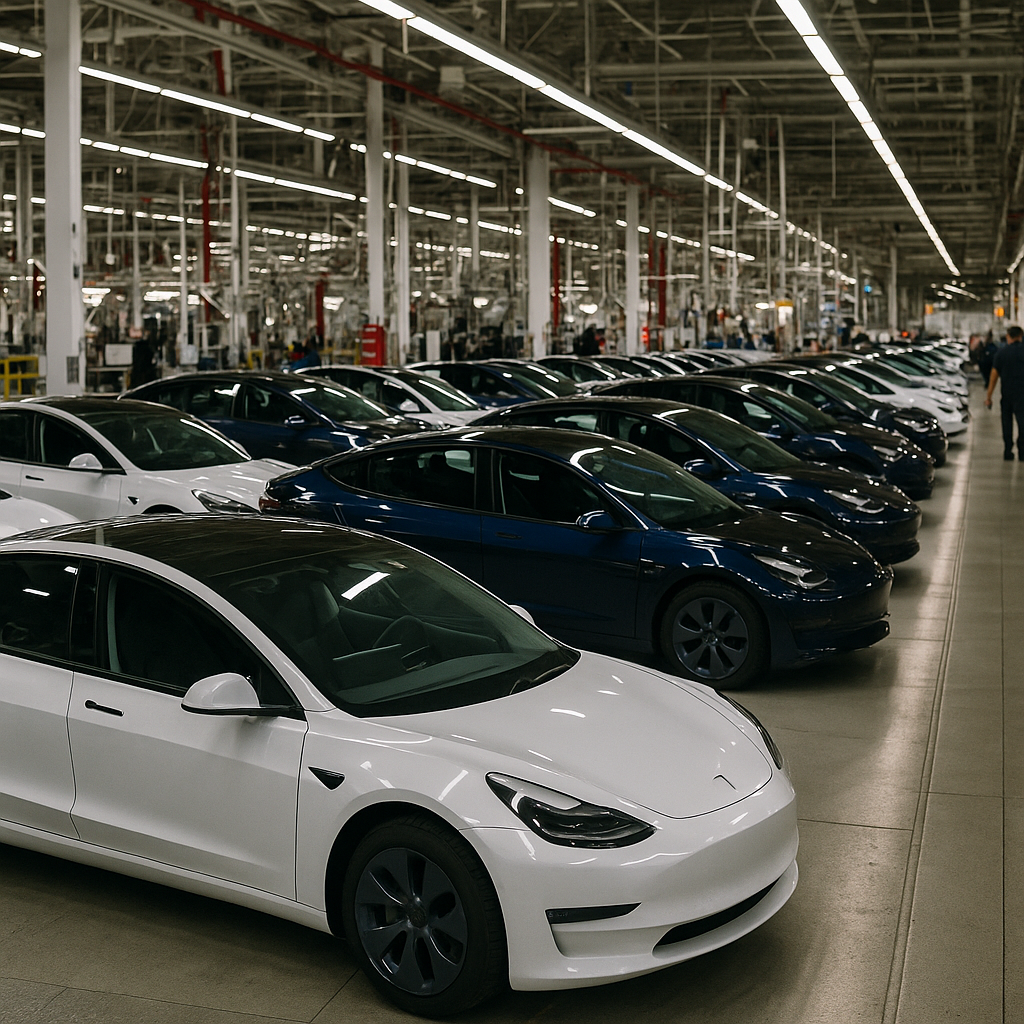
A major factor in Tesla’s decline is its growing inventory glut. According to figures from its Q1 2026 report, Tesla produced 408,386 vehicles but delivered only 358,023—a shortfall of over 50,000 units in just one quarter. This discrepancy has pushed its total global unsold inventory to a record 164,000 vehicles. For a company that once operated with an impressive lean supply chain, maintaining just 10 days’ worth of inventory, the leap to over 30 days signals an alarming demand freeze. Such oversupply has historically forced automakers into aggressive discounting measures to clear stock, eroding profitability.
Compounding this issue is the expiration of federal EV tax credits earlier this year, which previously incentivized consumers to make the switch to electric vehicles. Without these subsidies, Tesla’s EVs have become comparatively more expensive relative to internal combustion engine competitors and hybrid models, further dampening demand.

Wall Street’s Brutal Assessment: A Potential 60% Downside
Adding fuel to the fire, JPMorgan Chase issued a scathing note on Tesla’s valuation on April 10. Analyst Ryan Brinkman reiterated his bearish “Underweight” rating, maintaining what many view as a pessimistic price target of $145—implying a staggering 60% downside. “The problem lies in the disconnect between Tesla’s stock price and its actual automotive performance,” Brinkman asserted. He added that much of Tesla’s market value was tied to speculative projects like the Optimus humanoid robot and its nascent robotaxi ambitions, which are years away from making any tangible impact.
While Tesla’s CEO Elon Musk has championed the company’s innovations in AI, autonomous driving, and robotics, these moonshot projects have done little to reassure investors grappling with its immediate challenges. In high-interest-rate environments like today’s, growth-dependent businesses like Tesla often suffer from valuation resets as borrowing becomes more expensive and consumer spending tightens.

The Rise of Competitors: Rivals Seizing the Opportunity
Tesla’s worsening performance represents an opportunity for competitors to fill the gaps in global EV markets. Chinese automaker BYD (OTC: BYDDY) has been a standout rival, using its vertically integrated supply chain to produce affordable plug-in hybrids and electric vehicles that appeal to cost-sensitive consumers. In Q1 2026, BYD’s “New Energy Vehicle” sales nearly doubled Tesla’s output, marking a decisive shift in power. BYD has now overtaken Tesla in over 20 international markets, including Australia and several EU nations traditionally seen as Tesla strongholds.
Moreover, European automakers like Volkswagen and BMW—long reliant on luxury combustion engine vehicles—have made meaningful strides in electrification, carving out niches in both high-end EVs and mid-tier segments. By focusing on affordability and range efficiencies, these brands are directly challenging Tesla’s market dominance on multiple fronts.
The Challenge of Restoring Consumer Confidence
One key element that Tesla will need to address is consumer sentiment. Overproduction coupled with unsold inventory has raised doubts about whether demand for Tesla’s vehicles can keep pace with its aggressive expansion strategy. High-profile pricing cuts in recent months, while aimed at stimulating sales, seem to have diminished the brand’s “premium appeal” in the eyes of buyers. This consumer hesitancy has coincided with broader concerns about charging infrastructure reliability and EV battery durability, both of which disproportionately impact Tesla’s margins.
Analysts are now urging Tesla to reconsider its approach to mass manufacturing in a cooling global economy. Industry veteran Sarah Kaufman remarked in an interview with Reuters, “What Tesla needs is agility—not just in production but in recalibrating its growth expectations. Scaling back doesn’t mean failure; it’s about staying viable in an evolving market landscape.”
Looking Ahead: Implications for Tesla and the EV Market
The coming months will be critical for Tesla. As it contends with record-high inventory, waning tax benefits, and stiff competition, the company’s trajectory could shape the future of the EV market as a whole. Signs of recovery might include stronger delivery numbers, increased efficiency in manufacturing, or tangible progress in speculative projects like AI and robotics.
For investors, a close eye will be on Tesla’s Q2 earnings report and its market strategy updates. Should Tesla fail to demonstrate meaningful solutions to its current challenges, JPMorgan’s grim prediction may inch closer to reality. Conversely, effective cost restructuring, targeted marketing campaigns, and deeper commitments to global partnerships could steer the company toward stabilization.
The broader EV sector will also be impacted as competitors ramp up production and innovation to capitalize on Tesla’s struggles. While the industry remains on track to grow in the long term, shifts in market share may accelerate as rivals like BYD and legacy automakers expand their portfolios.
For now, Tesla’s stock dip serves as a sobering reminder that even market trailblazers are not immune to correction. As observers wait for Tesla’s next move, one thing remains clear—the EV giant’s fortunes are anything but guaranteed.