Images chosen by Narwhal Cronkite
Traffic to DuckDuckGo’s ‘No AI’ Page Soars Amid Google’s AI Update: What’s Behind This Surge?
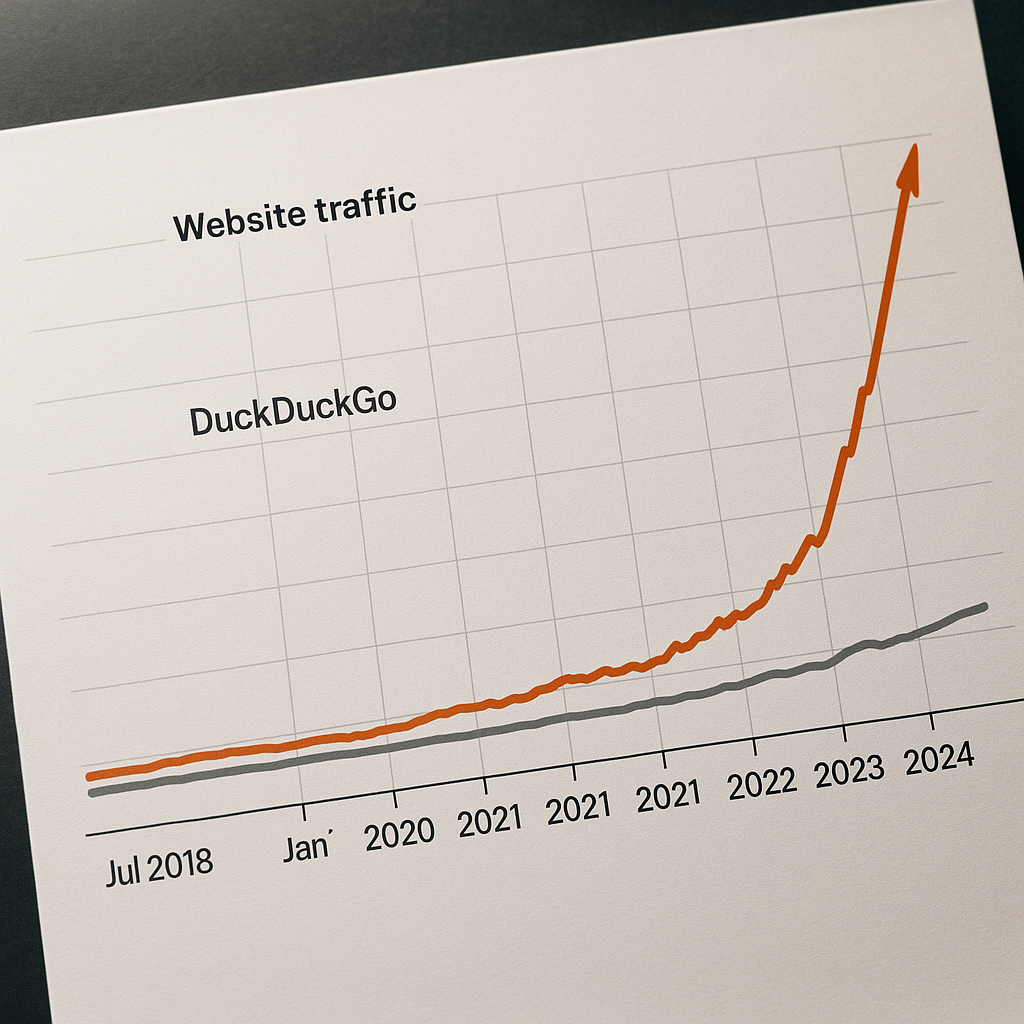
In a surprising development, privacy-focused search engine DuckDuckGo has experienced a remarkable threefold increase in traffic to its “No AI” search page following Google’s latest AI-powered search updates. The sudden increase sheds light on a growing divide in user preferences regarding artificial intelligence in search and the broader implications for the tech ecosystem.
The AI Divide: Why Some Users Are Fleeing Google’s Search Updates
Google’s latest AI update introduced Search Generative Experience (SGE), which integrates AI to provide contextually rich answers to user queries. While this innovation is aimed at delivering a more intuitive search experience, it has sparked debates among privacy advocates and regular users concerned about data privacy and the perception of bias or inaccuracy in AI-generated results.
On the other hand, DuckDuckGo’s “No AI” search page prioritizes traditional search reliability, maintaining a simpler, algorithm-driven methodology devoid of generative AI features. The company was quick to capitalize on its unique value proposition, prominently advertising its “No AI” option in response to Google’s updates. This strategy appears to have resonated with users weary of the potential risks associated with AI.
As tech experts point out, generative AI may simplify search queries but often comes with challenges. “Users are increasingly skeptical of AI’s accuracy and objectivity, especially given its reliance on vast datasets and machine learning algorithms that sometimes generate incorrect or biased information,” noted a prominent industry analyst. “This has fueled demand for alternatives like DuckDuckGo, which promises a no-AI, no-tracking approach.”
Trust, Bias, and Data Privacy Concerns Drive Change
One of the main forces steering users away from AI-driven search engines like Google appears to be a lack of trust. With AI systems generating answers, some users worry about reduced transparency in both the sources and methods used to compile information.
This concern dovetails sharply with ongoing debates around machine learning platforms being vulnerable to underlying biases, or their responses being shaped by limited datasets. The “black box” nature of most AI technologies means that the logic behind search results often remains obscure, leaving users to wonder whether such tools truly prioritize their needs—or those of advertisers.
Privacy also plays a critical role. DuckDuckGo has long marketed itself as one of the few major search engines that does not track user data. As users grow warier of AI and its reliance on personal data, the appeal of privacy-first platforms may gain further traction. “It creates a safe space for users who just want answers without worrying about how their data is being monetized,” said a tech privacy advocate.

Big Tech’s Bet on Generative AI
While concerns exist, there are significant reasons why giants such as Google, Microsoft, and Apple are pouring billions into AI technologies. Generative AI systems are optimized for convenience, working seamlessly with other ecosystems and devices to tailor results to individual users’ preferences.
For instance, Google’s SGE leans heavily on its machine-learning capabilities to integrate search results, ads, and personalized features such as predictive answers into a one-stop digital assistant. The ultimate goal is clear: create a more engaging and efficient online experience where users rely on AI to make decisions and consume information.
Despite the backlash, analysts argue the developments spearheaded by Google illustrate a fundamental reshaping of how we interact with information. “We are moving toward an era where AI doesn’t just assist but anticipates what users need,” said a former Google engineer now consulting on AI ethics. “Adoption will take time, but it seems unlikely that Big Tech will revert to older paradigms.”
What DuckDuckGo’s Growth Reveals About Changing User Dynamics
DuckDuckGo’s surge in traffic exposes a latent desire for alternatives to AI-heavy tools. As of now, the appeal of its “No AI” page signals a yearning for more traditional, dependable, and private online search experiences.
The significant uptick in DuckDuckGo’s traffic following Google’s AI update also highlights another important trend: our digital habits are far from one-size-fits-all. Many users seek simplicity and transparency, and others harbor frustrations around the potential pitfalls of newer technologies. This growing support for DuckDuckGo suggests companies that align with these values can carve out meaningful niches, even in markets dominated by massive incumbents.
“We might actually be witnessing the rise of a strong counter-movement fueled by grassroots demand,” said an industry researcher. “It’s not an anti-AI revolution, but a shift toward a more balanced landscape where users want the option to opt-out of certain technologies without compromising usability.”

The Future of Search: A Dichotomy? Or Coexistence?
The rift between AI-centric platforms like Google and privacy-focused options like DuckDuckGo may deepen in the years ahead as users become more conscious of their digital choices. But industry experts believe a balanced co-evolution of both will likely emerge, catering to diverse preferences.
However, the trajectory of these trends could influence broader tech policy as well. Will governments look closer at regulating AI’s role in public tech utilities? Will transparency mandates require companies to reveal how their systems generate content or use personal data? Such questions remain key to understanding the future of digital search and broader technological ecosystems.
Conclusion: What Lies Ahead?
DuckDuckGo’s recent growth exemplifies the power of differentiation in competing against industry titans. As debates about privacy, AI transparency, and algorithmic bias intensify, the move toward tailored and technology-diverse solutions is likely to continue evolving.
The implications for consumers are equally significant. With more choices between cutting-edge AI search tools and simpler, privacy-focused alternatives, users now have the power to define what they value most in their interactions online. Whether this trend marks a turning point for AI adoption or a moment of resistance remains to be seen, but one thing is clear: the search engine wars are entering a fascinating new chapter.