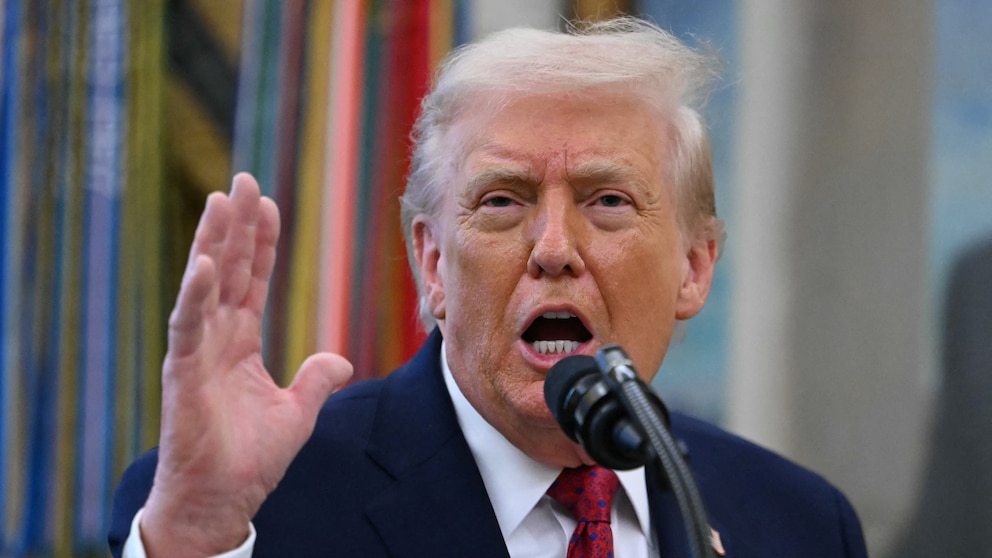
President Donald Trump on Tuesday unveiled a sweeping Trump Venezuela oil tanker blockade, saying he had ordered U.S. forces to stop “all sanctioned oil tankers” going into and out of the country in a major escalation of pressure on President Nicolás Maduro’s government.
“Venezuela is surrounded by the largest Armada ever assembled in the History of South America,” Trump wrote in a lengthy post on his social media platform, promising the naval buildup “will only get bigger.”
Trump added that the campaign would continue “until they return to the United States of America all of the Oil, Land, and other Assets that they previously stole from us.”
He did not specify which assets he believes were “stolen.” Under Maduro’s predecessor, Hugo Chávez, Venezuela nationalized oil fields in 2007 and expropriated some American oil company holdings, triggering long-running legal disputes.
Australia’s social media ban for under-16s takes effect
Huge naval presence and legal questions
The order builds on what officials describe as the largest U.S. military deployment in the Caribbean since the Cuban Missile Crisis, including warships, aircraft, and thousands of troops focused on intercepting sanctioned tankers and suspected drug-trafficking vessels.
Trump’s post came days after U.S. forces seized a tanker off Venezuela’s coast that Washington said was carrying sanctioned crude. The new directive would attempt to choke off the broader “dark fleet” that has helped Venezuela move oil to buyers such as China despite U.S. sanctions.
Trump has also labeled Venezuela a “foreign terrorist organization,” a designation typically reserved for non-state groups and usually made by the State Department rather than the White House. Legal experts have questioned how that label would function when applied to an entire country.
Venezuela has condemned the blockade as illegal and vowed to challenge it at the United Nations, calling Trump’s demands for oil and land a form of “imperial theft.”

Oil is at the center of the pressure campaign
Oil has long been at the heart of the fraught U.S.–Venezuelan relationship. Venezuela holds some of the world’s largest crude reserves and relies on oil exports for the vast majority of its foreign revenue.
Sanctions have already severely limited Caracas’ ability to sell oil on open markets, forcing it to rely on discounted shipments to China and a patchwork of sanctioned vessels. Analysts say a full Trump Venezuela oil tanker blockade could cut deeply into remaining exports and further destabilize an economy already weakened by hyperinflation, shortages, and years of political turmoil.
Oil prices rose after Trump’s announcement, with traders weighing the risk of tighter supply if Venezuelan shipments are fully disrupted.
White House looks ahead to “what’s to come.”
The blockade announcement came hours before a speech that White House officials had been promoting as a look back at what they call Trump’s “historic accomplishments” over the past year — and a preview of his agenda for the remainder of his term.
White House press secretary Karoline Leavitt told reporters that Trump would highlight issues such as border security and the economy, and hinted that he might preview new policies for the coming year. “He’s going to talk a lot about the accomplishments over the past 11 months, all that he’s done to bring our country back to greatness and all he continues to plan to do to continue delivering for the American people over the next three years,” she said.
In an interview with Fox News, Leavitt added that “the best is truly yet to come,” suggesting the president could “tease some policy that will be coming” within the next year.
What comes next for Venezuela and the region
Trump and his aides have framed the naval campaign as a way to cut off drug trafficking and pressure Maduro to step down, arguing that oil revenue is being used to fund criminal networks and corruption.
Critics in the U.S. and abroad warn that the blockade edges close to an act of war and could deepen the suffering of ordinary Venezuelans by strangling an already fragile economy. Some legal scholars have also questioned whether a prolonged naval blockade would require additional authorization from Congress.
For now, Trump has signaled that the pressure will continue to mount. In his social media post, he promised that the “Armada” around Venezuela “will only get bigger,” even as questions remain about how far the U.S. is prepared to go — and how Maduro’s government, and its allies, might respond.
Sources:
The Washington Post – “Trump announces ‘complete blockade’ of sanctioned oil tankers to Venezuela”