Images chosen by Narwhal Cronkite
Uber’s AI Spending Crisis: Innovation at What Cost?
Four months into 2026, Uber made headlines for a startling financial misstep—exhausting its entire annual AI budget in record time. What’s more, the company’s Chief Operating Officer Andrew Macdonald has openly questioned whether the aggressive push toward artificial intelligence is delivering value to consumers. As Uber navigates the costs of cutting-edge technology, it raises broader questions about the sustainability of enterprise AI adoption in Silicon Valley and beyond. Is AI the promised panacea or an overhyped expense?

The Growing Pains of Enterprise AI
Uber has long positioned itself as one of Silicon Valley’s most AI-driven firms. From calculating riders’ fares to optimizing driver routes in real-time, artificial intelligence underpins the company’s core services. Yet, a recent shift toward internal autonomy with coding tools like Claude Code—used to simplify complex software projects—has left executives pondering whether these investments truly pay off. Featured in a recent interview on the Rapid Response podcast, COO Andrew Macdonald admitted that the direct link between AI adoption and consumer benefits isn’t obvious. “It’s very hard to draw a line between those stats and actually producing 25% more useful consumer-facing features,” he noted.
The problem isn’t unique to Uber. A May report from Livemint highlighted similar struggles faced by Microsoft, which began canceling Claude Code licenses in favor of using GitHub’s Copilot CLI for software development. In the case of Uber, additional reports—like one from MakeUseOf—revealed just how costly AI mismanagement can be. A single instance of leaving Claude Code running overnight reportedly cost $6,000, akin to hiring a senior consultant on retainer.
Why Enterprise AI is Breaking the Bank
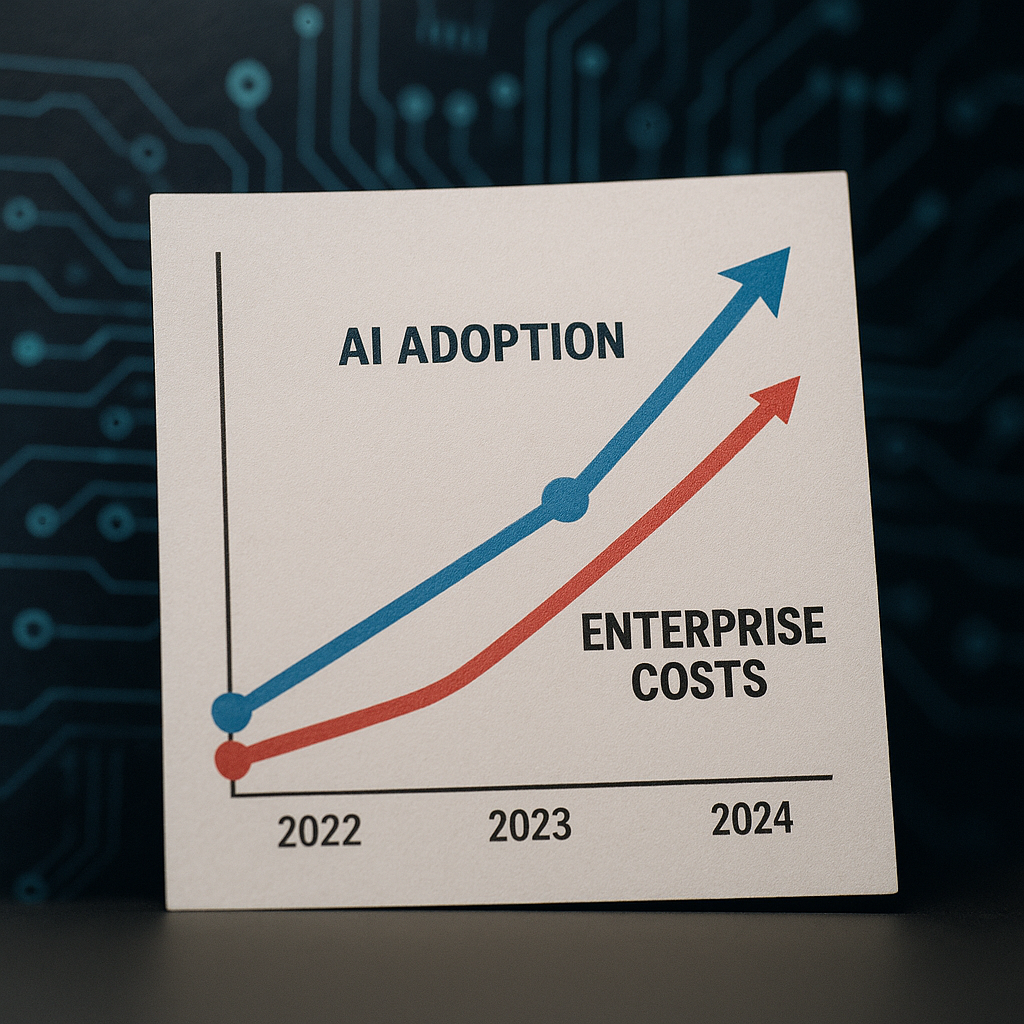
At the core of Uber’s quandary is a paradoxical trend in AI economics. Although advancements in AI models are steadily reducing per-unit costs, enterprise operational expenses are ballooning. A Gartner study underscores this contradiction, forecasting a 90% reduction in inference costs by 2030. However, more advanced agentic AI models—like those Uber deploys—demand exponentially higher token use per task, offsetting these price reductions.
Doubling down on costly adoption strategies, Uber reportedly incentivized employees across departments to embrace AI through gamification. Internal leaderboards tracked each team’s AI usage, driving adoption rates but also sending usage volumes—and costs—soaring. The AI vendor Anthropic further complicated matters by pivoting to usage-based pricing, charging companies per token of compute use instead of a flat licensing fee.

The Industry Dilemma: AI’s Promise vs. Reality
Uber is far from alone in navigating the complexities of AI economics. While CEOs like OpenAI’s Sam Altman have touted the disruptive potential of agentic AI, others have started to retreat from their original bullish views. Duolingo CEO Luis von Ahn, for instance, recently scaled back his optimism, arguing that even advanced AI cannot yet replace many employee functions. Similarly, Uber CEO Dara Khosrowshahi reflected on the company’s AI efforts in a recent earnings call, emphasizing that 10% of its committed code now comes from autonomous agents. However, even he tempered his enthusiasm by acknowledging that higher AI usage often introduces higher financial strain.
The rising costs extend beyond technical teams; Uber has seen uptake of AI tools by legal, marketing, and support departments, as Khosrowshahi noted. In theory, this broad integration makes employees “superhuman,” as he described. Yet, as ongoing challenges reveal, broad integration is only sustainable if it leads to measurable efficiency gains—a connection that’s proven elusive thus far.
Revisiting the AI Business Case
Uber’s AI spending spree has become a cautionary tale for enterprise leaders across industries. The promise of AI often hinges on its ability to streamline operations and reduce long-term costs, but in Uber’s case, the ROI is proving harder to justify. Analysts cite flawed adoption strategies—such as rushing to deploy untested AI tools or prioritizing novelty over necessity—as key missteps.
The recent pivot by major players like Microsoft to more cost-effective tools like GitHub Copilot suggests a recalibration is underway. Meanwhile, companies like OpenAI and Anthropic are reshaping pricing structures, favoring token-based billing calibrated to the level of computational complexity demanded by their clients. However, as this model gains dominance, businesses may find themselves allocating even larger portions of their budgets to keep pace.
The Road Ahead: Cautious Optimism or Retreat?
The key takeaway from Uber’s 2026 struggles is the need for deliberate, transparent AI adoption plans that align with clear business goals. The allure of AI-driven innovation is undeniable, but careless implementation can quickly turn even the most advanced technology into a liability.
In the immediate future, Uber and other enterprises are likely to focus on refining their AI strategies—seeking a balance between maximizing capabilities and managing costs. Meanwhile, the broader implications of the AI spending crisis will force technology leaders to reassess the value proposition of AI in enterprise settings. Can the technology live up to its lofty promises of efficiency and cost-cutting, or will budgets consistently outpace benefits?
For consumers, this tension could translate into tangible changes—such as slower feature rollouts or changes to pricing models—as enterprises recalibrate. Industry observers advise keeping an eye on Uber’s upcoming reports, which may offer insights into whether the company doubles down on AI adoption or reevaluates its approach.
In the end, Uber’s dilemma reflects a broader truth about technology adoption: tools alone aren’t enough. How they’re implemented, measured, and scaled ultimately determines whether they deliver meaningful results—or just drain budgets.