Images chosen by Narwhal Cronkite
US Orders 2,200 Marines on Warships to Middle East: A Strategic Analysis
The United States has ordered the deployment of 2,200 Marines aboard three amphibious warships to the Middle East, an operational move that underscores rising tensions in the Strait of Hormuz and growing concerns over regional security. This deployment aligns with longstanding US military dynamics in the region, but also introduces fresh debate about the significance of naval power in a rapidly evolving geopolitical landscape.
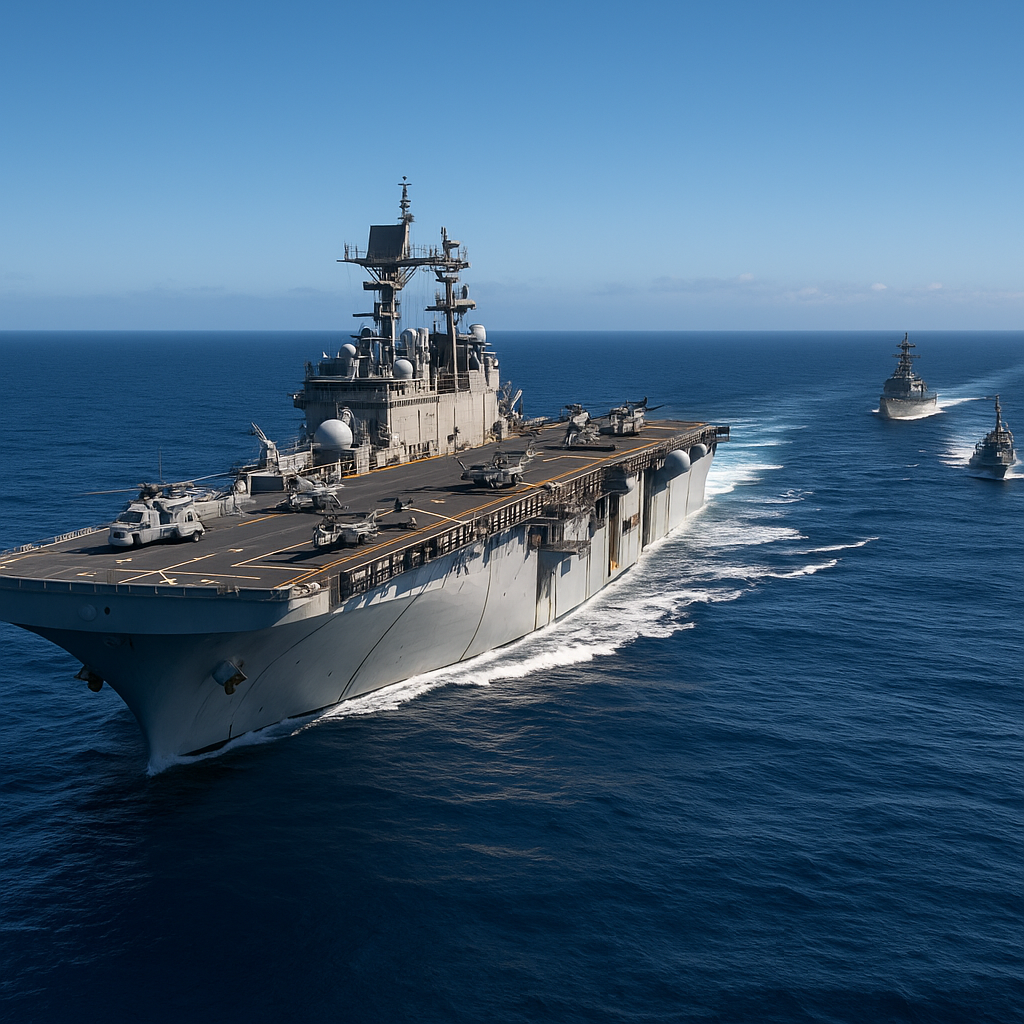
Why the Strait of Hormuz Matters
Geopolitical experts often regard the Strait of Hormuz as the world’s most strategically critical maritime chokepoint. Approximately one-fifth of global crude oil passes through this narrow waterway connecting the Persian Gulf with the Arabian Sea, making it vital not only for Middle Eastern economies but for global energy stability. Recent Iranian missile and drone attacks have further strained security in the region, prompting heightened international scrutiny.
The decision to deploy Marines aboard amphibious assault ships like the USS Tripoli reflects the US’s commitment to maintaining open trade routes while responding to emerging threats quickly. According to The Wall Street Journal, US Central Command (CENTCOM) requested this reinforcement to address unrelenting tensions, a move approved by War Secretary Pete Hegseth.
The Role of Marine Expeditionary Units
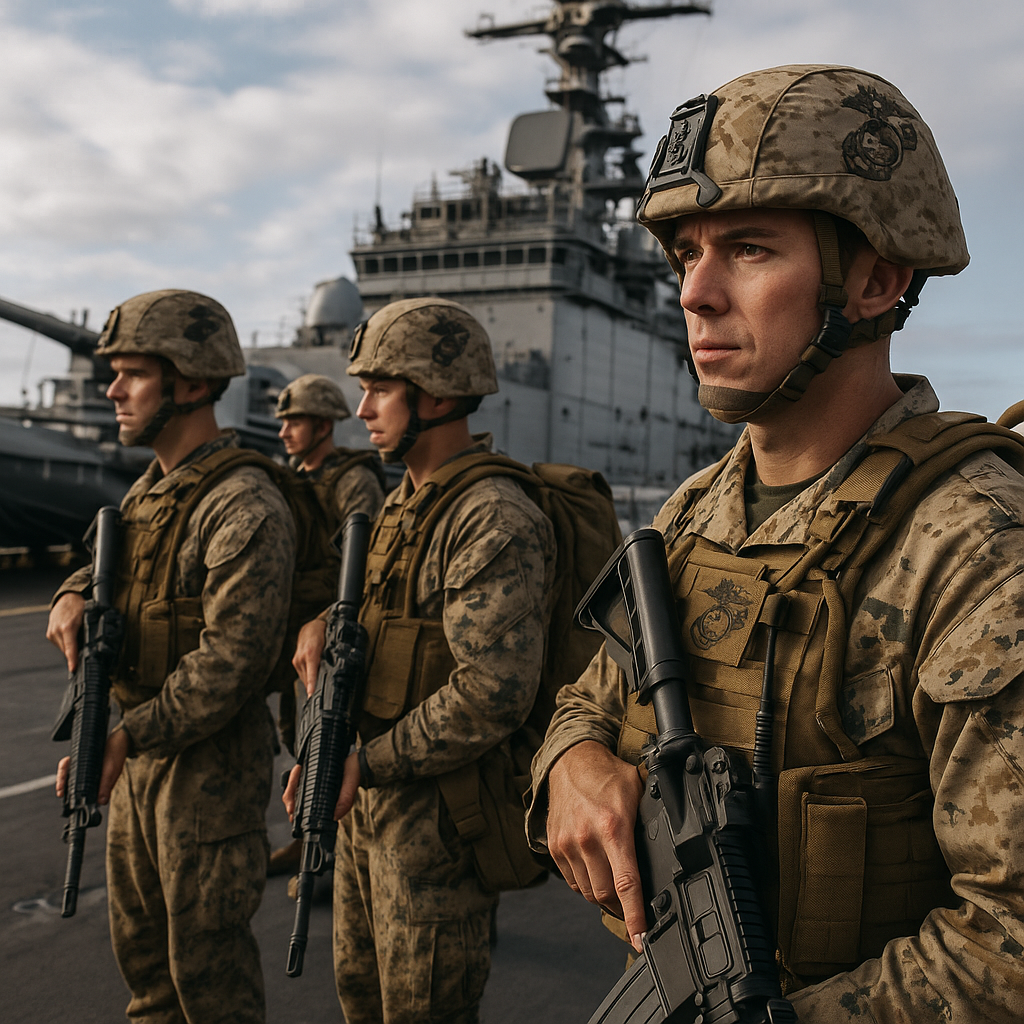
Marine expeditionary units (MEUs) represent some of the most versatile assets in America’s military toolkit. Designed for rapid-response missions and equipped for a range of operations, MEUs typically operate from amphibious assault ships capable of supporting combat, humanitarian aid, and crisis management. Their deployment in the Strait of Hormuz highlights their adaptability to scenarios marked by both conventional warfare and asymmetric threats.
Regional Dynamics: A Complex Landscape
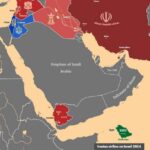
While the Strait of Hormuz directly affects global oil markets, its importance goes beyond crude shipping. The waterway has become a focal point for broader regional tensions involving Iran, Gulf Cooperation Council (GCC) countries, and external players like the US. Iranian provocations, including missile tests and drone incursions, have significantly escalated fears of possible confrontations.
“The Strait of Hormuz acts as both a lifeline and a pressure point,” William Kennel, a former Pentagon analyst, told NarwhalTV. “While securing oil shipments is often the headline concern, the strategic calculus goes deeper. Control over this waterway symbolizes influence in Middle Eastern geopolitics.”
It is worth noting that naval reinforcements may further complicate diplomatic efforts, creating friction in an already volatile region. Still, analysts assert that deterrence may outweigh immediate risks of escalation.
How Does This Fit Into US Policy?
This military reinforcement follows a trend in US policy aimed at containing Iranian capabilities and protecting regional allies. Recent sanctions against Tehran and years of arms deals with GCC states have drawn criticism, especially over issues of proportionality and effectiveness. Critics argue that such moves risk increasing dependency on militarized solutions instead of fostering dialogue and de-escalation.
However, officials emphasize that increased military presence serves a broader purpose. “The reinforcement of naval forces in the Persian Gulf is ultimately about preserving peace, not provoking war,” said Rebecca Rhodes, a defense correspondent with Reuters. “The strategy prioritizes security through strength.”
While this deployment signals continuity in US-Middle East relations, it also raises questions about the domestic military agenda. With ongoing debates over budgeting and readiness, such deployments highlight a balancing act between vigilance abroad and resource constraints at home.
Implications and What to Expect Next
As warships head to the Middle East, several pressing issues demand attention. The first is Iran’s likely response. Historically, Tehran has opposed the presence of foreign forces near its waters, often leveraging proxy groups or escalatory tactics in response. Analysts caution that while immediate confrontation remains unlikely, localized disruptions could intensify.
Additionally, the deployment could affect oil markets. Higher security in the Strait of Hormuz may stabilize crude flows but could also temporarily elevate prices if tensions escalate further. Investors are keenly monitoring the situation, given the broader implications for global trade routes.
The third concern lies with diplomatic ties in the region. While Gulf states may see the reinforcement as reassurance, other nations—such as Russia and China—may interpret it as an assertion of US dominance, adding layers to already complex power dynamics.
Finally, this move sparks renewed discussion about the utility of amphibious ready groups in modern conflict scenarios. As warfare increasingly pivots toward hybrid models, the adaptability and visibility of MEUs could prove their worth in stabilizing hotspots without provoking direct engagement.
In the short term, all eyes will be on the USS Tripoli’s arrival in the region and how Iranian leadership navigates its naval presence. Long-term watchers will delve into implications for Middle Eastern security, energy markets, and US foreign policy priorities.