Images chosen by Narwhal Cronkite
Jonathan the Tortoise: A Timeline Revisited
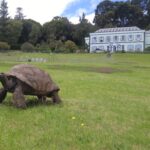
Late last week, reports circulated regarding the supposed passing of Jonathan, the Seychelles giant tortoise hailed as the oldest known land animal in recorded history. However, confirmation has now arrived that Jonathan is indeed alive and thriving on the grounds of the Government House in Saint Helena. At an estimated 191 years old, Jonathan remains an enduring symbol of longevity and resilience, offering scientists and admirers around the world a unique opportunity to reflect on both reptilian biology and human fascination with lifespan milestones.
The confusion surrounding Jonathan’s status is far from the first time misconceptions have emerged about a celebrity animal. As Saint Helena’s tourism office stated in a swift correction, Jonathan “continues to bask in the sun, munch on his favorite vegetables, and enjoy gentle interactions with keepers.” But why does the life of a single tortoise matter so much—and what can his longevity teach us?
The Science Behind Longevity: Why Tortoises Live So Long
Tortoises have long been known for their remarkable lifespans. While many turtle species average lifespans of 50–100 years, Jonathan’s advanced age took him to extraordinary heights in the record books. Experts suggest several reasons behind such longevity in tortoises, including physiological factors like slow metabolism, sturdy genetic coding for resilience, and the ability to adapt to environmental stressors.
As Dr. Leonard Potter, a biologist specializing in reptilian life cycles, explains: “Giant tortoises like Jonathan evolve in environments where metabolic conservation is key, not speed. Their bodies are systematically designed to withstand scarcity and physical deterioration.” Jonathan also benefited from a structured environment on Saint Helena, where he received consistent care and wasn’t subject to the dangers of predators or habitat disruption.
Reports had erroneously suggested that Jonathan’s exact birth year was recorded as 1832, which would place him at an improbable 193 years old. The corrected number of 191 years remains a testament to both the accuracy of long-term captivity records and the conservative estimation practices of biologists measuring animal age.
The Iconic Life of Jonathan: Global Symbol and Local Treasure
Born during the reign of Britain’s King William IV—decades before electricity became commonplace—Jonathan’s life has spanned generations, witnessing remarkable world events from the first telephone call to the rise of the internet. Beyond the extensive timeline, Jonathan’s story resonates deeply with residents of Saint Helena, the remote South Atlantic island that he calls home. Long embraced as a mascot for wildlife conservation and tourism, Jonathan’s presence regularly draws tourists and conservation enthusiasts to Saint Helena’s shores.
According to reported accounts from BBC News, Jonathan’s diet has remained fairly consistent over the decades, comprising local produce. Notably, his caretakers closely monitor him each day to ensure his continued health, with annual inspections by veterinarians acting as a key tool for extending his quality of life. In modern years, his reduced eyesight and dulled sense of smell are offset by a meticulous caretaking regime aimed at minimizing discomfort often associated with aging in reptiles.
Local historian Emily Gardner recalls how Saint Helena residents revere Jonathan: “His peaceful presence reminds us of patience and the slow rhythm of natural time. Those characteristics inspire people, whether they’re here as visitors or lifelong inhabitants.” By exemplifying survival and natural wisdom, Jonathan represents the enduring beauty of a species that thrives beyond contemporary human worries of time.
Examining the Why: Viral Wildlife Stories and Their Emotional Weight
The public reaction to Jonathan’s unexpected death hoaxes highlights humanity’s unique attachment to animals of symbolic grandeur. Over the past decade, numerous older animals have achieved viral acclaim, from Lonesome George, the Pinta Island tortoise, to 80-year-old lobsters and centenarian fish. This fascination stems partly from nostalgia, but also from the comfort of continuity and endurance in a fast-paced, transient world.
When news outlets like kare11 and MLive.com reported his passing prematurely, social media erupted. Fans lamented the loss of a ‘living monument,’ revealing not only affection for the animal himself but also a collective yearning to hold on to the rare constants in the natural world. The incident exposed the rapid velocity with which information travels today, leaving little time for verification, even among trusted outlets.
More than a passing curiosity, Jonathan represents an opportunity for education about longevity. For conservation groups, he’s a reminder of the conditions necessary to protect species threatened by habitat loss and human behavior. His story raises awareness about environmental sustainability and how cohabitation with wildlife can help preserve iconic species for future generations.
What Lies Ahead for Jonathan and Conservation Efforts
While Jonathan continues to enjoy his golden years, the question of succession has led conservation experts at Saint Helena to consider how best to honor him once his long life comes to an end. Observers propose a commemorative statue or expanded preservation efforts for other threatened tortoise species, such as those living in the Galápagos Islands, whose ecosystems remain under pressure.
Equally important will be the lessons drawn from his care, dietary patterns, and habitat parameters. Understanding how and why Jonathan achieved such extraordinary longevity could aid ongoing research into animal habitats and age-related diseases, including insights into how certain environmental conditions influence long life spans.
For now, Jonathan remains a gentle reminder of history embodied in living form, offering visitors to Saint Helena the chance to witness nature’s resilience firsthand. As Dr. Potter notes: “It’s not just his age but his presence that enriches the world. Jonathan has lived through eras that we can only read about, yet he reflects the continuity of life on Earth.”
In a time of uncertainty and rapidly changing ecosystems, Jonathan’s story carries significant power, urging us all to pause and reflect. As for what lies ahead, his caretakers will no doubt continue their diligent work in providing him with the best possible final chapter.