Images chosen by Narwhal Cronkite
‘Jeopardy’ Super Champ Jamie Ding Ends 31-Game Run by Highlighting Immigration Issues
Jamie Ding, the latest sensation on the game show Jeopardy!, has made headlines not only for his stellar 31-game winning streak but also for his decision to wade into an issue that resonates on both personal and national levels. As his historic run came to an end earlier this week, Ding used his media spotlight to speak candidly about immigration and its place in modern America, breaking from the traditionally apolitical tone of most contestants.
An Unexpected Political Turn on a Celebrated Stage
Jamie Ding, a 33-year-old law student and public servant from New Jersey, entered the pantheon of Jeopardy! legends by securing $882,605 in prize money over the course of 31 episodes. Ranked fifth on the show’s official leaderboard for most consecutive wins, Ding’s streak cemented his legacy as one of the quiz show’s greatest champions. But while his charm, poise, and intellect endeared him to audiences, it was his remarks following his streak’s conclusion that added a new layer of complexity to his public persona.
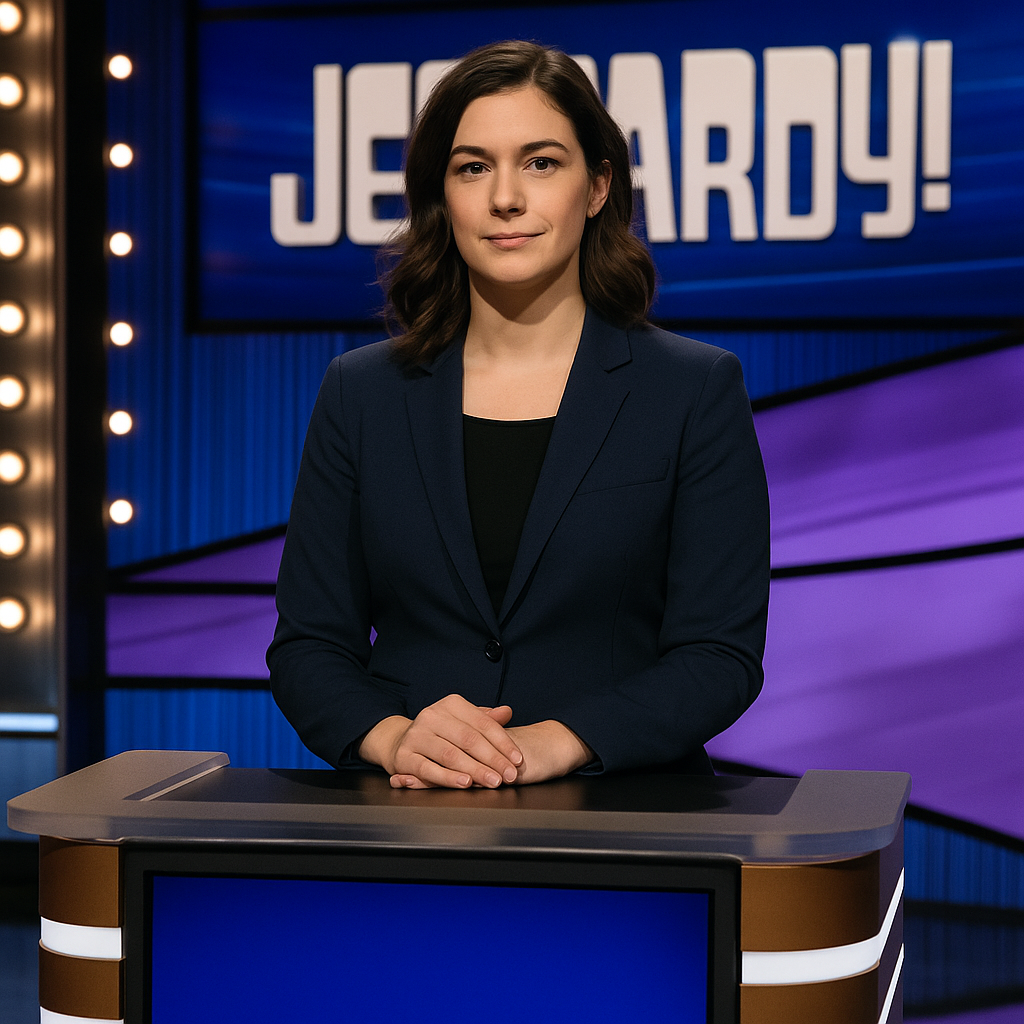
In an interview with People, Ding shared his thoughts on the significance of his success as an immigrant and a person of color, saying, “>‘Jeopardy!’ really is an institution and America’s turning 250 years old and the federal government is going after immigrants in a way unlike anything that we’ve seen in the recent past.”
Though he did not explicitly name policies or political figures, Ding’s comments were implicitly critical of high-profile immigration actions taken in recent years, including those targeting undocumented individuals through increased enforcement by the Immigration and Customs Enforcement (ICE) agency.
Why Ding’s Stance Stands Out
Traditionally, longtime contestants on Jeopardy! have focused on the pursuit of knowledge, trivia excellence, and camaraderie rather than engaging with divisive political topics. Ding’s willingness to address these issues was uncommon, sparking broader interest in the intersection between game show fame and social commentary.
Ding himself is no stranger to the complexities of immigrant life. Born in Australia to Chinese parents who had emigrated from Beijing, Ding later became a naturalized U.S. citizen. His comments reflect both his lived experiences and his concerns about policies that impact immigrant communities.
“To use a platform like this to remind people that immigrants help define America was both bold and thoughtful,” noted cultural analyst Dr. Elise Morgan. “Ding was reminding us that being an intellectual force and being an engaged citizen are not mutually exclusive.”

Risk and Reward in the Public Eye
While Jamie Ding’s decision has won praise in some circles, it also invites the inherent risks of public figures stepping into politically sensitive areas. Though a quiz show may have little to do with policymaking, high-profile participants like Ding inevitably become influential voices. Public reaction to Ding’s comments has ranged from commendation for tackling important issues to criticism for bringing political overtones to a revered entertainment platform.
According to industry observers, Ding’s remarks fit into a larger trend of prominent figures addressing systemic issues during moments of heightened visibility. Similar moves have been seen in the sports world, art performances, and even within Hollywood award acceptance speeches. The result is often polarizing, fascinating, and emblematic of a broader cultural moment in which prominent nonpolitical actors are choosing to weigh in on weighty subjects.
A Career Beyond Trivia
Beyond his time on Jeopardy!, Jamie Ding also appears committed to playing an active role in social and legal issues. As reported by the New Jersey Globe, Ding is involved in federal litigation concerning voter privacy. The case revolves around whether the U.S. Department of Justice can gain access to New Jersey’s voter registration database, which contains information on millions of residents. His role in the case further underscores his willingness to address matters that intersect legal, political, and civil rights concerns.
Ding’s competitive spirit is reflected both on and off-stage. During his time on Jeopardy!, he established a reputation for taking calculated risks with his wagers, using both intuition and logic to navigate high-stakes scenarios. This characteristic, although applied in a game setting, speaks to his broader philosophy of seizing opportunities to make meaningful impacts.
Implications and What’s Next for Jamie Ding
So, where does someone like Jamie Ding go after finishing as one of the top champions in Jeopardy! history? While some former contestants capitalize on their newfound fame by engaging in media or writing about their experiences, Ding’s apparent commitment to legal and civic issues might take him in an entirely different direction.
“If his appearances on the show were a testament to his intellect, his commentary reflects a deeper desire to leave a positive imprint on something far greater than trivia,” said David Klein, a political sociologist. “There’s every indication that he has the drive and perspective to make significant contributions in the public policy arena.”
Ding’s public remarks may also signal a shift for cultural icons like himself, who feel compelled to address social concerns in real-time, even while operating in non-political spaces. While his commentary about ICE and immigrants may fade from the headlines, the broader implications of his words will shape ongoing discussions.
Conclusion: A Legacy Beyond the Game
At its core, Jeopardy! has always celebrated individual achievement, intellect, and character—and Jamie Ding exemplified all three during his incredible run. By bringing attention to issues close to his heart, he has broadened the discussion of what it means to define oneself as both a champion and a citizen. Whether one agrees with his views or not, his decision to bring immigration into the conversation adds an intriguing layer of depth to what has typically been a disciplined, escapist show.
Viewers will be eager to watch where Ding’s career takes him next—whether it’s on television, in the courtroom, or on a broader public stage. In doing so, this “humble king,” as many fans have dubbed him, has given us all a moment to pause, think, and reflect on the intersections of culture, citizenship, and identity in contemporary America.