Images chosen by Narwhal Cronkite
‘The cost of compute is far beyond the costs of the employees’: Nvidia exec says right now AI is more expensive than paying human workers
Artificial intelligence has often been touted as the ultimate cost-saving tool, a technology capable of reshaping the workforce and automating tasks to an unprecedented level. However, recent insights from the industry-leading chipmaker Nvidia paint a more complicated picture. While some companies eagerly embrace AI, it turns out that the economic trade-offs aren’t as clear-cut as anticipated.
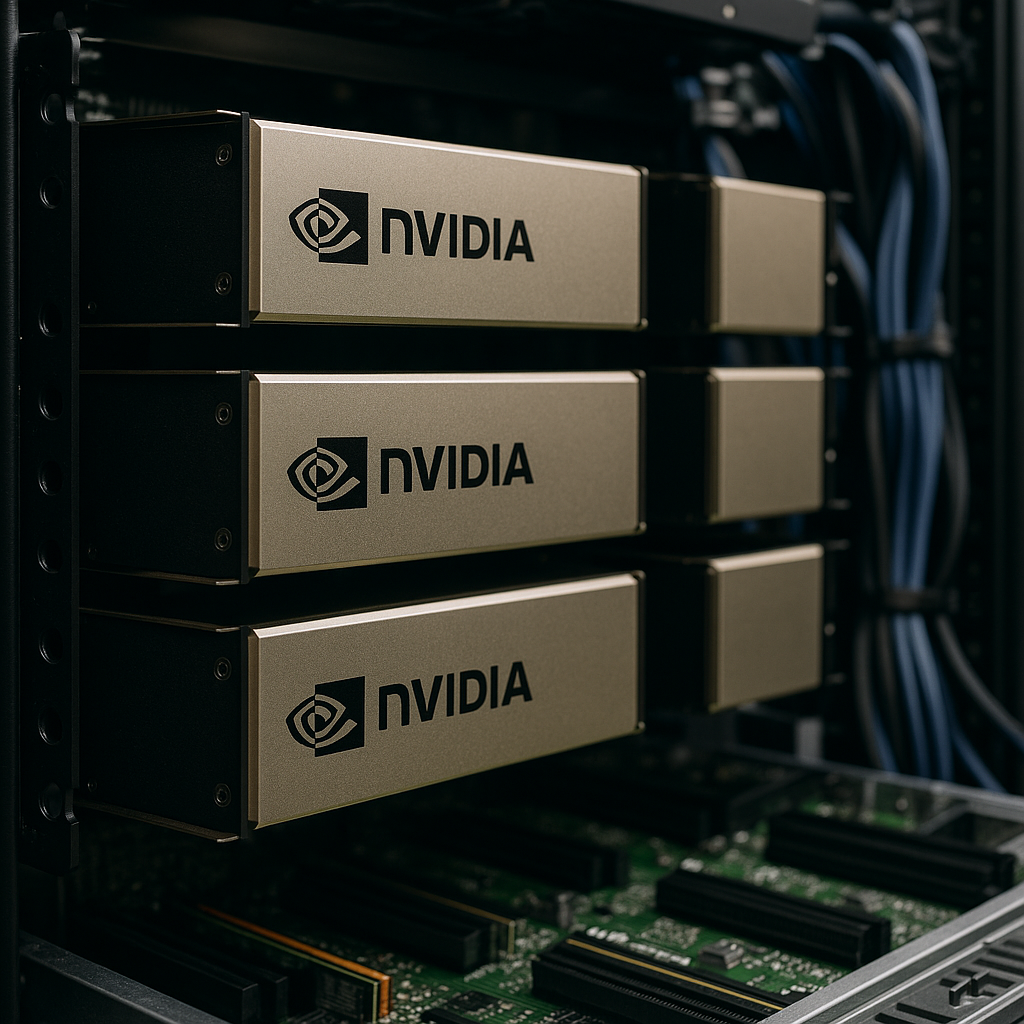
“For my team, the cost of compute is far beyond the costs of the employees,” remarked Bryan Catanzaro, Vice President of Applied Deep Learning at Nvidia, in an interview with Axios. This refreshingly honest admission underscores the growing strain high-powered AI deployments impose on tech budgets.
The True Cost of AI: Beyond the Hype
The belief that artificial intelligence would dramatically lower operational costs has fueled massive investment from industry leaders like Meta, Google, and Uber. Just this year, companies have unleashed a staggering $740 billion in capital expenditures on AI technologies, according to Morgan Stanley, marking a 69% increase from 2025.
In theory, the payoff sounds straightforward: automated systems should require fewer human inputs, boosting efficiency and reducing reliance on a large workforce. Tech layoffs—such as Meta’s recent decision to downsize its staff by 10%, affecting 8,000 employees—appear to validate this transition towards automation. However, the reality is proving more complex.
Studies, including a 2024 analysis by MIT, reveal that AI is economically viable in only 23% of roles where vision is a primary task. For the majority of tasks, particularly those demanding complex reasoning or hands-on human intervention, traditional workers remain more cost-effective.
Compute Costs and Failures Dominate the AI Equation
A key factor driving AI’s high cost is “compute,” a term used within the industry to describe the processing power required to operate and train AI models. Training large-scale AI systems such as OpenAI’s GPT models, for example, requires hundreds of GPUs, vast volumes of data, and energy-intensive data centers. All of this results in eye-watering operational expenses.
Additionally, resource allocation isn’t the only challenge for businesses adopting AI. The technology is far from infallible, with notable failures causing significant disruptions. One software engineer recently reported a high-profile incident where an AI agent inadvertently destroyed an essential database and network as a result of overuse. Such errors contribute to a perception that AI is not yet the foolproof solution companies have been promised.

The Budget Blowout: CFOs Rethink Spending
The economic implications aren’t being ignored by executives. Uber’s Chief Technology Officer Praveen Neppalli Naga admitted earlier this month that the ride-hailing company had already exceeded its projected AI budget. “I’m back to the drawing board because the budget I thought I would need is blown away already,” Naga told The Information. His comments highlight how outbreaks of overspending are becoming common as companies scramble to remain competitive in the AI arms race.
Similarly, at OpenAI, Chief Revenue Officer Denise Dresser acknowledged the growing financial pressure in a strategy memo viewed by The Verge. Dresser wrote, “The market is as competitive as I have ever seen it,” as rivals like Anthropic, Google DeepMind, and smaller startups aggressively expand their AI capabilities.
Industry Layoffs and the Uncertain Path Ahead
The financial mismatch between AI aspirations and reality has broader implications for the workforce. According to Layoffs.fyi, more than 92,000 tech workers have already been laid off in 2026, and the pace of job cuts is outstripping that of the previous year. While some of these workforce reductions are linked to general market sluggishness, a portion is undoubtedly tied to surging investments in automation and AI systems.
However, as experts point out, these layoffs might not signify the dawn of full-scale AI-led labor displacement. Yale’s Budget Lab has found no widespread productivity gains attributed to AI deployment, revealing that the technology is far from achieving the level of maturity necessary to scale across all sectors of the economy. Keith Lee, an AI and finance professor at the Swiss Institute of Artificial Intelligence, cautions against assuming AI will provide immediate financial returns. “What we’re seeing is a short-term mismatch,” said Lee. “Emerging technologies often take time to achieve the efficiencies they promise.”

Looking Forward: What Comes Next?
As companies reassess their budgets and workforce strategies, the debate around AI’s economic viability is likely to intensify. Will businesses continue investing blindly in AI systems as a show of innovation, or will they pull back and focus on refining their current workforce and technologies? The delicate balance between experimentation and practicality will determine which approach succeeds in the long term.
Moreover, advancements in AI hardware and energy efficiency could eventually alter the cost equation, making compute less of a financial burden. Experts are also optimistic that as AI software becomes more accurate and less prone to errors, companies will begin reaping the benefits they initially sought.
In the short term, however, the AI revolution comes with a hefty price tag—and it’s one that businesses and investors alike cannot afford to overlook.
For more updates on AI, automation, and the future of work, stay tuned to NarwhalTV.