Images chosen by Narwhal Cronkite
Supreme Court Decision Stalls Alabama Redistricting, Sparking Broader Debate on Voting Rights
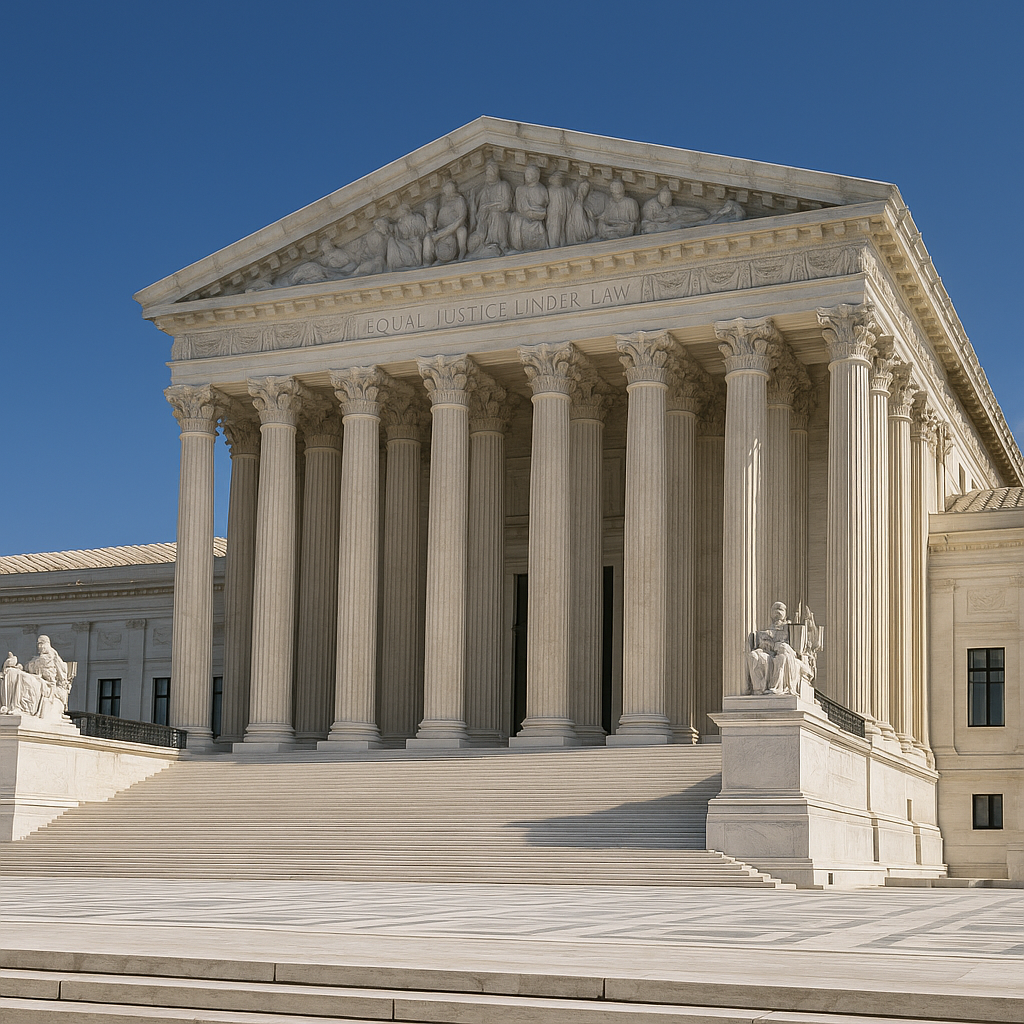
The U.S. Supreme Court has once again become the battleground for a high-stakes showdown over redistricting, as it temporarily blocked a lower court’s order requiring Alabama to redraw its congressional map to include two majority-Black districts. The decision underscores ongoing tensions surrounding voting rights, racial equity, and the limits of judicial intervention in politically charged disputes.
What Prompted the Legal Clash in Alabama?
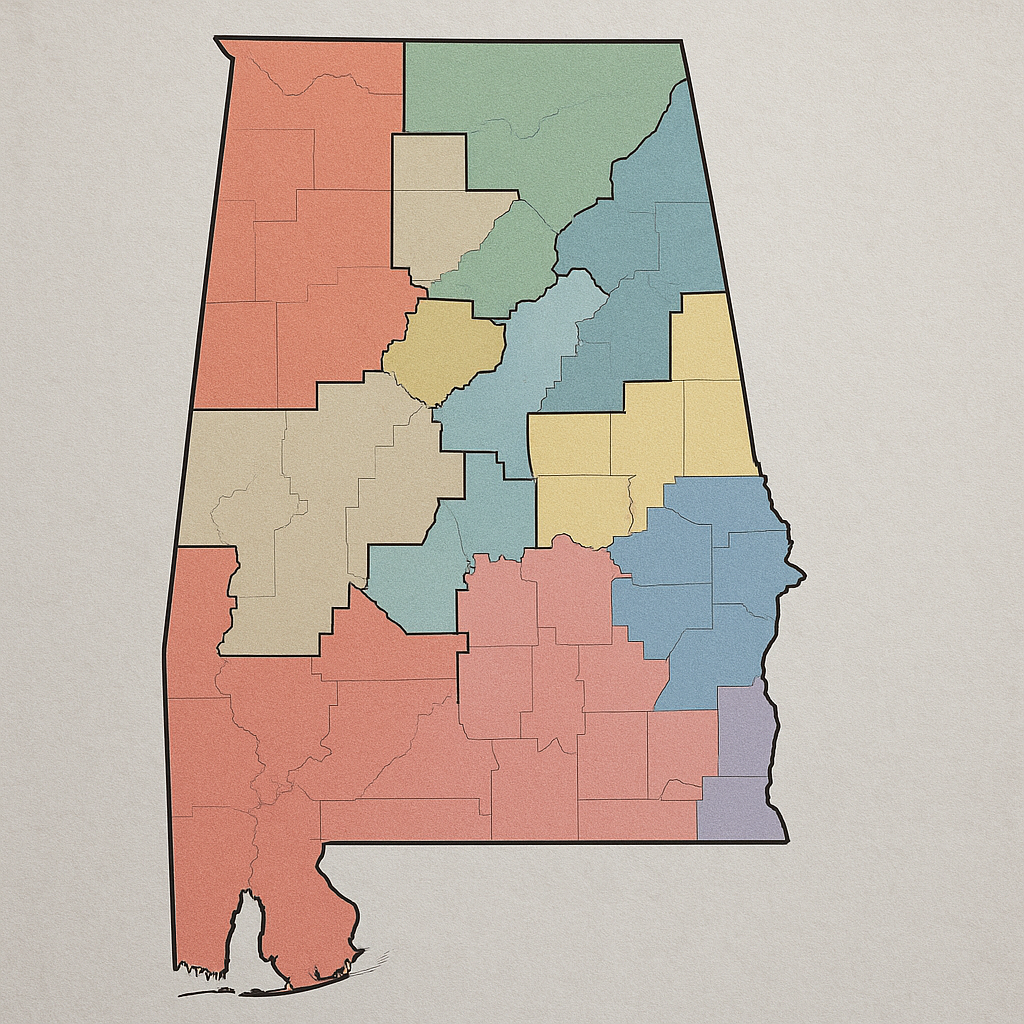
This dispute originates from Alabama’s latest congressional redistricting effort, initiated in the wake of the 2020 U.S. Census. Following the Census, each state is tasked with redrawing its district boundaries to reflect population changes. However, Alabama’s map—approved by the state’s Republican-controlled legislature—was criticized for failing to provide adequate representation for its Black population, which accounts for roughly 27% of the state’s residents.
In June 2023, a federal court ruled that Alabama’s map likely violated the Voting Rights Act, a landmark law designed to prevent racial discrimination in elections. The court directed the state to revise its districts, ensuring that the new map included two districts where Black voters would constitute the majority or at least come close to having a significant voting bloc. However, Alabama contested the ruling, taking its case to the nation’s highest court.
This week, the Supreme Court issued an emergency stay, effectively halting enforcement of the lower court’s directive. While the Court’s decision does not end the battle, it pushes back immediate changes to the state’s district map in advance of the 2024 elections.
The Broader Implications of the Supreme Court’s Stay
The Court’s decision has far-reaching consequences, not only for Alabama but also for the broader interpretation of voting rights across the country. At the heart of the issue is the Voting Rights Act, specifically its Section 2, which prohibits voting practices that discriminate based on race, color, or language minority status.
Critics of Alabama’s map argue that maintaining a single majority-Black district dilutes the power of Black voters, violating their right to equitable representation. According to civil rights advocates, this suppression perpetuates systemic challenges to democracy. “Alabama is failing to comply with its constitutional duty to ensure fairness and equity in representation,” one voting rights expert noted. “The Supreme Court’s intervention risks sending a chilling effect to other states considering redistricting reforms.”
On the opposing side, Alabama officials contend that creating two majority-Black districts would amount to racial gerrymandering, prioritizing race above other traditional redistricting criteria, such as geographic contiguity and community interests. The state’s legal team argued that Alabama’s approach complies with the Voting Rights Act as currently written and should not be adjusted under judicial mandate.
A Polarized Legal Precedent
This is not the first time the Supreme Court has influenced redistricting debates. In 2019, the Court’s conservative majority ruled that federal courts lacked authority to intervene in partisan gerrymandering cases, leaving such disputes largely to state legislatures and courts. However, cases involving claims of racial gerrymandering or voting rights violations remain within the high court’s jurisdiction.
The Court’s recent track record on voting rights has been contentious. Critics point to its 2013 decision in Shelby County v. Holder, which struck down key provisions of the Voting Rights Act—particularly a requirement that certain states with documented histories of racial discrimination receive federal approval before altering voting laws. That ruling, many argue, has emboldened states to roll back protections for minority voters.
In contrast, just earlier this year, the same Court issued a surprising ruling in Merrill v. Milligan, upholding a lower court’s decision that Alabama’s initial redistricting violated the Voting Rights Act and needed to be redrawn. This reversal left many legal analysts puzzled and has highlighted the unpredictability of the Court’s stance on voting matters.
Political Reactions: A Balancing Act for Both Sides
The Supreme Court’s intervention has elicited mixed reactions from political leaders, activists, and analysts. Civil rights groups condemned the stay, framing it as a setback for fair representation and racial justice. “This decision delays justice for Black voters in Alabama who deserve the same representation afforded to every other community,” said a prominent civil liberties attorney.
Meanwhile, Republican leaders in Alabama and beyond celebrated the stay, viewing it as a validation of their argument against federally imposed redistricting standards. “States should have the right to create district maps through their own legislative processes without overreach from unelected judges,” a state representative commented.
Yet, as legal analysts point out, the Court’s decision is only a temporary measure. The underlying constitutional questions remain unresolved and are expected to resurface when the Court tackles the case more thoroughly in its upcoming term.
What Lies Ahead?
For now, Alabama will proceed into the 2024 elections using its existing map, leaving the ultimate fate of its redistricting battle to future court decisions. Beyond the immediate case of Alabama, this issue underscores a broader concern regarding the state of voting rights in America. With growing calls for legislative reforms to address racial inequities, some advocates argue that Congress must act to strengthen the Voting Rights Act and provide clearer guidance on redistricting standards.
At the same time, closely contested elections in the coming years are likely to place further scrutiny on how district lines are drawn. Political observers suggest that the resolution of Alabama’s case could influence redistricting debates in states such as Louisiana, Georgia, and Texas, where similar racial and partisan questions loom large.
The Supreme Court itself faces its own battle for credibility. Following several high-profile and polarizing rulings in recent years, the Court’s decisions on voting rights are being closely monitored to determine whether it can uphold its reputation as an impartial arbiter of justice in deeply divisive cases.
Key Takeaways for the Future
The Court’s latest ruling adds to the complexity of Alabama’s redistricting fight, leaving questions about the future of the Voting Rights Act and equitable racial representation unresolved. As this legal saga evolves, policymakers, activists, and ordinary citizens alike are left in a state of uncertainty, knowing that the implications of this case extend far beyond a single state’s boundaries.
Whether the Court’s ultimate decision will bolster protections for minority voters or redefine the scope of those protections remains to be seen. For now, this pause in the legal battle serves as only the latest chapter in a continuing narrative over the balance between states’ rights and voter equity in the United States.