Samsung has confirmed it is developing Samsung floating data centers housed aboard ships, and the company has already received regulatory approval to move the project forward, according to a report published by TechSpot. The approval marks a concrete step beyond concept — this is not a paper proposal.
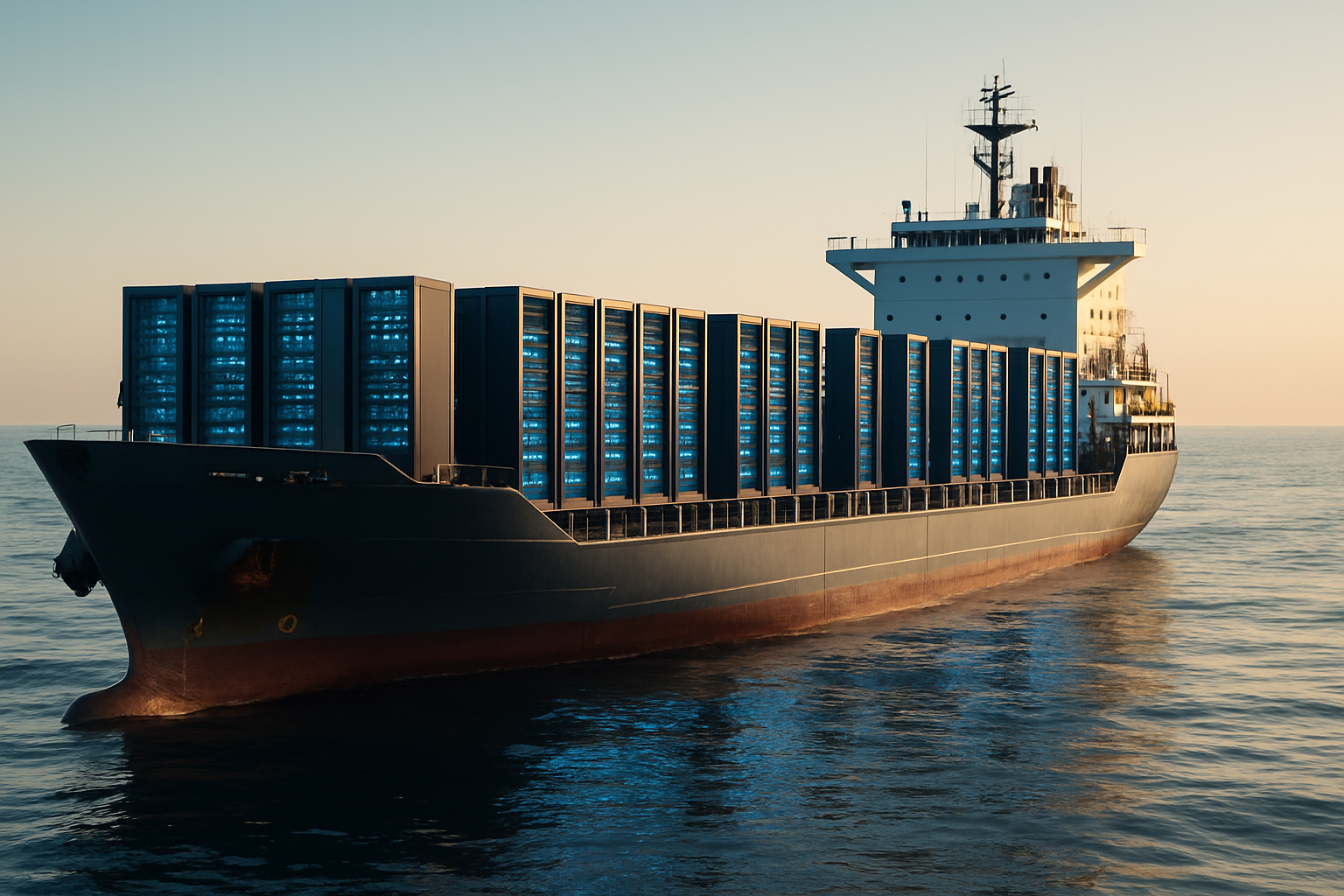
The non-obvious detail buried in the story: Samsung’s ship-based approach isn’t primarily about saving money on land — it’s about using seawater as a natural coolant. Ocean water allows for far more efficient thermal management than traditional air-cooled land facilities, which is one of the biggest operational cost drivers in modern data centers.
Why Samsung Floating Data Centers Make Engineering Sense
Conventional data centers are power-hungry and heat-intensive. Cooling systems alone can consume 30–40% of a facility’s total energy budget. Placing server infrastructure on a vessel at sea gives operators direct access to a virtually unlimited heat sink — the ocean itself. This could dramatically cut energy costs and shrink the carbon footprint of AI and cloud workloads, which have surged globally through 2025 and into 2026.
Ship-based data centers also sidestep one of the most frustrating bottlenecks in the industry: permitting. Building a land-based facility can take years to clear zoning, environmental, and construction approvals. A vessel can, in theory, be repositioned to international waters or different jurisdictions — offering flexibility no onshore facility can match.
Samsung Already Has the Green Light
Regulatory approval is the milestone that separates Samsung’s project from the pile of offshore data center concepts that have circulated in tech circles for over a decade. Microsoft once explored a similar idea with its Project Natick, which submerged a data center capsule underwater off the Scottish coast. Samsung’s approach is distinct — the infrastructure sits on ships, not below the surface, making maintenance and hardware upgrades far more practical.
The approval Samsung secured signals that at least one regulatory body has found the ship-based model meets safety and operational standards. That is significant for the broader industry: it creates a precedent other companies can point to when seeking their own sign-offs for maritime tech deployments.
The AI Demand Problem No One Has Fully Solved
Global demand for AI infrastructure has outpaced the construction of traditional data centers. Power grids in the United States, Europe, and Asia are under strain. Utilities in several U.S. states have delayed new data center connections due to capacity limits. The offshore data center model — whether on ships or submerged — is emerging as one credible answer to the physical and logistical constraints that onshore builds face.
Samsung’s move positions the company not just as a chipmaker or consumer electronics giant, but as a serious player in the global AI infrastructure race. The company already supplies memory and storage components to most of the world’s largest cloud providers. Owning ship-based data center capacity would let Samsung capture more of the value chain end-to-end.
- Natural seawater cooling reduces energy consumption compared to air-cooling systems.
- Mobility allows vessels to relocate based on regulatory or operational needs.
- Faster deployment compared to the multi-year permitting timelines for land-based builds.
- Scalability — additional ships can be added to a fleet as demand grows.
Challenges Still Ahead for Ship-Based Infrastructure
Maritime data centers are not without real risks. Saltwater environments are corrosive, and hardware exposed to humid sea air degrades faster than in controlled onshore conditions. Redundant power systems, storm resilience, and secure undersea cable connections all add engineering complexity. Staffing and servicing vessels at sea also raises operational costs that partially offset the cooling savings.
Connectivity is another open question. Ship-based data centers would need to tie into existing submarine cable networks or rely on satellite links — both of which introduce latency and potential single points of failure that land-based hyperscale facilities typically avoid.
Still, the fact that Samsung has cleared the regulatory hurdle suggests the company has at least preliminary answers to these challenges. The next stage will be watching whether the first operational vessel enters service on schedule and whether rival cloud providers start filing their own maritime permits.
What Happens Next
Samsung has not publicly disclosed a commercial launch date for its floating data center fleet, but the regulatory green light means construction and outfitting of the first vessel can proceed without a legal hold-up. Industry observers will be watching for partnership announcements — whether Samsung operates the ships independently or leases capacity to hyperscalers like Amazon Web Services, Google, or Microsoft.
For a sense of how quickly ambitious infrastructure bets can reshape entire industries, consider how the economic footprint of large-scale venue builds has evolved. The same principle applies here: whoever controls the physical infrastructure of AI computing controls enormous leverage over the digital economy. Samsung just took a meaningful step toward owning a piece of that future — on the water.