Ukrainian President Volodymyr Zelenskyy declared on June 22, 2026 — the 85th anniversary of Nazi Germany’s invasion of the Soviet Union — that Ukraine has begun returning the war to Russia, and that the G7 bloc of leading democracies stands firmly behind that effort. The statement, reported by United24 Media, marks one of Zelenskyy’s most direct public assertions yet that Ukraine is no longer fighting purely a defensive war inside its own borders.
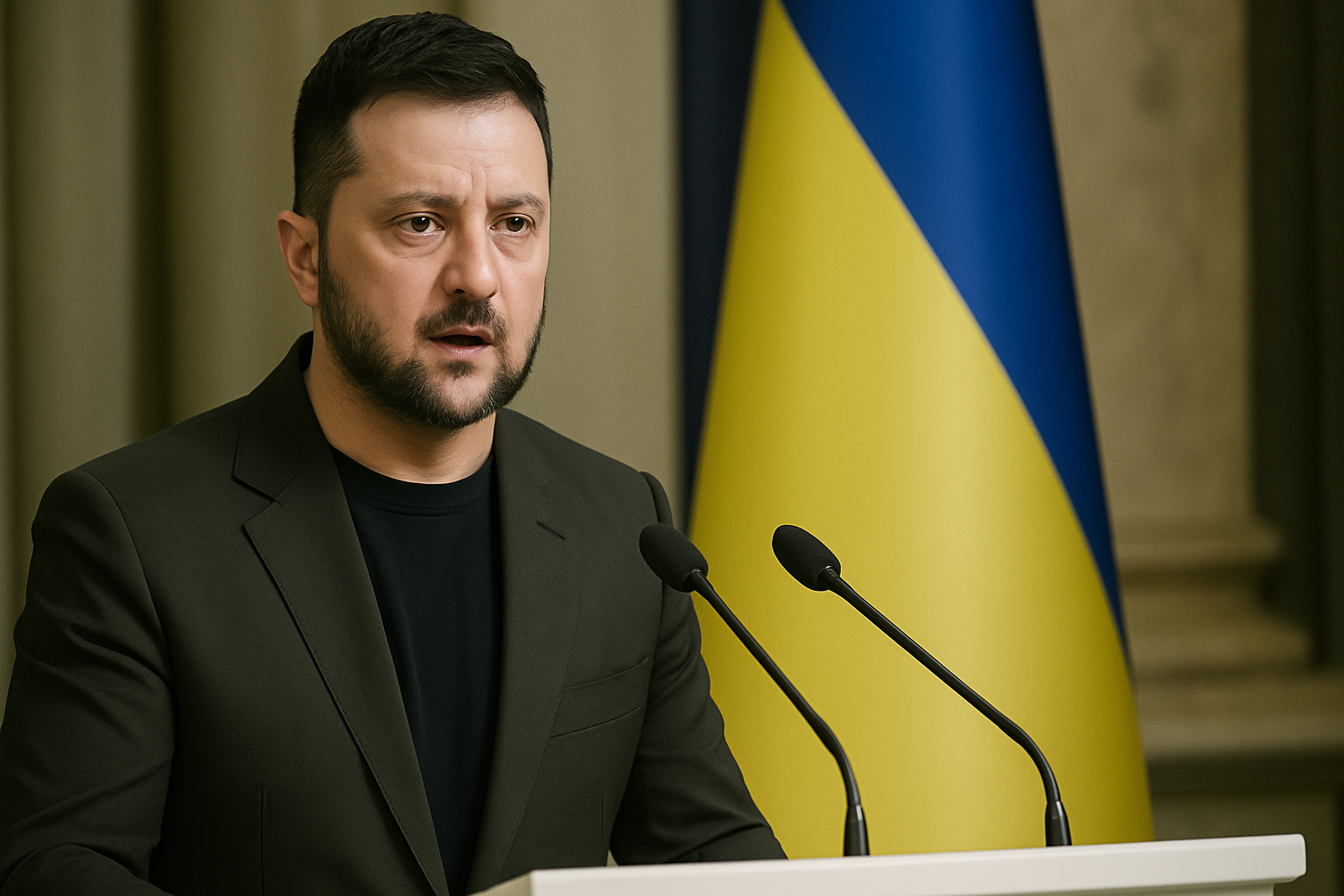
The timing of the announcement was deliberate and symbolic. Zelenskyy chose June 22 — a date seared into Eastern European historical memory — to signal that Ukraine’s posture has fundamentally shifted from absorbing Russian strikes to projecting force back onto Russian territory. That choice of date is the kind of detail easy to miss but impossible to ignore once you see it.
What “Returning the War to Russia” Actually Means
Zelenskyy’s framing is pointed. Ukraine has carried out a series of long-range drone and missile strikes deep inside Russia over recent months, targeting military infrastructure, fuel depots, and logistics hubs well beyond the front lines. His June 22 statement frames those operations not as isolated incidents but as a coherent, escalating strategy — one now openly validated by G7 partners.
The G7 bloc — the United States, United Kingdom, Canada, France, Germany, Italy, and Japan — reaffirmed its support for Ukraine’s right to self-defense, including operations that strike legitimate military targets on Russian soil. That backing matters enormously for Ukraine’s legal and diplomatic standing. It signals that the world’s wealthiest democracies are not asking Kyiv to limit itself to its own territory when Russian forces continue to launch missiles at Ukrainian cities, hospitals, and energy infrastructure.
Ukraine has consistently maintained that striking military assets inside Russia is a matter of basic self-defense under international law, not escalation. The G7’s renewed endorsement strengthens that argument heading into the second half of 2026.
G7 Support: More Than Words
G7 backing is not merely rhetorical. Since the full-scale invasion began in February 2022, the bloc has coordinated hundreds of billions of dollars in military, financial, and humanitarian aid to Ukraine. In 2026, the focus has shifted toward sustained long-term commitments — multi-year military supply agreements and continued frozen-asset mechanisms that funnel Russian sovereign funds toward Ukrainian reconstruction.
The renewed G7 statement accompanying Zelenskyy’s declaration reinforces that none of the bloc’s members are pulling back. For a Ukrainian public that has endured more than four years of full-scale war, the political signal from allied capitals is as important as any single weapons package.
Ukraine’s military operations inside Russia have also created real tactical pressure. By forcing Russian commanders to defend their own rear areas — airfields, command centers, rail links — Ukraine compels Moscow to divert resources away from front-line offensives. That strategic logic underpins Zelenskyy’s confidence in presenting this shift publicly.
Zelenskyy’s Message to the Ukrainian People
Beyond the diplomatic audience, Zelenskyy’s statement was clearly aimed at Ukrainian civilians and soldiers who have borne devastating losses. Framing the current moment as one of initiative — rather than endurance — serves a critical morale function. Ukraine has sovereignty, a recognized right to self-defense, and allies willing to say so publicly. That is a meaningfully different position than where Ukraine stood even eighteen months ago.
The anniversary context deepened the resonance. On June 22, 1941, Operation Barbarossa began — a catastrophic invasion that killed tens of millions across the Soviet Union and left a trauma that still shapes Eastern European identity. Zelenskyy invoking that date to announce Ukraine’s offensive shift was a deliberate act of historical reclamation: the invaded nation is not waiting to be liberated. It is acting.
For those following the broader arc of the conflict, the Iran walking out of Switzerland peace talks earlier this month is a reminder of how volatile the wider geopolitical landscape remains — and why Ukraine’s allies are pushing to lock in support now rather than wait for a shifting diplomatic environment.
What Comes Next
Military analysts will be watching whether Zelenskyy’s public declaration is followed by a visible intensification of cross-border strikes or whether it primarily serves a diplomatic and informational purpose heading into summer 2026. Either way, the statement closes a chapter in which Ukraine felt obligated to downplay or deny operations on Russian soil to avoid alarming nervous allies.
That era appears to be over. With G7 partners explicitly on record supporting Ukraine’s right to strike military targets inside Russia, Kyiv has more room to operate — and more incentive to show results. Zelenskyy has staked a public claim: Ukraine is no longer simply surviving this war. It is shaping it.
Follow NarwhalTV for continuing coverage of the conflict and its global ripple effects. For a sense of how shifting alliances are reshaping international sport and diplomacy simultaneously, see our World Cup 2026 power rankings — another arena where geopolitics and national identity are colliding in real time this summer.