The U.S. Supreme Court ruled Monday that birthright citizenship is constitutionally protected, rejecting a challenge that sought to end automatic citizenship for children born on American soil to non-citizen parents. NPR reported the decision June 30, marking one of the most closely watched constitutional rulings of the decade.
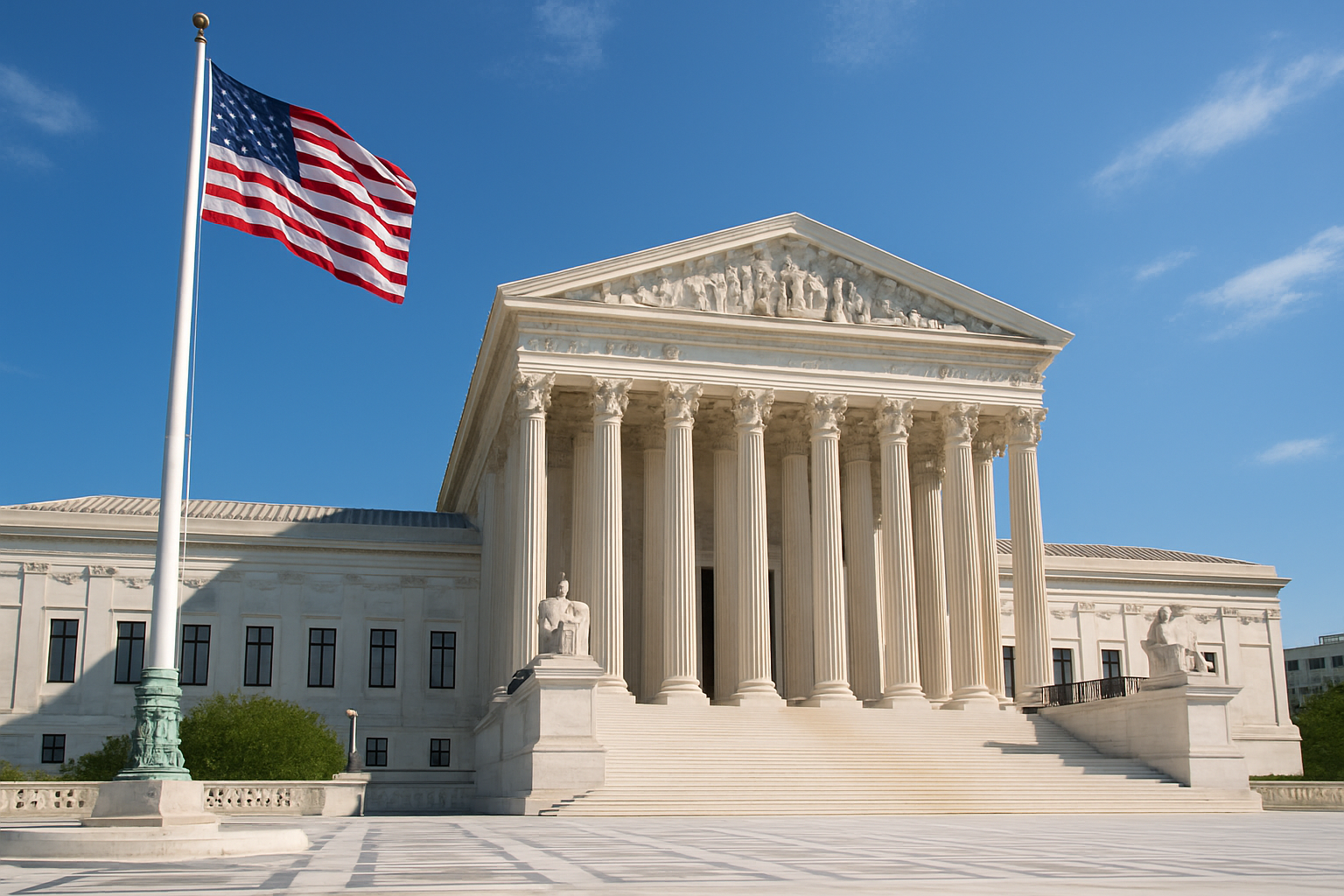
The case had been seen as an existential test for the Fourteenth Amendment’s Citizenship Clause, which states that all persons “born or naturalized in the United States, and subject to the jurisdiction thereof, are citizens.” The Court’s ruling affirms that this language means what it has long been understood to mean: birth on U.S. soil confers citizenship, regardless of the parents’ immigration status.
One detail that drew less attention than the outcome itself: the ruling directly blocks enforcement of an executive order that had sought to restrict birthright citizenship for children of undocumented immigrants and certain visa holders — an order that had already been frozen by lower courts since early in the year. The Supreme Court’s decision now permanently settles that injunction in favor of the challengers.
What the Fourteenth Amendment actually says — and what the Court decided
Ratified in 1868 primarily to guarantee citizenship to formerly enslaved people, the Fourteenth Amendment has anchored birthright citizenship for over 150 years. Opponents of the policy argued that the phrase “subject to the jurisdiction thereof” was meant to exclude children of people with no lawful immigration status. The Court rejected that reading.
Justices in the majority held that longstanding precedent, most notably the 1898 case United States v. Wong Kim Ark, settled the question. In that case, the Court ruled that a child born in San Francisco to Chinese immigrant parents was a U.S. citizen at birth — a holding that has defined citizenship at birth ever since. Monday’s decision treats Wong Kim Ark as controlling and declines to overturn it.
The ruling applies nationwide, ending months of legal uncertainty during which some families had been unsure whether children born in the U.S. would receive citizenship documentation.
Hundreds of thousands of births affected each year
The practical stakes are enormous. The Pew Research Center has estimated that roughly 250,000 to 300,000 children are born annually in the United States to at least one parent who is undocumented. Had the Court ruled the other way, those children would have faced statelessness in many cases — a condition international law strongly disfavors — since their parents’ countries of origin may not automatically grant them citizenship either.
Immigration attorneys had warned that stripping birthright citizenship would also create administrative chaos: birth certificates, Social Security numbers, and passports are all tied to citizenship status, and a rollback would have forced a legal reclassification of an enormous population.
The decision does not change anything about immigration enforcement or the legal status of undocumented parents. Children born in the U.S. gain citizenship; their parents do not gain legal status as a result.
A ruling that divides along more than partisan lines
Legal scholars had split on the merits of the challenge in ways that didn’t map cleanly onto the Court’s usual ideological divide. Some originalist scholars had argued that the historical record at the time of the Fourteenth Amendment’s ratification actually supported broad birthright citizenship, undercutting the argument that a textualist or originalist reading would favor restriction.
Harvard constitutional law professor Laurence Tribe had publicly argued before the ruling that any effort to narrow the Citizenship Clause by executive order — rather than constitutional amendment — was “plainly unconstitutional.” The Court’s decision aligns with that position, though the majority opinion’s precise reasoning will be parsed for weeks as the full text circulates.
For a sense of how the Court has been reshaping executive authority in adjacent areas, see our earlier coverage of the Supreme Court letting the president fire an FTC member, a ruling that expanded presidential power in a different direction. Monday’s birthright decision is a notable counterpoint — an area where the Court drew a firm line against executive reach.
State-level implications and what comes next
Several states had passed or were preparing legislation that mirrored the federal executive order, anticipating that the Supreme Court might open the door to restrictions. Those efforts are now dead on arrival. State laws that attempt to define citizenship more narrowly than the Fourteenth Amendment permits would face immediate constitutional challenges under Monday’s ruling.
Congress could theoretically pursue a constitutional amendment to change birthright citizenship, but that path requires two-thirds approval in both chambers and ratification by three-fourths of states — a threshold that has not been cleared for any amendment since 1992. No serious amendment effort is currently underway.
For immigrant families who spent months in legal limbo, the immediate consequence is concrete: children born in the U.S. will continue to receive citizenship documentation without interruption. The Court’s recent run of consequential rulings on citizenship and voting rights has reshaped how both parties think about constitutional litigation strategy heading into the next election cycle.
The federal government now has 30 days to formally rescind guidance issued under the earlier executive order, per the terms of the lower court injunction that the Supreme Court’s ruling makes permanent. Birth registration agencies in several states had already been operating under court orders to process citizenship documents normally; that practice now has the Court’s full backing.