Researchers have successfully regrown knee cartilage in human tissue samples that had deteriorated so severely they were already scheduled for total joint replacement surgery, according to a study published and reported by Science Daily in June 2026. The breakthrough marks the first time cartilage regeneration has been demonstrated at this advanced stage of degradation in human tissue — not animal models or early-stage damage.
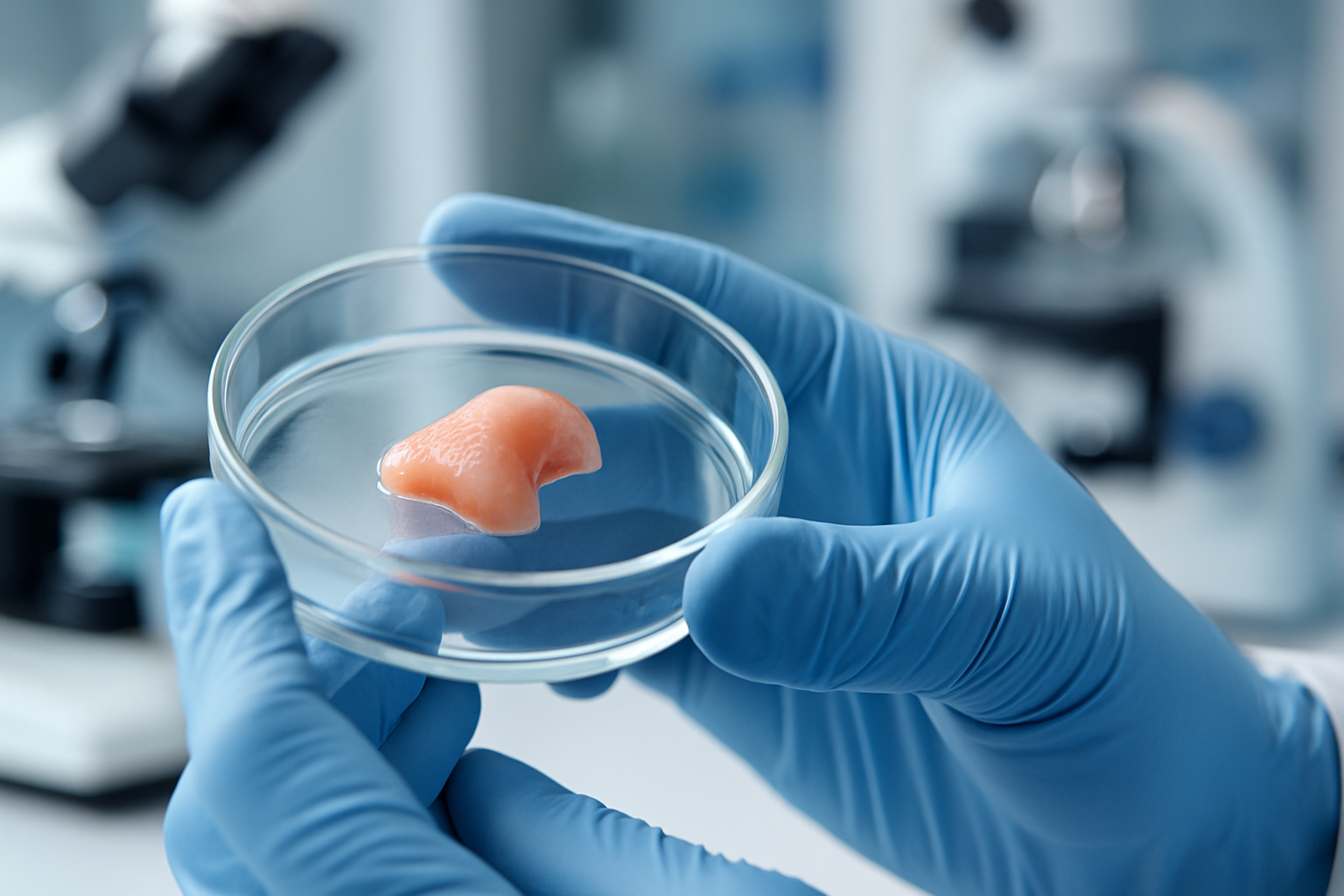
The non-obvious detail buried in the coverage: the regrown tissue was not a thin surface patch. It exhibited the layered, load-bearing architecture of healthy articular cartilage, the type that cushions bones during walking, running, and climbing stairs. That structural quality has historically been the barrier that stopped earlier regeneration attempts from surviving real mechanical stress.
How the cartilage regeneration actually worked
The research team used a scaffold-based tissue engineering approach, seeding the damaged joint tissue with specialized chondrocyte progenitor cells — the same cells responsible for cartilage formation during fetal development. Those cells were guided by a bioactive hydrogel designed to mimic the chemical environment of a developing joint, prompting them to lay down new extracellular matrix rather than scar tissue.
Earlier attempts at cartilage regeneration typically worked on mild-to-moderate damage and failed to produce the dense collagen network that makes healthy cartilage tough enough to handle body weight. By targeting end-stage tissue and still achieving structural integrity, the team cleared a bar that the field had been struggling to reach for nearly two decades.
Knee osteoarthritis affects an estimated 365 million people worldwide, according to global disease burden data, and total knee replacement surgery — which involves removing the joint entirely and fitting a metal-and-plastic implant — remains the standard treatment when cartilage is gone. Implants typically last 15 to 20 years, meaning younger patients often face a second surgery later in life. A biological repair that restores native tissue could eliminate that second operation entirely.
End-stage tissue was the deliberate test case
The researchers specifically chose tissue from patients already approved for replacement surgery rather than starting with less damaged samples. That choice was strategic: it demonstrates the technique’s ceiling rather than its floor, and it creates a clearer clinical path because end-stage patients already represent an established surgical population with defined criteria for intervention.
If the approach moves into clinical trials, those same patients — people currently told their only option is a metal implant — would be the first candidates for enrollment. That pipeline matters because it sidesteps the years often required to identify and recruit earlier-stage patients whose damage is harder to standardize.
Cartilage has almost no blood supply, which is precisely why the body cannot repair it on its own after injury or disease. The hydrogel scaffold essentially substitutes for the vascular signaling that other tissues use to trigger healing. Removing that dependency on blood flow is what makes the approach viable for a tissue type that has resisted regeneration efforts for so long.
Distance left to cover before the clinic
The work remains at the ex vivo stage — meaning it was performed on tissue outside a living body, not inside a patient’s knee. Moving from a lab dish to an implanted repair requires demonstrating that the regrown cartilage survives under the dynamic, cyclical loads of an actual joint over months and years, integrates cleanly with surrounding bone, and does not trigger immune rejection in a living system.
Those are solvable problems, but they take time. Animal model studies and eventual Phase I human safety trials are the next steps, and the full regulatory path to approval in the United States typically spans a decade or more for novel biological therapies. Still, reaching this proof-of-concept in end-stage human tissue compresses the front end of that timeline considerably — previous research spent years just trying to confirm whether regeneration at this severity was biologically possible at all.
For context on how quickly materials science is enabling biological breakthroughs in other sectors, new membrane technology in China recently made seawater desalination cheaper than bottled water — a similar story of an engineering scaffold unlocking something nature couldn’t do alone.
Orthopedic surgeons and rheumatologists have long treated joint replacement as an endpoint rather than a waypoint. This research, if it holds up in living systems, would reframe it as a last resort that fewer patients ever reach. The immediate next milestone to watch for is a peer-reviewed animal trial result, which the research group is expected to publish before the end of 2026.