Reports that two high-speed trains collided in Spain spread rapidly across news aggregators and social platforms on Thursday, October 29, 2026, pushing the story to the top of international discussion boards including Reddit’s r/news community. As of publication, Spanish authorities had not released a consolidated official account confirming the number of casualties, the precise location or the sequence of events that led to the two trains coming into contact.
NarwhalTV is treating the early reporting with caution. Rail incidents in their first hours are among the most error-prone stories in news, and initial figures circulated online frequently diverge from the verified record published later by emergency coordination centres. What follows is a clear account of what can be established, what remains open, and the institutional machinery that will determine the facts.
What is confirmed and what is not
The core claim driving the story is that two trains operating on Spain’s high-speed network made contact. Beyond that, several critical elements remain unverified in public sources:
- Casualty figures. In Spain, confirmed injury and fatality counts come from regional emergency services and the national emergency coordination service reachable via 112, not from passenger accounts or unattributed social posts.
- The type of collision. A low-speed contact inside a station or depot, a rear-end impact on open line, and a collision at a junction are very different events with very different consequences. Early headlines often compress all of them into the word “collide.”
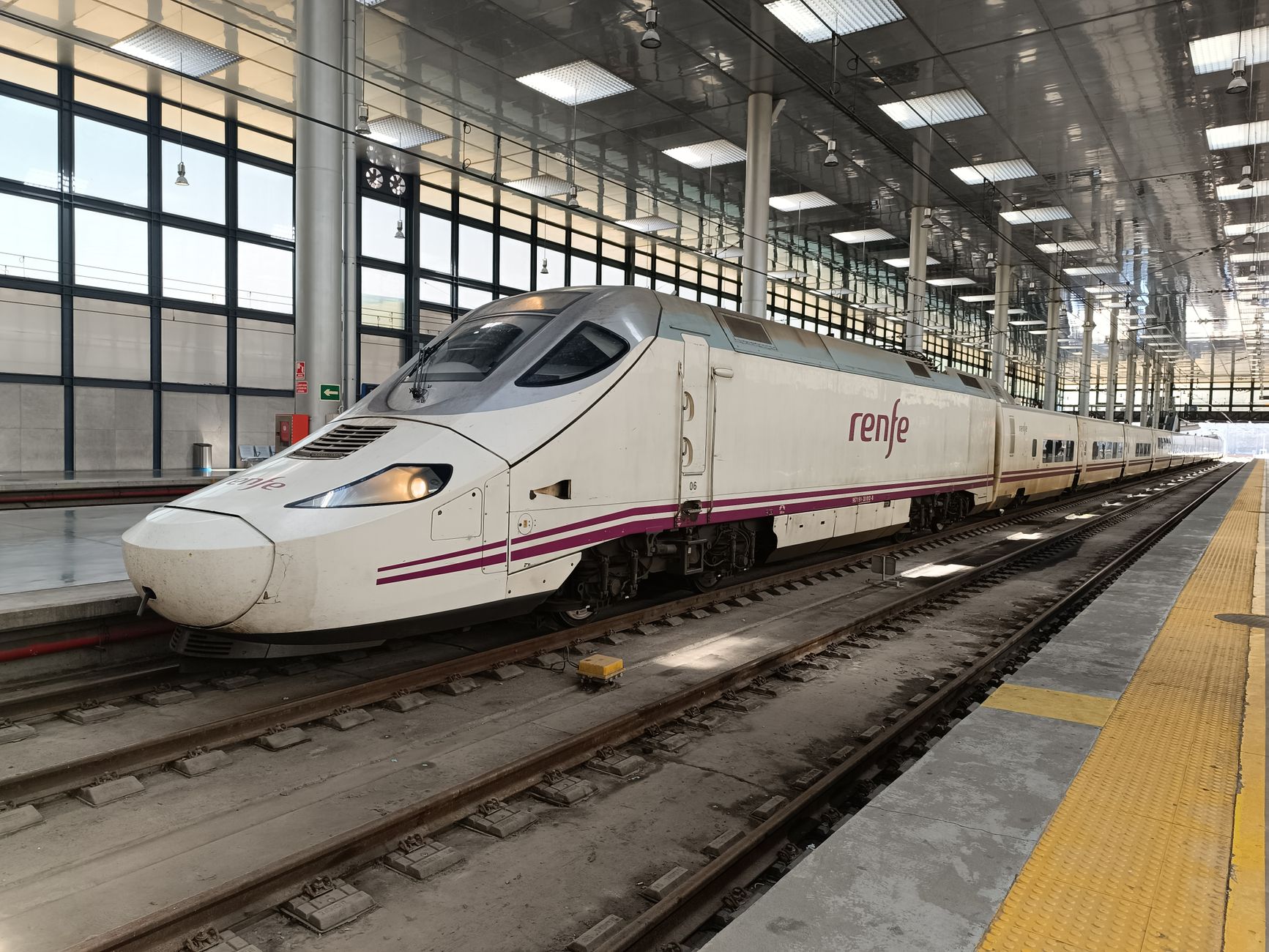
- The operators involved. Spain’s high-speed corridors have carried competing services since market liberalisation, with Renfe’s AVE and Avlo brands running alongside Ouigo España, backed by France’s SNCF, and Iryo, backed by Trenitalia and Air Nostrum. More operators on the same tracks means more trains per hour and a higher chance that any single disruption involves rolling stock from different companies.
- The cause. Signalling failure, a misread authority to proceed, infrastructure works, a track-circuit fault and human error are all plausible categories. None can be assigned responsibly before investigators publish findings.
The network involved
Spain operates the longest high-speed rail network in Europe and the second longest in the world after China, with roughly 4,000 kilometres of dedicated high-speed line radiating largely from Madrid toward Barcelona, Seville, Málaga, Valencia, Alicante, Valladolid, Galicia and the Basque Country. The infrastructure is owned and managed by Adif Alta Velocidad, a state-owned manager that is legally separate from the train operating companies that use it.
That separation matters for how an incident is handled. Adif controls the signalling, the traffic management centres and the track; operators control the trains and crews. Any investigation has to reconstruct the interaction between the two.
Signalling and protection systems
Spanish high-speed lines are equipped with the European Rail Traffic Management System, generally at Level 1 or Level 2, layered over the older ASFA national system used as a fallback. ERTMS is designed to supervise a train’s speed continuously and apply the brakes automatically if a driver exceeds a movement authority. It is one of the reasons that collisions between high-speed trains at line speed are extremely rare anywhere in Europe.
Most contacts between trains in high-speed environments happen where that protection is weakest or deliberately relaxed: in station throats, during degraded-mode operation after a fault, inside maintenance facilities, or on conventional-gauge connecting sections where trains leave the dedicated high-speed infrastructure.
How Spain investigates
Two parallel processes typically follow a serious rail incident in Spain. The Comisión de Investigación de Accidentes Ferroviarios, the independent rail accident investigation body attached to the Ministry of Transport and Sustainable Mobility, conducts a no-blame technical investigation aimed at identifying causes and issuing safety recommendations. Separately, an investigating magistrate may open a judicial inquiry to determine whether criminal liability exists.
Under European Union rules, the technical investigation body is expected to publish a report within 12 months of the event where possible, with a preliminary account issued far sooner. Investigators will seek event recorder data from both trains, signalling logs from Adif’s control centre, radio recordings, crew rosters and maintenance records.
Historical context
Spain’s most serious modern rail disaster occurred on July 24, 2013, when an Alvia service derailed at the Angrois curve on the approach to Santiago de Compostela, killing 80 people. That crash occurred on a transition between a high-speed section protected by ERTMS and a conventional section where protection was less comprehensive, and it reshaped Spanish debate over signalling handovers, driver workload and risk assessment. A long-running trial concluded with convictions related to the handling of that risk assessment.
Since then, Spain’s high-speed system has carried hundreds of millions of passengers with a strong overall safety record. Serious incidents remain statistically uncommon, which is precisely why reports of a collision between two high-speed trains attract immediate global attention.
What travellers should do
Passengers with journeys booked on Spanish high-speed corridors should check directly with their operator rather than relying on aggregated social media updates. Renfe, Ouigo España and Iryo each publish service status notices, and Adif issues infrastructure advisories when a line is closed or capacity is reduced. Disruption following any line blockage typically extends well beyond the affected section, because high-speed paths are tightly scheduled and recovery is slow once a corridor is interrupted.
People seeking information about someone who may have been travelling should use the official helplines published by regional emergency services rather than contacting individual stations.
Reporting standards during a developing story
The first hours of a transport incident are when misinformation spreads fastest, often amplified by accounts recycling old footage. The reliability of public discussion spaces has itself become a live issue, as covered in our report on how Discord public server messages will show up in Google, and in our coverage of how a hacker targeted FEC systems according to an internal email. Readers are advised to anchor on named official sources.
NarwhalTV will update this article as Spanish authorities, Adif and the operators involved release verified information.