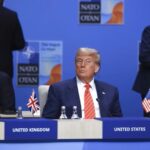
US Defense Secretary Pete Hegseth has restricted bilateral military ties between Washington and Ottawa through a classified directive dated November 13, according to reporting citing the Washington Post. The restrictions, reported by the Post on November 20, place new limits and conditions on US military engagements with Canadian forces, while the Pentagon says core NATO and NORAD operations will remain unchanged.

The directive comes amid a wider diplomatic and economic dispute between the United States and Prime Minister Mark Carney’s government, including retaliatory tariffs and President Donald Trump’s repeated rhetoric about annexing Canada.
November 13 memo limits military ties
The News reported that the instructions circulated as a secret memo, citing the Post’s November 20 account. One US official quoted by the Post described the move as a “slap in the face” to Ottawa.
Hoodline identified the memo’s date as November 13 and said officials familiar with the directive described new restrictions on the defense relationship. Its account said Reuters also reported on the Post’s findings, noting that the memo preceded public reporting by roughly a week.
As of Hoodline’s November 22 report, no Canadian government response to the memo had been made public. The outlet also said it remained unclear when the restrictions took effect or whether they had already been put into practice.
Pentagon says NATO and NORAD operations are protected
Chief Pentagon spokesman Sean Parnell said the directive would not affect core defense intelligence sharing or joint operations conducted through NATO and NORAD, the North American Aerospace Defense Command, according to The News.
Parnell said the department was ensuring that bilateral engagements advanced “tangible U.S. defense objectives” and prioritized homeland and hemispheric defense. He also said those engagements would support Canada’s ability to fulfill its NATO commitments.
Separately, an official from another country in the Five Eyes intelligence alliance told the Post that US data-sharing through separate channels had already declined over the past year, The News reported. That account concerned sharing outside the core arrangements Parnell said would be unaffected by the directive.
Annexation rhetoric and tariffs strain the partnership
The restrictions on military ties add to tensions that both outlets described as extending beyond defense. The News placed the memo within the dispute between Washington and Carney’s government, pointing to retaliatory tariffs and Trump’s repeated statements about annexing Canada.
Hoodline said the Post characterized the directive as an escalation in a multifaceted clash between the two countries. It also cited BBC reporting describing the United States and Canada as long-standing defense partners and allies, despite trade disputes and pointed rhetoric in recent months.
Canada has responded in part by increasing its own defense spending after years of falling short of NATO targets, according to the BBC reporting cited by Hoodline.
Canadian officials rebuke a separate Hegseth post
The memo became public after a separate controversy involving Hegseth and a Canadian military cadet. Canadian Defence Minister David McGuinty said on Tuesday that a social-media post by Hegseth was “below the dignity of the office,” according to BBC reporting cited by Hoodline.
The Pentagon responded that the post “speaks for itself,” without offering a further explanation. Hoodline’s account said Canada’s national cadet programme provides leadership and skills training for young people aged 12 to 18, and that cadets connected to the incident had drawn attention following the post.
General Jennie Carignan, Canada’s top military commander, said officials were in contact with the cadets involved and were considering a response with them. “We are consulting with them on how they want to go about doing this,” she said, according to the BBC account.
European force review adds to allied uncertainty
Hoodline also placed the Canada directive alongside an earlier Hegseth announcement of a six-month review of US forces in Europe. According to earlier Washington Post reporting cited by the outlet, the outcome would hinge on how quickly European countries assumed more responsibility for their own security.
That earlier Post account described European allies and Canada as adjusting to an increasingly unpredictable American partner. On the Canada memo itself, Hoodline reported that no comment from Hegseth had been made public. The Pentagon’s stated assurances about NATO, NORAD and core intelligence arrangements remained distinct from the new restrictions on bilateral military ties.