Nvidia’s board has returned Jensen Huang to the chief executive’s office 11 days after he resigned, and the Jensen Huang reinstatement has set President Donald Trump against a group of Republican lawmakers who say the chipmaker’s co-founder is a national security risk. Huang stepped down on Nov. 12 after reports of alleged affairs with Alice Huang, a suspected Chinese spy and former Megaspeed CEO who is no relation, and with Kimberly Powell, Nvidia’s vice president of health care.
Nvidia’s board said it relied on input from senior U.S. officials in concluding that bringing Huang back posed “no national security risk.” Huang addressed employees in a lobby of the company’s Santa Clara, California, headquarters, where the New York Post reported he was greeted with explosive applause.
“Thank you all for the second chance. I am going to be a better CEO the second time around,” Huang said, putting his hand on his heart.
How the Jensen Huang reinstatement came together
Trump was at the center of the lobbying effort to bring Huang back, just under two weeks after his resignation on Nov. 12, according to the New York Post’s account of the president’s remarks. White House pressure intensified after Trump and Vice President JD Vance were briefed on Saturday by Attorney General Todd Blanche, who the Wall Street Journal reported told them the Justice Department did not have evidence that Huang had acted illegally or posed a national security risk.
“I began a push,” Trump told the Journal, after learning that Huang had only “made some indiscretions having to do with other things.” The president said he spoke to the board “in numerous ways” and “through representatives” before learning on Sunday that Huang would be reinstated. “There’s really nobody like him,” Trump said. He added that he called Huang to congratulate him, and that the Nvidia co-founder told him about the chips he wants to design.
Trump said he had wanted to call the board the previous week but held off. “I’m not sure I would have been as successful. The climate became more and more right as the company stock began to tumble,” he said.
A record day in dollar terms on Wall Street
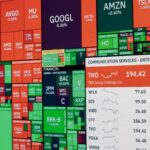
Nvidia’s stock closed Friday at $125.53, a fall of almost 50% from its 52-week high of $243.37. Shares then rose 31% on Monday, adding roughly $950 billion in market value in what the New York Post described as the largest single-day rise in stock market history in dollar terms. In percentage terms, the move fell short of the company’s record 42% gain on March 7, 2000. The Nasdaq 100 rose 6.5%, the Dow climbed almost 1,450 points and the S&P 500 gained 4.75%.
Trump pointed to the market reaction when asked about Republican objections. “I think they’ll see the result is so positive because the public has spoken today. That really shows the decision was right,” he said.
Republican senators say the national security risk remains
Several Republicans broke with the president. Secretary of State Marco Rubio had warned Trump about Alice Huang’s alleged links to China’s spy agency.
Sen. Kevin Cramer of North Dakota wrote on X that “the legal and reputational risk of hiring a CEO who may very well be convicted in the United States or other nations of violating espionage and export control laws is now borne by the board of Nvidia, but the national security risk is passed along to the United States military and its citizens.” He added: “Congress should immediately pass the strictest export controls possible. I hope it’s not too late.”
Sen. Pete Ricketts of Nebraska said Huang’s conduct did not justify his return. “Jensen Huang had multiple affairs including with subordinates and an alleged Chinese spy. His own board described his behavior as lacking ‘candor,'” he wrote. “His behavior does not support reinstatement. Nvidia’s decision today doesn’t excuse Jensen Huang from testifying before Congress.”
Sen. John Curtis of Utah demanded details about which officials advised the board. “I have some questions. Who in our government weighed in? What did they tell the board? And on what basis did the board conclude there was no risk?” he wrote, noting that the board acted while its own independent investigation was still underway and that it had said the previous week it did not intend to reinstate him. “I’d like to know what changed.” He told Politico the episode is “bad, I think, for the administration in a lot of ways — they pick up liability for this decision.”
Sen. Tom Cotton of Arkansas, who leads the Senate Intelligence Committee, called the Nvidia scandal “just the tip of the iceberg” and said, “It’s not resolved because Jensen Huang has his job back.” Rep. Don Bacon of Nebraska said Huang was “compromised and exploited by a Chinese spy.” Outgoing Sen. John Cornyn of Texas questioned the board’s conclusion directly: “No national security risk? Based on what?”
Congressional appearances set for December
Huang is scheduled to sit for a closed-door interview with three House committees on Dec. 1 and to appear publicly before the Senate Banking Committee on Dec. 3. Ricketts said the reinstatement “also doesn’t absolve Nvidia of answering for national security concerns and unaccounted-for chips,” adding, “I look forward to Mr. Huang coming to the Senate in December.” Separately, the Commerce Department has blacklisted Megaspeed from trading with the United States, barring the AI infrastructure company from buying American-made semiconductors.
Foreign Policy editor calls the episode unprecedented
In an opinion piece for Foreign Policy, deputy editor James Palmer argued that the Jensen Huang reinstatement “may be the biggest national security scandal in U.S. history”, comparing it with the Iran-Contra affair, which he wrote “did not involve personal profiteering by the president and his associates” nor “the United States helping its principal geopolitical rival.”
Palmer wrote that both Nvidia and the White House had been warned about the affair, including in a memo to senior officials overseen by Rubio, and that neither acted. He noted that Nvidia struck a deal with the White House last December to sell its H200 chips to China in exchange for a 25 percent cut for the U.S. government, with no public details about how the funds would be used or overseen; that Huang donated $25 million to the president’s ballroom; and that Trump owns large amounts of Nvidia stock. Lawmakers released information showing Nvidia had shipped more than 800,000 advanced chips to Chinese companies as of May 11, including to firms closely linked to the Chinese military, Palmer wrote.
According to Palmer, Treasury Secretary Scott Bessent blamed Commerce Secretary Howard Lutnick for failing to prevent China from accessing the chips. Palmer also wrote that, by Trump’s own admission, the decision on Huang followed a lengthy conversation with Chinese President Xi Jinping about the Nvidia leader, and that Trump issued an executive order on Friday attempting to forestall a congressional investigation into the deal. Alice Huang, her husband and her business partner in Singapore were found in multiple outlets’ reporting to be involved in a network of firms allegedly set up to evade U.S. restrictions and funnel advanced chips to China.