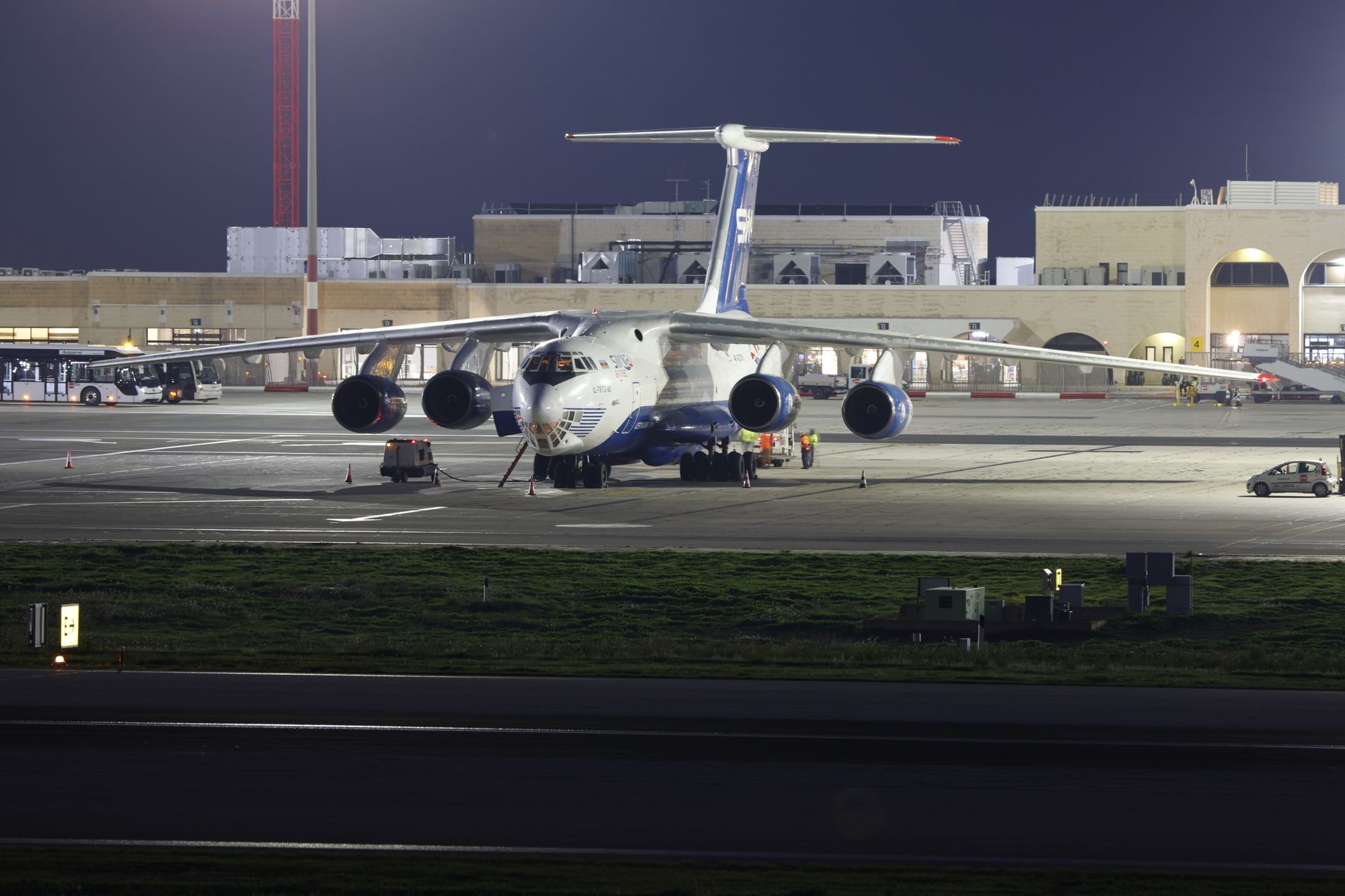
A Boeing 767 freighter flying for Amazon overran the end of runway 30 at Miami International Airport while landing on Sunday afternoon, struck multiple vehicles and caught fire, killing five people and injuring five others. The aircraft, 21 Air Flight 7598, had flown from San Juan, Puerto Rico and came down just before 2 p.m. Eastern, coming to rest in a field beside the airport after crossing the ground between the runway end and the perimeter.
Three of the injured were in critical condition and taken to a trauma center; two others were transported to a local hospital. The dead were not in the aircraft alone – the jet struck vehicles as it left airport property, which is what turned a runway excursion into a mass-casualty event.
The response
Miami-Dade Fire Rescue sent more than 60 units to heavy flames and smoke. Crews described a “very complex fire” involving the engine compartments, and technical rescue teams worked to extract people trapped inside the vehicles the aircraft had hit while an active fuel leak continued at the site. Video from the airport perimeter showed a column of black smoke visible across the western side of the field.
The airport initially closed all runways and taxiways. Two of its four runways reopened after 5 p.m. Eastern, with ground delays expected to run into early Monday – a disruption that ripples further than it looks, because Miami is the largest international freight gateway in the United States and a primary connection point for cargo moving between North and South America.
Who was flying the aircraft
The jet carried Amazon branding, but Amazon did not operate it. The company confirmed the flight was an Amazon service operated by 21 Air, a US cargo carrier that flies 767 freighters. Amazon does not hold an air operator certificate for these services; the Prime Air network is flown end to end by contracted operators, and 21 Air is one of several.
That structure is standard across express freight – FedEx and UPS aside, most air cargo networks branded by a retailer or forwarder are flown by third-party certificate holders – but it matters for the investigation, because responsibility for crew training, maintenance and dispatch sits with the operator rather than the brand on the fuselage.
Amazon spokesperson Kelly Nantel said: “We’re heartbroken to learn that five people lost their lives in today’s incident at Miami International Airport.” 21 Air chief executive Keith Winters said: “Our deepest condolences are with the families and loved ones of those who lost their lives.”
The aircraft
The 767-300 involved was delivered as a passenger jet in 1994 and later converted to a freighter. Conversions of that kind are routine and tightly regulated – a large share of the world’s dedicated cargo fleet consists of former airliners with the windows plugged, a main-deck cargo door cut into the fuselage and a reinforced floor installed – and age alone tells you very little about airworthiness. What it does tell you is that the airframe has accumulated decades of cycles, which is one of the first things investigators will pull records on.
What investigators will look at
The National Transportation Safety Board has launched a go-team, the Federal Aviation Administration is participating, and Boeing is supporting the probe. Nothing about the cause is known, and runway overruns on landing have a well-defined list of contributing factors that the board will work through methodically:
- Touchdown point and approach speed. Landing long or fast is the most common precursor to an overrun, and both are recoverable by a go-around if identified in time.
- Runway surface condition. Standing water and rubber contamination sharply reduce braking effectiveness; South Florida afternoons in September routinely produce both.
- Deceleration systems. Thrust reverser deployment, spoiler extension and anti-skid braking will be read straight off the flight data recorder.
- Weight and balance. Cargo loading errors change stopping distance and handling, and freight operations have a documented history of load-related accidents.
- The overrun area. Whether the runway end had an engineered materials arresting system, and how far the aircraft travelled beyond airport property before striking vehicles.
The recorders will be recovered early; a preliminary report typically follows within 30 days, with a probable cause determination taking a year or more. NarwhalTV has covered recent US aviation investigations including the Alaska crash that killed eight, and the Air India crash near Ahmedabad.
The unusual part
Cargo aircraft accidents rarely kill people on the ground, because freight flights operate at hours and on routes chosen partly to keep them away from congestion. The fatalities here were caused by geography: a runway whose end sits close to a road carrying ordinary traffic, and an aircraft that did not stop where the pavement did. That relationship – between airport boundaries and the roads built up against them – is the question this crash will put in front of regulators well beyond Miami. Full coverage of the response was reported by NBC News.