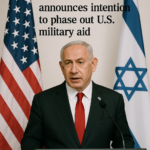
Israeli Prime Minister Benjamin Netanyahu has ordered the dismantling of unauthorized settler outposts in the occupied West Bank, according to two people familiar with the matter who described the decision to Reuters on September 6, in reporting carried by The Jerusalem Post. The order lands after weeks of American pressure on Israel to act against settlers accused of attacking Palestinians, and it applies to sites built without authorisation from the Israeli state itself.

No timetable has been announced. It was not immediately clear when removals would begin, and the practical scope remains uncertain: Israeli outlet Ynet reported that around 100 outposts are targeted, out of roughly 340 that exist across the territory.
What an outpost is, and why the distinction matters
The vocabulary here is doing real work. Alongside the outposts sit 146 settlements formally recognised by the Israeli government – established communities with municipal budgets, roads, schools and, in several cases, tens of thousands of residents. Outposts are a different category: typically a cluster of prefabricated caravans housing a small number of settlers, built on hilltops without state authorisation.
That means the order Netanyahu has issued does not touch the settlement enterprise as most of the world understands it. It targets structures that are unlawful under Israeli law as well as under the international legal consensus, which is what makes the instruction politically survivable inside his coalition – and what limits how much it changes on the ground.
The American pressure behind it
The immediate trigger was a sharpening of the US position. Ambassador Mike Huckabee, who has been among the most sympathetic American officials to the settler movement, denounced violent settlers as “terrorists” on Saturday and called for them to face severe consequences. He spoke after meeting several Palestinian Americans in a West Bank Palestinian town, and argued it was in Israel’s own interest to act against settlers engaged in “criminal behavior and terrorism”.
The meeting followed an incident last month in which Israeli settlers besieged Palestinian homes in a nearby village – including one owned by a Palestinian American – before the military intervened. Residents of the village have reported continued harassment and intimidation since. The involvement of American citizens is what converted a pattern of local violence into a diplomatic problem, as it has repeatedly over the past two years. NarwhalTV reported on a similar West Bank attack involving a news crew earlier this year.
The coalition problem
Netanyahu governs with partners for whom settlement expansion is not a policy preference but the organising purpose of their politics, and the pushback began immediately. Finance Minister Bezalel Smotrich, who holds authority over civil administration in the West Bank, confirmed the prime minister had given “an instruction to evict places built in Areas A and B” while making clear he disagreed with the decision – and redirected attention to what he described as the government’s progress on settlements in Area C.
The geography in that sentence is the whole argument. Under the Oslo framework, Area A is under Palestinian Authority civil and security control, Area B under Palestinian civil control with joint security, and Area C – roughly 60% of the West Bank – under full Israeli control. An order confined to Areas A and B removes outposts from the parts of the territory Israel does not administer, while leaving untouched the far larger construction programme in the part it does.
Whether it happens
Israeli governments have ordered outpost removals before. Enforcement has historically been slow, partial and reversible: sites are cleared, then rebuilt within weeks, sometimes with the same caravans. The security establishment has generally treated evacuations as operations requiring significant manpower and appetite for confrontation with residents who are Israeli citizens, and both have been in short supply.
Three things will indicate whether this order is different. First, whether a start date is set at all, rather than the instruction sitting as a stated intention. Second, whether the police and army are given a standing mandate to prevent rebuilding, which is the step that historically has not been taken. Third, whether Smotrich and National Security Minister Itamar Ben Gvir, who controls the police, obstruct implementation from inside the cabinet without formally opposing it.
The wider context
Settler violence in the West Bank has been at its highest recorded level since UN monitoring began, and the pressure on Netanyahu is not only American. European governments have imposed sanctions on individual settlers and outposts; Israeli human rights organisations have documented incidents that produced no arrests. An order to dismantle a hundred caravan clusters is a response to that pressure, and its significance will be measured entirely by what stands on those hilltops in three months.