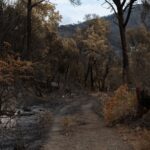
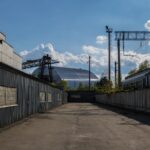
HAMINA, Finland — Rural municipalities across the Kymenlaakso region of southeastern Finland are grappling with a surge of apex predators in residential areas after Google felled roughly 1,300 acres of mature taiga forest to construct an expanded artificial intelligence data hub. Local wildlife officials confirmed Friday that displacement from the tech giant’s extensive logging operations has driven displaced wolf packs straight into village streets and farming properties.

Habitat Destruction Pushes Apex Predators into Suburbia
Over the past fortnight, residents in villages outside Hamina and Kotka have logged dozens of sightings of European gray wolves wandering through backyards, bus stops, and school zones. Municipal trackers recorded several domestic pets killed and livestock threatened, prompting schools in two districts to restrict outdoor recess and advise parents against letting children walk unattended in early morning hours.
Biologists with the Natural Resources Institute Finland (Luke) stated that the rapid clearance of roughly 530 hectares (1,300 acres) of dense spruce and pine woodland severed critical migration pathways connecting regional packs to their natural prey base of roe deer and European elk.
“When more than five square kilometers of contiguous canopy disappear in a matter of months under continuous heavy machinery and blast work, animals do not quietly adapt,” said Dr. Tuomas Rantanen, senior wildlife biologist at Luke. “The wolves lost both seclusion and their primary prey corridors, forcing them into suburban margins where household waste and domestic livestock present easier calories.”
Corporate Expansion Clashes with Nordic Conservation
The incident represents an acute escalation following widespread public anger over tech infrastructure developments in the Nordic nation. It comes just months after an outcry in Finland as Google fells 250,000 trees ignited national debates regarding how international tech giants navigate local zoning and forestry protections. Environmental organizations argue that the accelerated approval of tech campuses has outpaced environmental impact assessments.
Finland, long courted by hyperscalers for its cold climate and abundant clean energy, has increasingly found its environmental stewardship at odds with the sheer footprint demanded by compute-heavy AI clusters. Hyperscale facilities require not only vast physical space for server halls and cooling towers, but also wide utility right-of-ways and substations that disrupt delicate woodland ecosystems.
The issue of infrastructure strain extends beyond land clearance to utility grids across Europe and North America. As regional utilities buckle under the load requirements of modern computing, several international legislatures have pursued measures similar to the proposed bill forcing data centers to fund their own grid upgrades, ensuring that corporate energy demands do not displace civilian resources or impose unexpected burdens on taxpayers.
Municipal Leaders Demand Emergency Intervention
Local leaders from affected hamlets gathered at a tense emergency council session in Hamina on Thursday evening, where community members voiced frustration over the prioritization of multinational infrastructure over resident safety. Several municipal councilors called for an immediate halt to heavy land grading until ecological buffers and acoustic deflection barriers can be instituted.
- Emergency Sightings Hotlines: Regional police have established a dedicated dispatch channel for predatory animal sightings near school districts.
- Perimeter Fencing: Local farmers have requested emergency municipal subsidies to erect reinforced electric fences around sheep pastures.
- Call for Corporate Liability: Several council members proposed municipal fines against Google’s regional holding entity to fund wildlife relocation programs.
“We welcomed tech investment on the promise that it would respect the pristine environment of our community,” said Hamina council member Laura Aalto during the town hall. “Now our children cannot wait safely for the morning bus because an international search engine needed room to cool artificial intelligence clusters. This is fundamentally unsustainable.”
Tech Giants Face Tightening Environmental Scrutiny
Google has operated a major data center presence in Hamina since 2011, initially repurposing an abandoned paper mill that drew praise for recycling Baltic seawater for direct cooling. However, recent campus additions driven by global investments in generative AI have forced expansion beyond industrial brownfields directly into virgin forestry reserves.
In a formal statement released late Friday, Google Nordic representatives acknowledged the community concerns, stating that the company works closely with local authorities and certified environmental consultants. “We are committed to operating as responsible neighbors in Finland,” the spokesperson noted. “We are reviewing our recent land-clearing timelines in consultation with regional environmental authorities to ensure comprehensive ecological mitigation and wildlife corridor support.”
Despite corporate assurances, Finnish green parties and regional conservationists have announced plans to file legal petitions with the Supreme Administrative Court of Finland next week, seeking injunctions against further ground clearance. Until remediation measures take effect, local authorities continue to patrol village perimeters, attempting to deter wolves with non-lethal acoustic cannons and track collars while communities adjust to life alongside displaced predators.