A microalgae bloom stretching more than a dozen miles through the eastern Mediterranean forced five of Israel’s six coastal desalination plants offline on Sunday, temporarily disabling the infrastructure that supplies most of the country’s drinking water. By Thursday, several plants had partially restarted, but only one was running at full capacity, according to Mekorot, Israel’s national water company, in reporting by CNN.
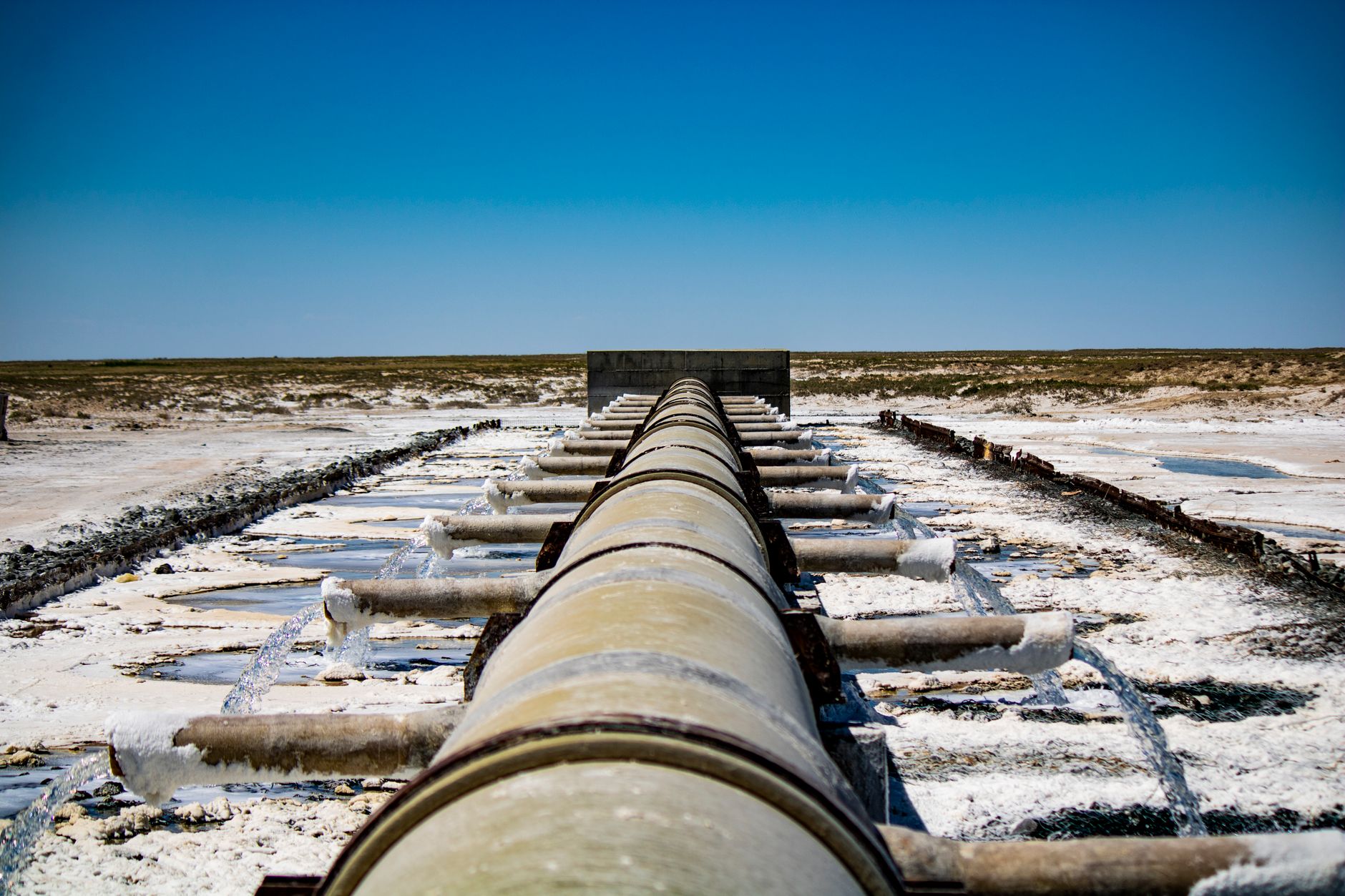
“An event of this kind has never occurred before in Israel,” officials said of the shutdown, which struck a system built specifically to make the country’s water supply independent of rainfall.
Where the bloom came from
The bloom is believed to have formed off the Nile Delta and drifted north along Israel’s coastline on the Mediterranean’s prevailing currents. Microalgae blooms are common in the region and usually harmless to infrastructure. This one was dense enough, and wide enough, to reach the intake pipes of nearly every plant on the coast at roughly the same time.
Desalination plants of the type Israel operates pull seawater through a series of filters before forcing it at high pressure through reverse-osmosis membranes. Heavy organic material in the intake water clogs the pre-filters within hours and can foul the membranes themselves, which are expensive and slow to replace. Operators facing that risk shut the intake rather than run the plant – which is what happened, almost simultaneously, at five privately owned and operated facilities.
How the shortfall was covered
Israel’s national water system absorbed the loss rather than passing it through to households. The government water carrier “stepped in to close the gap,” in Mekorot’s phrasing, by falling back on the sources desalination was built to replace:
- Pumping water from the Sea of Galilee, the country’s main surface reservoir.
- Activating groundwater wells held in reserve for exactly this kind of interruption.
- Drawing down national water reserves.
Some cities imposed short-term local restrictions on garden irrigation and filling swimming pools. The heaviest burden fell on agriculture: farmers who irrigate with drinking-quality water faced the main limitations, because that is the demand a national system can cut fastest without reaching taps in homes.
That sequencing is deliberate. A water utility facing a sudden supply loss protects household consumption first, then commercial use, then irrigation, because agricultural demand is large, schedulable and can absorb a delay of days without permanent loss. It also means the true cost of the shutdown landed on a sector that had no part in causing it and no alternative supply to switch to.
The trade-off in a desalination-first system
Israel spent two decades building its way out of drought. A chain of large plants along the Mediterranean coast turned a country with unreliable rainfall into one whose drinking water is largely manufactured, and the model has been studied and copied across the arid world.
The bloom exposed the structural cost of that success. When most of a nation’s drinking water comes from a handful of facilities drawing on one body of water, a single event in that body of water reaches all of them at once. The plants are geographically separated but not hydrologically independent – they share an ocean, and therefore share its problems.
Marine scientists have warned for years that warming surface temperatures and nutrient runoff make large blooms more frequent in the eastern Mediterranean. Nothing about this particular bloom has been formally attributed to those trends, and researchers were still identifying the species involved as the plants restarted. But the operational lesson does not depend on the attribution: an intake risk long treated as remote proved capable of taking down five plants in a day.
What happens next
Recovery depends on the bloom dispersing, which currents and cooling water should eventually accomplish, and on how much filtration capacity each operator can work through. Plants that restarted partially are running at reduced throughput to protect their membranes, and full normalization was not expected immediately.
The longer question is what the system does next time. Options under discussion in comparable systems include deeper or relocated intakes that draw below a surface bloom, additional pre-treatment capacity sized for extreme organic loads, and standing arrangements that keep reservoir and groundwater sources ready rather than dormant. Each adds cost to water that is already expensive to produce.
For now, the interruption reached farmers, gardens and swimming pools rather than kitchen taps – a reasonable outcome for a system meeting an event its designers had not planned for. It also served as an unusually clear demonstration that a water supply engineered to be immune to drought is not, by that fact, immune to the sea.