California has officially banned “Sell By” date labels from food packaging, making it the first state to standardize expiration language across all products sold within its borders. The New York Times reported on July 2, 2026, that the law replaces the patchwork of retailer-facing phrases with two consumer-facing terms: “Best If Used By” for quality and “Use By” for safety.
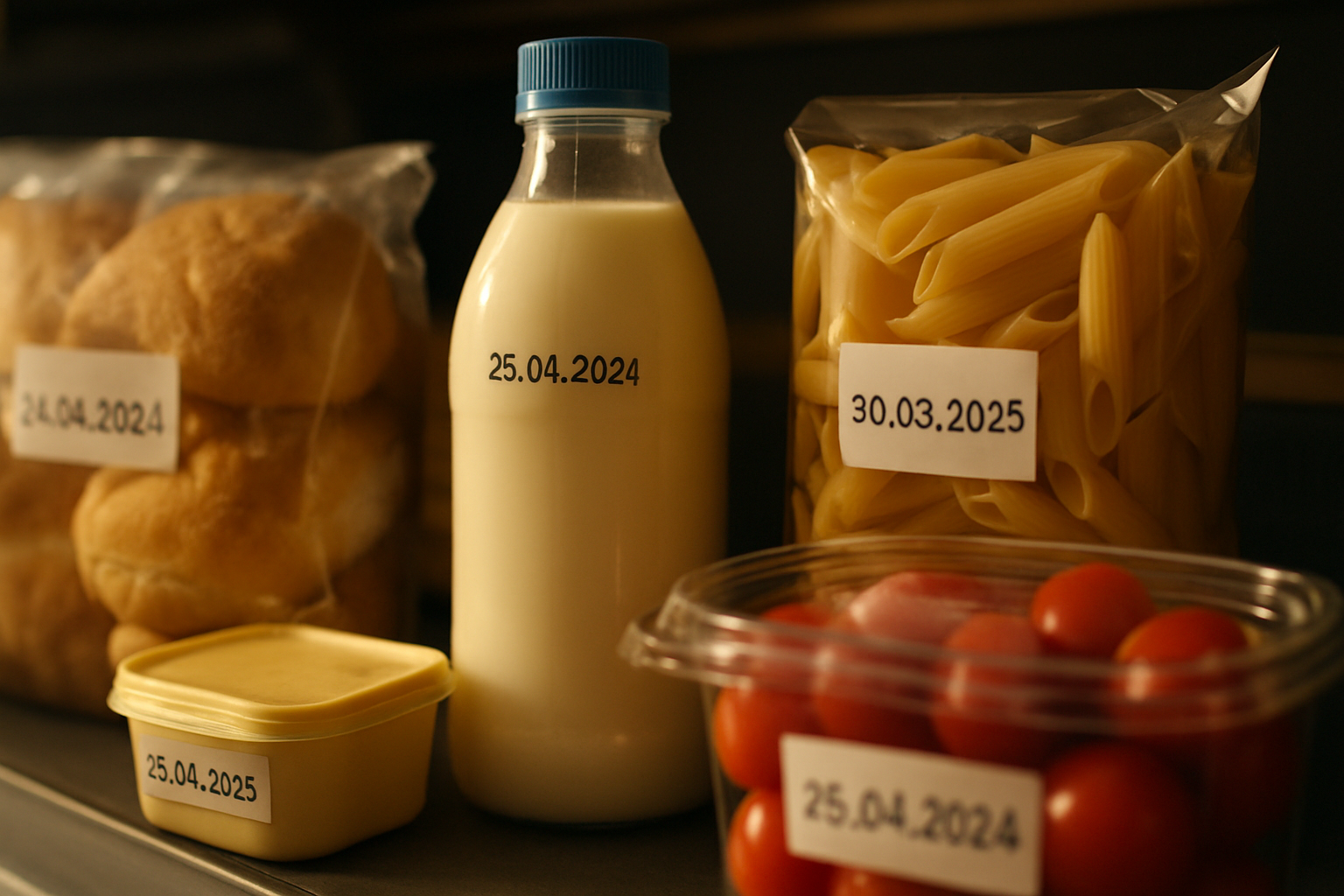
The detail most shoppers won’t see coming: “Sell By” was never a safety indicator to begin with. It was a logistics label written for store employees to manage inventory rotation — not for the person actually eating the food. Millions of Americans have been tossing perfectly good yogurt, bread, and canned goods based on a phrase that was never meant for them.
What “Best If Used By” and “Use By” actually mean
Under the new California food labels law, “Best If Used By” signals that quality — taste, texture, appearance — may decline after that date, but the food is still safe to eat. “Use By” is reserved for products where consuming them past the date carries a genuine health risk, such as certain deli meats or refrigerated ready-to-eat items. The distinction gives shoppers a clear, actionable split they never had before.
The U.S. Department of Agriculture estimates that more than one-third of all food sold in the United States is wasted. A large share of that waste happens at the consumer level, driven directly by confusion over date labels. A household that throws out food based on a “Sell By” stamp is discarding something a store employee was supposed to rotate off a shelf — not a warning that the product has spoiled.
California’s sell by ban and its national ripple effect
California’s market size — the largest in the country — tends to pressure manufacturers into reformulating packaging nationally rather than printing separate labels for one state. The same dynamic played out with vehicle emissions standards and certain chemical disclosure laws. Food producers selling in California will now need compliant packaging, and for many, retooling labels for just one market makes little economic sense. Expect the two-phrase system to spread to shelves far outside California’s borders within the next few product cycles.
The law also arrives as food costs remain a pressure point for American households. Cutting food waste isn’t just an environmental argument — a family that stops discarding edible food saves real money. The Natural Resources Defense Council has previously estimated that the average U.S. household throws away roughly $1,500 worth of food per year, much of it driven by misread date labels.
How the sell by ban fits into a broader food waste push
Several advocacy groups and food industry coalitions have spent years pushing for exactly this kind of label standardization at the federal level, with limited results. California’s move effectively forces the issue from the state level up. The Consumer Goods Forum and the Food Marketing Institute jointly recommended the “Best If Used By” / “Use By” framework back in 2017, but adoption remained voluntary and uneven for nearly a decade.
Retailers in California now face a hard deadline to clear old packaging from their supply chains. The law sets specific compliance dates for manufacturers, with phased enforcement to give smaller producers more runway. Large packaged food companies are expected to begin rolling out updated labels well before the deadline to avoid any shelf-level compliance gaps.
For shoppers, the practical takeaway is straightforward: if a package says “Best If Used By” and that date has passed, smell it, look at it, and use your judgment — it’s not an automatic trash bin moment. If it says “Use By,” treat that date seriously.
The food waste issue extends well beyond individual households. Wasted food that ends up in landfills generates methane, a potent greenhouse gas. Reducing consumer-level waste is one of the faster, cheaper levers available for cutting emissions without requiring new infrastructure — which is part of why environmental groups have backed this kind of labeling reform alongside food banks and anti-hunger organizations. You can also see how nations like China are attacking emissions from the energy side while the U.S. addresses them through consumption habits.
Whether Congress takes up a federal version of the sell by ban remains an open question. A bipartisan bill to standardize food date labels nationally has been introduced in previous sessions without passing. California’s law, and the manufacturer reformulations it will trigger, may provide the visible proof of concept that federal legislators have cited as a missing piece.
The next milestone to watch: whether any of the major national grocery chains — Kroger, Walmart, Costco — announce voluntary adoption of the two-label system for all stores, not just California locations, before a federal mandate forces the issue.