Images chosen by Narwhal Cronkite
DuckDuckGo Installs Surge 30% as Users Push Back Against Google’s AI Overhaul
When Google announced its ambitious AI-powered overhaul to Search, it might not have anticipated the backlash brewing among its users. Within days of the announcement, privacy-focused search engine DuckDuckGo saw a significant spike in app downloads, suggesting a growing movement against what some users see as “force-fed” AI features. For DuckDuckGo, this moment marks an opportunity to carve out space in the search engine market, leveraging its longstanding emphasis on privacy and user autonomy.
Google’s Vision for AI Search Sparks Concern
At its recent I/O conference, Google unveiled sweeping changes to its search experience. The new AI-driven system transforms the iconic search box into a conversational engine capable of handling long-form queries, anticipating user intent, and providing AI-generated Overviews alongside traditional search results. Users can even follow up with additional questions within the AI-generated response framework. While Google insists these features won’t be default settings, the announcement has left many uneasy.
Critics argue that AI-driven Overviews may compromise the integrity of search results, introducing inaccuracies and changing the open web’s role from a resource for diverse information to one curated by algorithms. “Google is forcing AI into the Search experience with no clear opt-out,” DuckDuckGo’s CEO Gabriel Weinberg said in a statement earlier this week. “The result isn’t better search; it’s a more complicated, less transparent experience.”
The backlash has been swift. A growing subset of online users believes the changes inhibit autonomy and simplicity. Testimonials of people switching to DuckDuckGo have surfaced widely, amplifying debates about whether stepping away from Google’s ecosystem is becoming an increasingly appealing alternative.

DuckDuckGo’s Momentum: By the Numbers
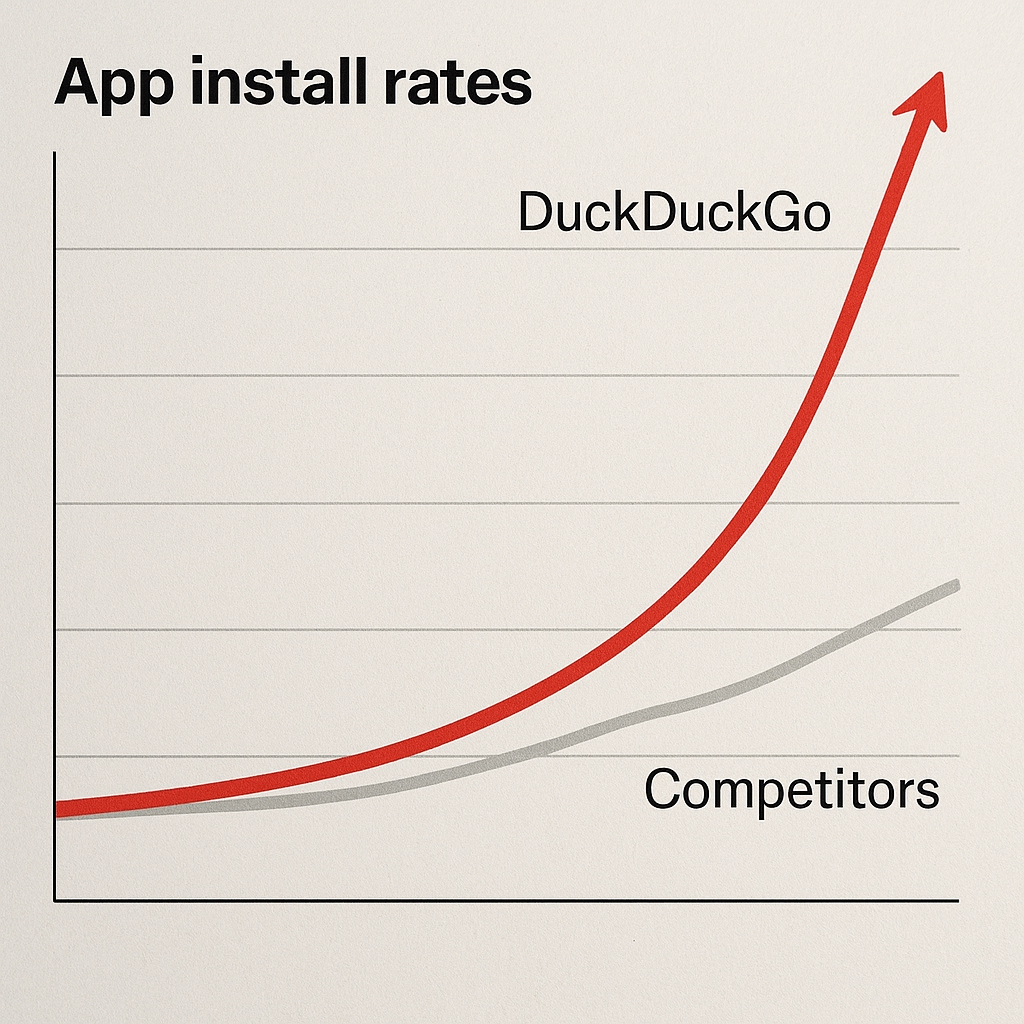
DuckDuckGo’s recent growth provides measurable evidence of user discontent with Google. Between May 20 and May 25, U.S. app installs of DuckDuckGo surged 18.1% on average, peaking at 30.5% growth in a single day. Growth rates on iOS were even more pronounced, hitting a daily peak of 69.9%, according to TechCrunch. For a company long overshadowed by Google’s dominance—DuckDuckGo claims just 2% of the U.S. search engine market—these numbers signify unprecedented traction.
The appeal of DuckDuckGo isn’t limited to its apps. Around the same time, traffic to its AI-free search page, noai.duckduckgo.com, which disables all AI-assisted features by default, grew by ~22.7% week-over-week, peaking at 27.7%. Notably, DuckDuckGo has also maintained strong momentum over Memorial Day weekend, a period that traditionally sees dips in digital engagement.
Analytics platform Apptopia corroborates these spikes, reporting a 29% increase in DuckDuckGo’s average daily downloads in the U.S. during the same timeframe, along with 12% growth globally.
Is This a Turning Point for Privacy-Friendly Search Engines?
While DuckDuckGo’s growth remains modest compared to Google’s towering market share, this trend could represent a shift in consumer priorities. For years, the privacy-focused engine has emphasized protecting user data, avoiding trackers, and offering ad-free experiences. With this latest surge, DuckDuckGo could be capitalizing on growing user fatigue with ever-expanding AI integration, digital surveillance, and the lack of control in mainstream tech services.
“There’s definitely a subset of users that values simplicity and autonomy in their tools,” notes tech analyst Michelle Tsu. “Google’s changes have simply accelerated a broad pattern we’ve been seeing: people are increasingly voting with their choices—and their devices—when it comes to the privacy-versus-convenience trade-off.”
Other experts, however, urge caution in interpreting DuckDuckGo’s recent popularity as a long-term trend. Many industry observers note that habitual behaviors in search are notoriously sticky—most users find it inconvenient to deviate from the default options bundled into their devices and browsers. Google’s near-ubiquity as the default search engine in Chrome, Android, and Apple Safari remains a formidable barrier. “DuckDuckGo’s growth is noteworthy, but mainstream adoption will take more than one week of strong downloads,” Tsu adds.
Lessons from Google’s AI Controversy
The backlash against Google’s AI overhaul highlights larger questions about the role of AI in everyday technology. With debates around data bias, misinformation, and the ethical frameworks underpinning these models, companies are required to perform a careful balancing act. Google’s power to reshape the way we navigate the internet is unmatched, but users’ reactions suggest that even the most powerful companies can alienate segments of their audience if they move too quickly or fail to communicate user benefits effectively.
Other major technology companies will undoubtedly monitor the reception of Google’s AI initiatives as they plan their own integrations of machine learning technologies. For DuckDuckGo, its recent growth underscores a growing demand for human-centered tools, reinforcing its pitch as an independent alternative for users opposed to AI dominance. Whether these changes become mainstream trends or remain niche remains to be seen.
Looking Ahead: Key Implications
The rise in DuckDuckGo installs offers several key takeaways. First, as search engines increasingly integrate AI into their platforms, a substantial group of users seems intent on resisting its encroachment, particularly in markets where opting for alternatives is easier. Secondly, consumer behavior is signaling renewed enthusiasm for choice and consent—not just regarding AI but also in broader discussions on privacy and corporate control.
For DuckDuckGo to sustain this momentum, it must continue communicating its value proposition to an audience concerned with digital autonomy. Partnerships with browser providers and bolstering its advertising campaigns might help convert current interest into lasting dominance.
Meanwhile, Google must navigate these challenges carefully. Its next moves—perhaps adding clearer opt-out options or simplifying how AI interacts with traditional search—will undoubtedly shape the broader trajectory for AI adoption across the industry.
As the tech landscape continues to evolve, one thing is clear: the push-and-pull between innovation and user preference has never been more pronounced. The coming months could prove decisive in determining not just how we search but who we trust to guide us.