Argentina’s players celebrated a 2-1 World Cup semifinal win over England on Wednesday in Atlanta by holding up a Falklands banner passed down from fans in the stands. By Thursday the British government was asking FIFA to investigate. The banner read “Las Malvinas son Argentinas” — “The Malvinas are Argentine” — as the BBC first reported.
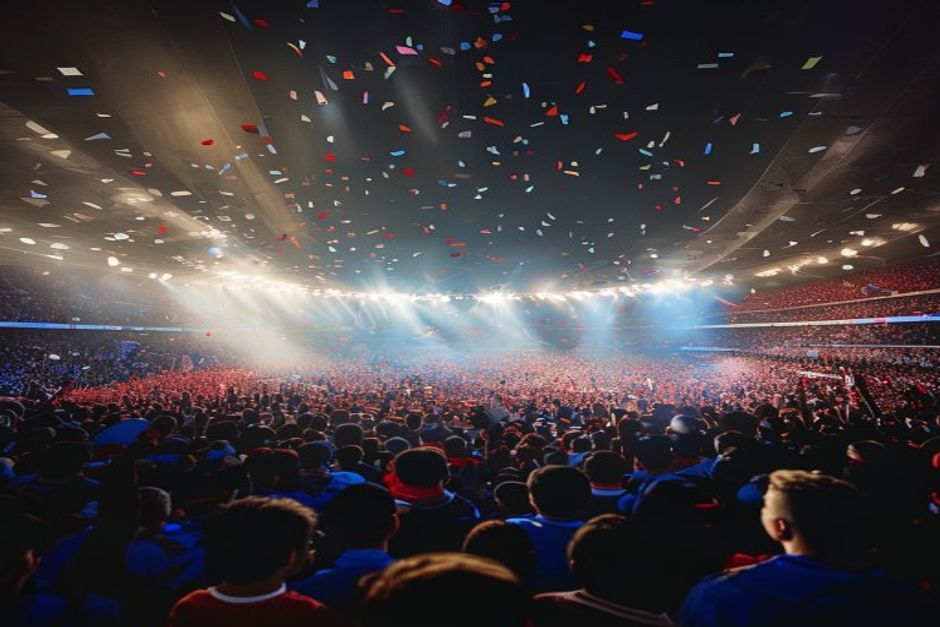
Midfielder Giovani Lo Celso held the banner open. Defender Nicolas Otamendi gestured toward him, and teammates Lisandro Martínez and Leandro Paredes joined the celebration on the pitch.
Here is the detail that complicates the outrage: Argentina has already been fined for this exact banner. In 2014, FIFA penalised the Argentine federation 30,000 Swiss francs — about $37,000 — over identical wording. The code cited this week carries fines of $5,000 to $20,000. If FIFA opens a case and rules against Argentina, the punishment would likely land at roughly half what the federation paid twelve years ago.
What Downing Street said about the Falklands banner
A spokesperson for Prime Minister Keir Starmer answered with a line built for the moment. “The World Cup might not be ours, but the Falkland Islands definitely are,” the spokesperson said, adding that “Self-determination rests with the islanders.” It is the position No 10 held in April, when it restated that Falklands sovereignty rests with the UK after reports of a US review.
Business Secretary Peter Kyle called the players’ behaviour “entirely inappropriate.” He told the BBC that “politics needs to be separate from football” and said he expects FIFA “to do its investigation thoroughly.”
Neither minister asked for a points deduction or a suspension. The request was narrower: that football’s governing body apply its own rulebook.
Milei calls the gesture “perfectly valid”
Argentine President Javier Milei backed his players, describing the display as “perfectly valid.” He offered a softer framing of the moment too: “What the players do is understandable; they get carried by emotions.” Vice President Victoria Villarruel posted an image captioned “The Malvinas are Argentine!”
The players themselves framed it as duty rather than provocation. “We couldn’t let the Argentine people down,” Lisandro Martínez said. Paredes struck a heavier note, saying that “for everyone involved in that chapter…it hurts.”
That gap matters. Britain is treating the banner as a political message smuggled into a sports event. Argentina is treating it as grief that predates the match.
What FIFA’s disciplinary code actually bans
FIFA’s disciplinary code prohibits any “message that is not appropriate for a sports event,” and it names the categories directly: messages of “a political, ideological, religious or offensive nature.” The wording is broad enough that a sovereignty claim held up on the pitch fits it comfortably.
Enforcement is the weaker half. The fines available under the FIFA disciplinary code sit between $5,000 and $20,000 — a sum that means nothing to a federation whose team just reached a World Cup final stage. FIFA has not said whether it will open proceedings. Federations do contest its calls: Belgium is currently appealing a FIFA ruling of its own.
The 2014 precedent is instructive in a way neither government mentioned. Argentina paid, and the banner came back anyway.
One detail could shape the case. The banner did not come out of the team’s kit bag — fans passed it down from the stands, and the players took it. FIFA’s code addresses the message displayed on the pitch, not who printed it. Whether a federation answers for something its players accepted mid-celebration is the question a disciplinary panel would have to settle.
The 1982 war behind the four words
Argentina invaded the islands in April 1982 on the orders of its then-military dictatorship, triggering a 10-week war that Britain won. The fighting killed 649 Argentine troops, 255 British service personnel and three islanders.
About 3,500 people live on the Falkland Islands today. Falkland Islands sovereignty has never been conceded by either side since, which is why a World Cup semifinal in Atlanta can still turn into a diplomatic exchange within 24 hours.
The phrase is not tournament-specific either. “Las Malvinas son Argentinas” is a standing national claim, which is why a president and a vice president could both endorse it within hours without it registering, at home, as an escalation.
The rivalry carries its own freight. England and Argentina have met repeatedly at World Cups since the war, and each meeting reliably reopens the argument.
FIFA’s move, and its $20,000 ceiling
FIFA now decides whether to charge the Argentine federation, and the range of outcomes is narrow: a modest fine, a warning, or nothing. No British minister has suggested the result in Atlanta is in question.
Whatever FIFA rules, the Falklands banner has already done what banners do. It travelled further in one night than any sanction will, and it forced two governments to restate positions neither has moved from in more than forty years. As reported by NBC News, the UK’s request is now with football’s governing body — where a $20,000 ceiling is the strongest answer available.