Pope Leo XIV used America’s 250th birthday to deliver one of his clearest public statements on migration, praising the United States’ history of welcoming immigrants in a message timed to the country’s Fourth of July celebrations, Reuters reported on July 3, 2026.
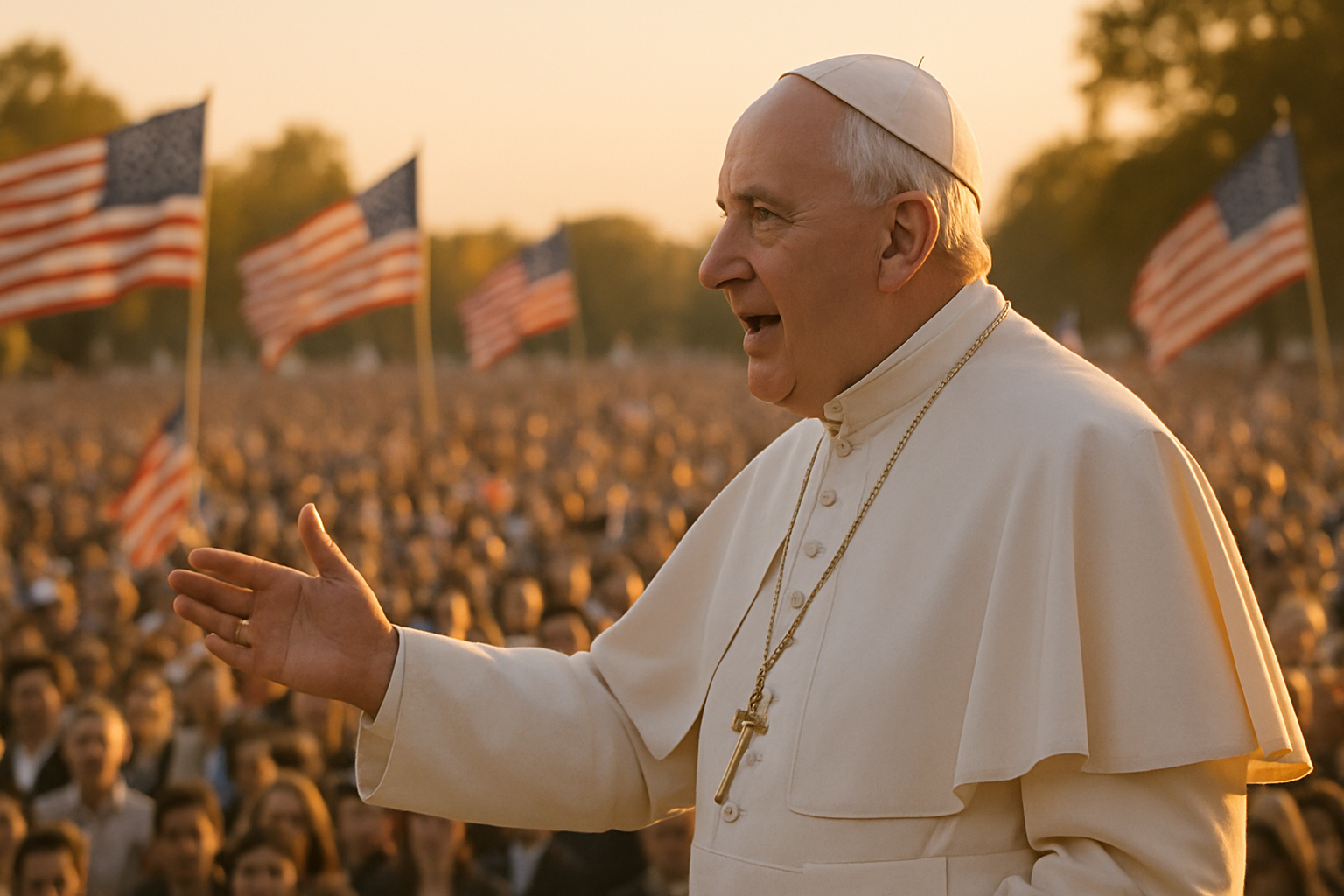
The statement landed one day before Independence Day — a deliberate choice that gave the Vatican’s remarks maximum visibility during a weekend of national reflection across the U.S. Leo, born Robert Francis Prevost in Chicago, is himself the first American-born pope, which gives his comments on U.S. immigration an unusually personal dimension that past pontiffs could not claim.
What Pope Leo Actually Said About US Immigration
The pope called on Americans to remember the foundational role that successive waves of immigrants have played in building the country. He framed that history not as a political argument but as a moral and cultural inheritance — something to be honored at a moment of national celebration rather than discarded. His remarks did not single out any current law, administration, or party.
Vatican observers noted that Leo has consistently returned to migration as a theme since his election, positioning the Church as a global advocate for the humane treatment of people crossing borders. The 250th anniversary gave him a high-profile platform to connect that message to American identity specifically, rather than addressing it only in abstract global terms.
An American Pope’s Particular Weight on This Issue
Leo’s Chicago roots matter here. He spent much of his adult life as a missionary bishop in Peru before his Vatican career, meaning he has lived on both sides of the migrant experience — as someone who left his home country to serve abroad, and as a church leader in a region that sends millions of migrants north every year. That biography shapes how the Church’s position lands differently when he speaks it than when a European pope did.
The Catholic Church has long held that nations have both the right to control their borders and an obligation to treat migrants with dignity — a dual position that lets the Vatican engage with immigration debates across the political spectrum without fully aligning with either side. Leo’s July 3 statement stayed within that framework, celebrating America’s historical openness rather than critiquing any specific current policy.
Why the 250th Anniversary Made This Moment Different
Milestone anniversaries carry symbolic weight that routine diplomatic statements do not. By anchoring his remarks to the semiquincentennial, Leo tied immigration directly to America’s founding story — the narrative that the country was built by people who arrived from elsewhere. That framing shifts the conversation from a contemporary policy dispute to a question of national identity and historical memory.
The timing also comes as the global Catholic community watches how the first American pope navigates relations with Washington. The U.S. has roughly 70 million Catholics, according to Pew Research Center data, making it one of the largest Catholic populations in the world. Leo’s willingness to speak on a topic as charged as immigration — even in measured, historical terms — signals that he does not intend to stay silent on issues where Church teaching and American public debate intersect.
For context on how economic pressures shape migration patterns in the U.S., it’s worth reading about the U.S. economy adding only 57,000 jobs in June 2026 — a slowdown that affects both domestic workers and newly arrived immigrants competing for employment.
Reception in the U.S. and at the Vatican
Reaction inside the Church was largely positive among American bishops who have long advocated for immigrant communities in their dioceses. Catholic immigrant advocacy groups welcomed the statement as moral reinforcement for their work at a time when migration remains one of the most contested topics in domestic politics.
Outside the Church, the statement drew predictable splits along existing lines: those who see America’s immigrant tradition as a living commitment applauded it, while critics who favor stricter border enforcement viewed it as the Vatican overreaching into U.S. domestic affairs. Leo did not respond to either camp directly.
The Vatican has shown a pattern of timing major pronouncements for symbolic dates. The Vatican’s recent excommunication of SSPX rebel group members similarly demonstrated Leo’s willingness to make consequential, high-profile calls rather than defer difficult decisions.
What Comes Next From Leo on the U.S.
Vatican insiders told Reuters that Leo is expected to continue engaging with American civic life more directly than his predecessors, given his own nationality. A potential papal visit to the United States — which has not been officially announced but is widely discussed in Church circles — would give him a physical stage for these themes. Any such visit would carry enormous media weight and land in the middle of an ongoing national conversation about who belongs in America and on what terms.
For now, the July 3 statement sets a clear marker: the first American pope used his country’s 250th birthday to call on it to live up to its own historical self-image on immigration, without endorsing any specific policy or political side.