A Tibetan man died after setting himself on fire near the United Nations headquarters in New York City, according to NBC News, which first reported the incident citing statements from Tibetan activist groups. The act, carried out in close proximity to the UN complex in Midtown Manhattan, drew immediate attention from the Tibetan diaspora community and human rights advocates gathered in the area.
The man has not been officially identified by U.S. authorities, but Tibetan activist organizations confirmed his death and described the act as a deliberate political protest against Chinese rule over Tibet. What makes this incident particularly striking is its location: the man chose the immediate vicinity of the world’s foremost international diplomatic body — a calculated choice to maximize global visibility on a day when diplomatic delegations from around the world were present.
Tibetan self-immolation as political protest has a long history
Self-immolation has been used as a form of protest by Tibetans for decades. According to the advocacy group Free Tibet, more than 150 Tibetans have set themselves on fire since 2009, the vast majority inside Tibet itself, calling for the return of the Dalai Lama and an end to Chinese government restrictions on religious and cultural expression. Carrying out such an act outside Tibet — and specifically in New York — is exceptionally rare, underscoring the lengths to which some in the diaspora community feel compelled to go to draw international attention.
New York City emergency services responded to the scene. The man was transported to a hospital but did not survive his injuries. Police and fire department officials confirmed the incident but deferred to ongoing investigation protocols for further details.
Why UN Plaza was chosen
The United Nations headquarters sits on First Avenue in Midtown Manhattan and serves as a gathering point for Tibetan activists during sessions of the UN Human Rights Council and other international forums. Tibetan advocacy organizations have long argued that the UN has not done enough to pressure China over its policies in Tibet, which Beijing administers as the Tibet Autonomous Region. China maintains that Tibet is an inseparable part of its territory and that its policies there have brought development and stability; Tibetan groups and many international human rights organizations dispute that characterization.
The Tibet Policy Institute and Students for a Free Tibet both issued statements mourning the man’s death and calling on the UN and member states to take concrete action on Tibet’s political status. Neither organization has released the man’s full name publicly, citing concerns for relatives still living under Chinese jurisdiction.
The broader pattern of protest and silence
Self-immolations inside Tibet rarely receive sustained international media coverage because foreign journalists have extremely limited access to the region. Chinese authorities have historically restricted reporting on such incidents, and communications out of Tibet are tightly monitored. The diaspora community, concentrated in cities like New York, Dharamsala, and Toronto, has increasingly brought protests to Western capitals precisely because those spaces offer visibility that is impossible to achieve inside Tibet itself.
Human rights groups note that the frequency of self-immolations tends to spike around politically sensitive anniversaries — including the anniversary of the 1959 Tibetan uprising in March — and during periods of heightened tension between Tibetan cultural institutions and Chinese authorities. The timing and location of Friday’s incident suggest it was planned to coincide with international diplomatic activity at the UN.
The incident comes at a time when U.S.-China relations remain under sustained strain across multiple fronts, adding a layer of geopolitical sensitivity to the story. The U.S. economy’s recent slowdown has added pressure to trade negotiations with Beijing, making high-profile diplomatic flashpoints like this harder for either government to ignore.
Vigils planned by diaspora organizations
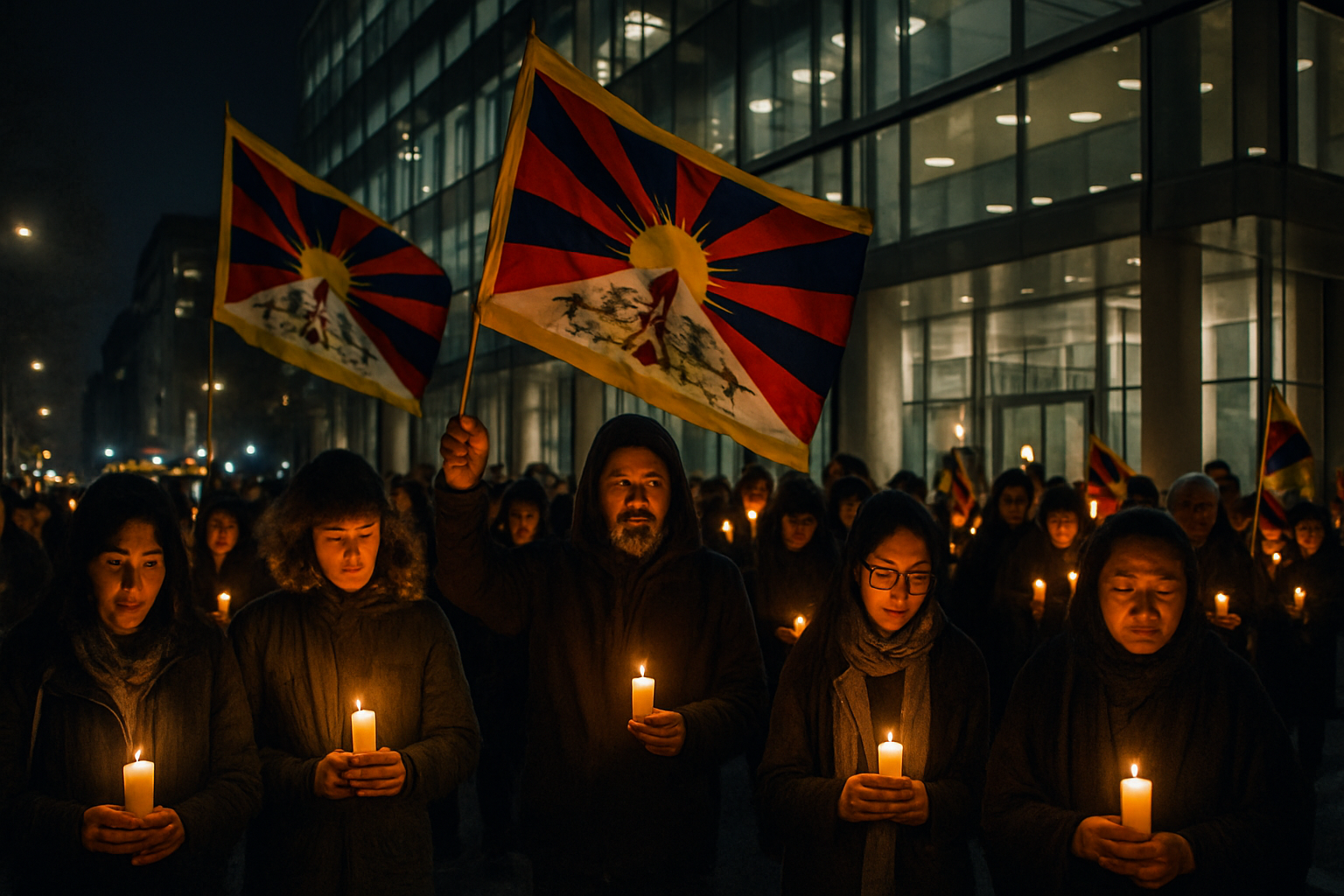
Tibetan community organizations in New York announced plans for a candlelight vigil to honor the man’s memory. The International Campaign for Tibet, one of the largest Tibetan advocacy nonprofits operating in Washington D.C. and New York, called the act “a desperate cry for the world to pay attention” and urged UN member states to place Tibet on formal human rights review agendas.
New York City police have opened an investigation into the circumstances of the incident. No other individuals were reported injured.
For those trying to understand the deeper backdrop of Tibetan protest movements, the pattern here fits a wider global trend of activists escalating tactics when conventional political channels feel closed — a dynamic that religious and political dissidents worldwide have faced in different forms. Whether this act prompts any formal response from UN bodies or shifts diplomatic attention toward Tibet’s status remains to be seen — but advocacy groups say they will push for an emergency session on the issue in the coming weeks.