A retreat in gold prices deepened in the precious metals market Thursday morning, with the metal falling below $3,700 an ounce, CNBC reported Nov. 19. Higher Treasury yields and a strengthening dollar have weighed on gold as investors reassess the appeal of an asset that produces no income.
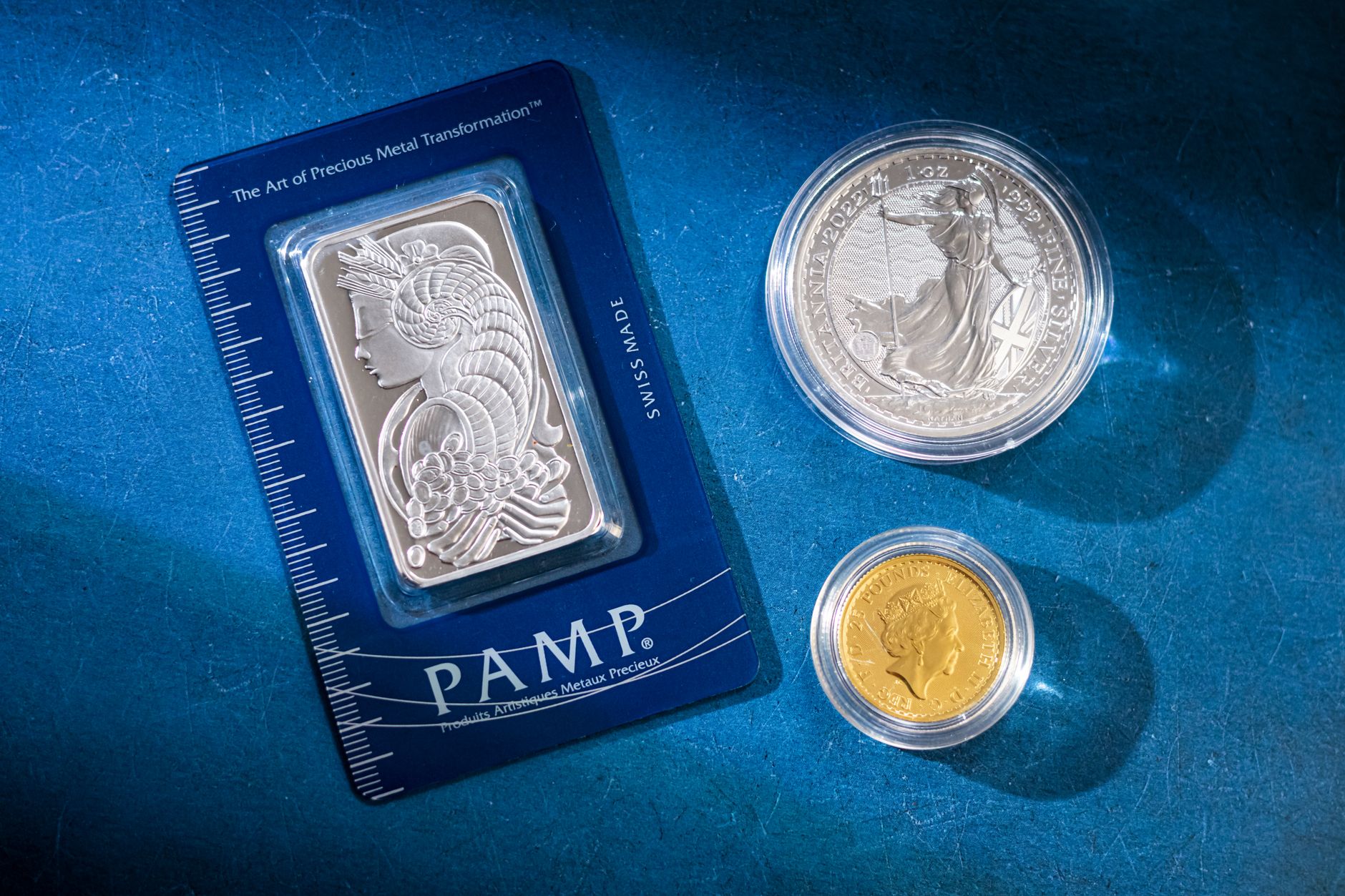
The latest low followed Wednesday’s slide below $3,800, the first time gold had crossed that threshold since September 2025. That left it roughly a third below its Jan. 28 record of $5,589.38 an ounce, reversing a rally that had carried the metal to repeated highs.
Gold prices reverse a record-setting run
Gold set new records 53 times in 2025 before reaching its historic January peak, according to CNBC. Suki Cooper, global head of commodities research at Standard Chartered, said several forces had combined to lift the metal, only for a different combination to pull it lower.
“Gold can behave as a commodity or a currency,” Cooper said.
Cooper traced the climb to strong physical demand beginning in 2022, which raised the floor under prices. Investors then began reconsidering gold’s role in their portfolios as the cost of holding a non-yielding asset fell.
A weaker dollar, lower bond yields and concerns about global debt “set the foundation for gold to hit highs in 2026,” Cooper said. Investors who had been under-exposed to the metal continued buying.
ETF buying helped absorb excess supply
Until early 2025, long-term investors, particularly those holding gold-backed exchange-traded funds, had been reducing their exposure, Cooper said. Those sales effectively added supply to the market.
That pattern reversed last year. ETF holdings, led by SPDR Gold Shares, increased by roughly 800 tons, helping absorb excess supply. Meanwhile, limited selling in the secondary market allowed prices to keep climbing.
“There was a lot of one-way interest, a lot of appetite to buy but not to sell,” Cooper said.
By the end of 2025, net ETF holdings exceeded 4,000 tons. According to World Gold Council figures cited by CNBC, gold ETFs worldwide recorded their strongest year for inflows at $89 billion, led by North America. Their assets more than doubled to $559 billion.
Evan Mills, a financial advisor at Scholar Financial Advising in Winston-Salem, North Carolina, said lower interest rates, expectations of additional cuts and a weakening dollar had all favored gold.
Rate expectations and cash needs drive selling
The rally’s speed began making some investors uneasy as discussion grew about possible Federal Reserve tightening, Cooper said. Then the Middle East conflict broke out, and gold shifted from a portfolio safe haven into what she called “a liquidity provider.”
Because gold was liquid and easy to sell, investors sold it to raise cash, setting off the first correction, Cooper explained. Markets have since focused on the Fed’s next moves.
Federal Reserve Board of Governors member Christopher Waller said during the week that a 50-basis-point rate increase might be necessary to “shock people,” CNBC reported.
“There are higher Treasury yields and a strengthening dollar, so the opportunity cost of holding an asset that doesn’t produce income is much higher,” Mills said.
Mills pointed to money market funds that can pay 4% to 5%. Gold had not become less scarce between 2025 and 2026; instead, he said, alternatives including stocks and bonds had become more attractive.
A hedge rather than a growth engine
Mills urged investors to distinguish between buying gold for short-term gains and holding it as a long-term hedge. He said expectations of annual returns of 20% or 30% could leave investors prone to panic when performance weakened.
“In the short term, with real yields going up and the dollar likely strengthening with future Fed hikes, I’d be cautious about gold in the overall portfolio,” Mills said.
A hedge can still be a poor investment depending on the purchase price, he said. But for someone who bought at January’s peak as a modest, long-term holding, a sharp downturn does not necessarily undermine its purpose.
“Gold is insurance, not an engine, and the mistake is buying insurance when its price has skyrocketed,” Mills said.
Analysts split over the path from here
Some analysts remain positive about gold prices over the longer term. Amy Gower, Morgan Stanley’s head of metals and mining strategy, told CNBC’s “Squawk Box Europe” there were “still lots of reasons” to retain gold despite the correction.
Philip Diehl, former U.S. Mint director and president of precious-metals coin distributor U.S. Money Reserve, also said the long-term case remained intact. He forecast a return to rising prices in 2027 as oil prices normalize and interest rates stabilize.
The World Gold Council reported that central banks continued buying, with September recording the highest monthly total, although overall purchasing was 7% below the same period last year.
Marc Chandler, managing partner and chief market strategist at Bannockburn Capital Markets, offered a more cautious near-term assessment. He said gold prices were headed toward $3,500 to $3,600 and urged patience from investors trying to identify a bottom.
“There is nothing on the charts that says a low is in place,” Chandler said. “For the anxious bottom pickers, I urge caution and being patient to see some reversal pattern. For the most part, the decline looks fairly orderly.”