Images chosen by Narwhal Cronkite
NATO Sees No Issue With Ukraine Striking St. Petersburg During Putin’s Economic Forum
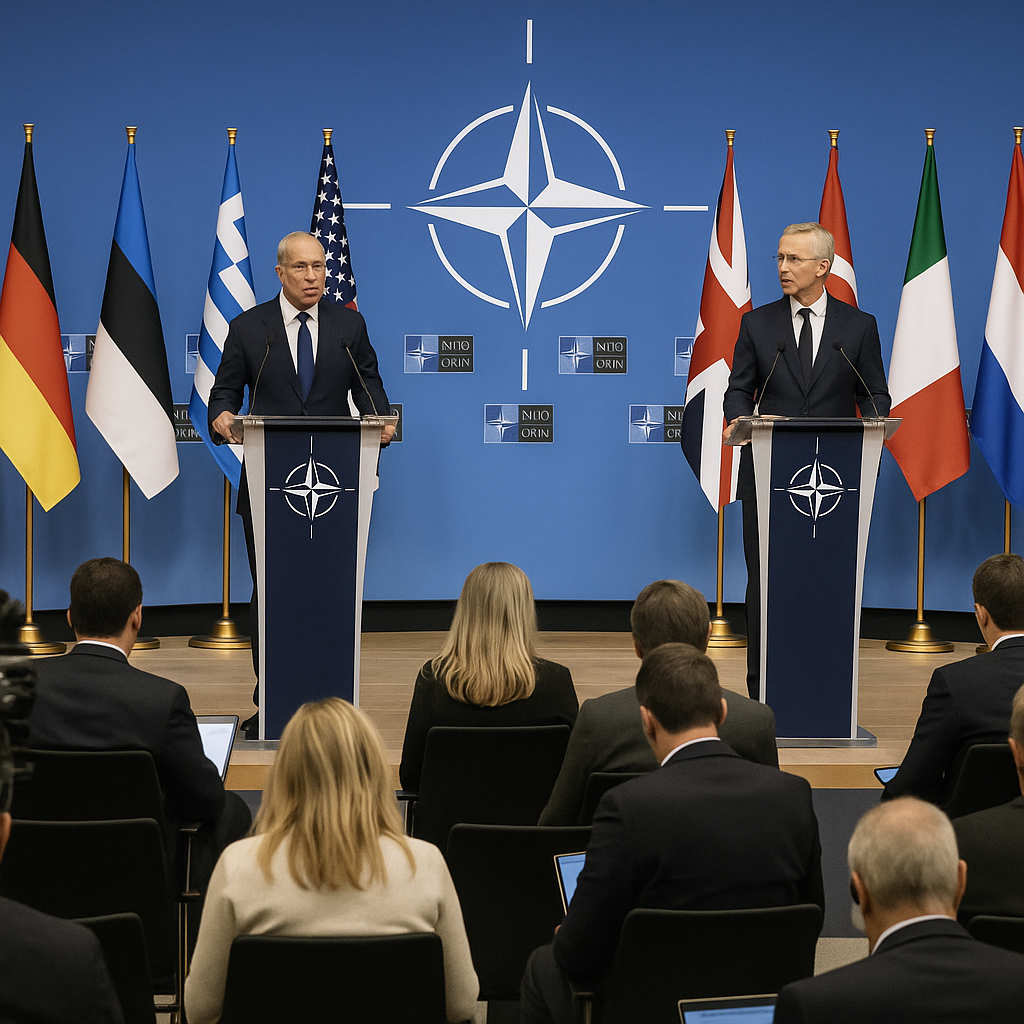
The geopolitical landscape continues to shift as NATO openly supports Ukraine’s aerial operations within Russian territory, a stance reinforced by Secretary General Mark Rutte during a high-profile joint press conference with Ukrainian President Volodymyr Zelenskyy held in Kyiv last Saturday. Significantly, Rutte drew parallels between Ukraine’s actions and Russia’s staged military events, including the notorious May 9 Victory Day parade, signifying a bold shift in Europe’s collective defense posture.
Ukraine’s Growing Boldness in its Defensive Campaign
From Moscow to St. Petersburg, Ukraine’s strategy has evolved from defensive operations to precision strikes aimed at key economic and military targets deep within Russian territory. Rutte’s comments highlight NATO’s acknowledgment of Ukraine’s rights under international law to ensure its security, even in Russian cities hosting high-profile events like the St. Petersburg International Economic Forum (SPIEF). The timing of Ukraine’s strikes underscores a broader psychological warfare strategy aimed at destabilizing Russia’s national image.
NATO’s validation of Ukraine’s strikes comes amidst an observed shift in battlefield dynamics. Analysts from global security think tanks suggest that Ukraine’s operational advancements are increasingly forcing Russia into reactive, rather than proactive, military stances. “Ukraine’s deep strikes are no longer symbolic,” remarks a senior analyst at the Center for Strategic and International Studies (CSIS). “These actions carry both tangible damage to Russian infrastructure and a significant political message.”
Strategic and Humanitarian Calculations
Observing how Ukraine prioritizes not just operational success but humanitarian outcomes, Zelenskyy’s temporary agreement to exclude Moscow’s Red Square from weapons targeting earlier this year stands as a strong example. The Ukrainian president made concessions tied to prisoner exchanges, sparing lives at a time when volatile geopolitical tensions threatened to escalate. Rutte’s comparison of this decision with Russia’s SPIEF-related strikes highlights NATO’s perception of Ukraine as a strategic yet cautious actor.
Notably, Ukraine’s strikes during SPIEF are aimed at diminishing the economic narrative Russia hopes to convey. Industry observers report that disrupting such forums sends a strong message to international investors who may still be considering deals with Russian businesses despite ongoing sanctions. These targeted aerial strikes during flagship economic events further emphasize Ukraine’s commitment to altering the trajectory of Russia’s global narrative.
International Reaction and Implications for NATO
While NATO’s open support for Ukraine’s operations found resonance in European capitals, reactions in Washington remain more muted. President Trump’s administration has yet to issue a formal endorsement or condemnation of NATO’s latest stance. However, as highlighted by “NBC News” on May 3, both U.S. Republican and Democratic lawmakers have criticized the administration for its decision to scale down troop presence in Germany, warning of unintended signals sent to Moscow amidst rising tensions. This mixed messaging adds an extra layer of complexity to NATO’s cohesion as it navigates one of the most dangerous post-Cold War security crises.
Meanwhile, European allies seem united in their resolve. According to “War on the Rocks,” securing undersea critical infrastructure like pipelines and internet cables has grown increasingly prioritized, reflecting NATO’s broader counter-Russian strategy. It remains evident that Ukraine’s courageous actions are galvanizing allied nations into developing robust responses against Russian aggression, from energy security issues to economic warfare tactics.
What Lies Ahead?
Looking into potential escalations, defense analysts warn of Russia possibly intensifying retaliatory strikes against Ukraine as it attempts to reassert authority over its territories. Russia’s SPIEF disruptions might push Moscow to double down militarily, both within Ukraine and potentially against NATO interests elsewhere. This would demand further operational readiness and stronger diplomatic maneuvers from NATO if the conflict spills beyond its current borders.
As Zelenskyy continues to maneuver diplomatically while advancing Ukraine’s military campaigns, the implications for global peace remain delicately poised. NATO’s role as a stabilizing force—backing Ukraine while avoiding outright war with Russia—will define the next critical phase of geopolitical interactions in Eastern Europe.
From disrupted economic forums to evolving battlefield tactics, the Russia-Ukraine conflict underscores the complexity of 21st-century warfare. NATO’s embrace of Ukraine’s defensive strikes may well set the tone for future engagements, with both sides engaging increasingly varied tactics to assert dominance.
Conclusion
As the conflict persists, global attention will remain squarely focused on Eastern Europe. The strategic implications of NATO’s support, coupled with Ukraine’s bold moves into Russian territory, shed light on the ways modern geopolitical strategies evolve under high-stakes circumstances. The coming months will test NATO’s cohesion, Russia’s resilience, and Ukraine’s ability to sustain both diplomatic and military pressures as it reclaims its sovereignty.