The Vatican press office has confirmed that Pope Francis spent a peaceful night in the hospital and is continuing his recovery as of Friday morning.
Pope Resting Comfortably as Condition Improves
“As in recent days, the night passed peacefully, and the Pope is now resting,” the Vatican stated.
Officials reported on Thursday that the 87-year-old pontiff’s condition is showing signs of improvement. He has been alternating between high-flow oxygen therapy and a ventimask, a method used to assist breathing.
“Given the complexity of his clinical condition, further days of clinical stability are needed to clarify the prognosis,” the statement continued.
Vatican Sources Say Critical Phase Has Passed
Despite concerns about his health, Vatican sources told media that there is no mention of a “critical condition.”
“So we can say that we have come out of the most critical phase, and we are back to what was previously described as a complex picture,” the sources said.
Top 10 Must-Read Books: A Guide to the Hottest Page-Turners
Pope Engages in Physiotherapy and Prayer
On Thursday, Pope Francis dedicated his morning to respiratory physiotherapy and rest. After a therapy session, he gathered in prayer at the chapel of his private apartment on the 10th floor, where he received the Eucharist. In the afternoon, he resumed work-related activities, according to the Vatican.
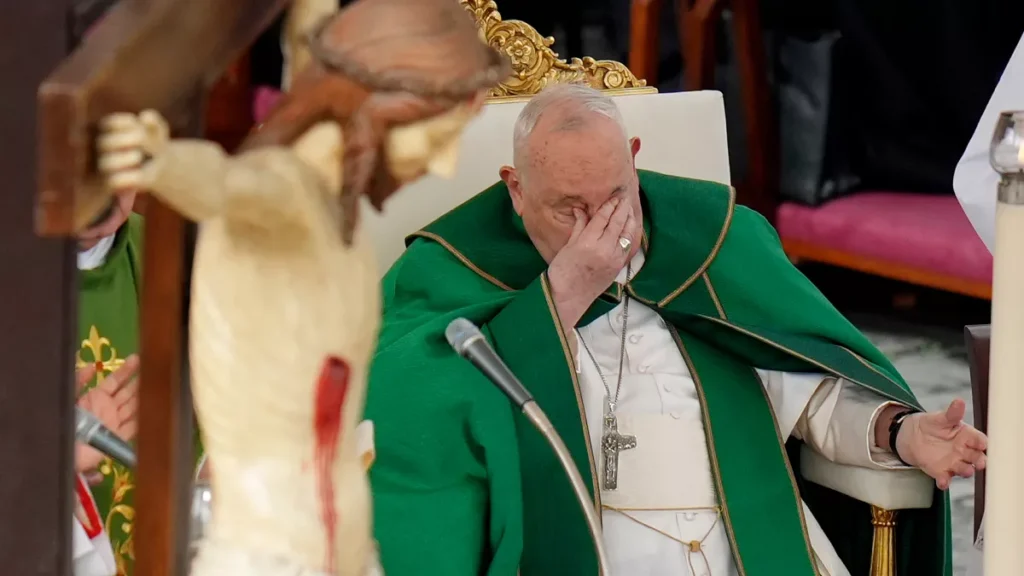
Doctors Maintain Cautious Outlook
While the Vatican reports signs of improvement, doctors remain cautious.
“The bulletin again speaks of an improvement, a slight one, but an improvement. However, the fact that the prognosis is reserved means that the doctors still have concerns,” Vatican sources told media.
Pope Francis, who has led the Catholic Church since 2013, was diagnosed with pneumonia last week. Medical experts continue to monitor his progress closely.

Why It Matters: Pope Francis and His Role in the Global Church
Pope Francis’ recovery is being closely watched not just by the Catholic faithful but by global leaders and communities of all faiths. As the head of the Catholic Church, which has over 1.3 billion members worldwide, the Pope’s health has significant implications for the Church’s ability to continue addressing critical social, environmental, and geopolitical issues. His leadership has been pivotal in tackling topics such as climate change, poverty, migration, and interfaith dialogue. Any disruption to his capacity to lead could temporarily shift the Vatican’s ability to respond to these global concerns.
Moreover, Pope Francis’ health issues bring renewed attention to the challenges of aging leadership within the Church. At 87 years old, he has faced several health setbacks in recent years, including colon surgery in 2021 and ongoing mobility issues due to knee problems. His current condition, while showing signs of improvement, underscores the importance of succession planning and the stability of the Vatican during times of uncertainty.
Medical Experts Highlight the Complexity of Pneumonia in Older Adults
Experts in geriatric care have noted that pneumonia can pose significant risks for elderly patients, particularly those with pre-existing conditions. Dr. Maria Gentile, a pulmonologist specializing in respiratory diseases, explained that recovery in cases such as Pope Francis’ requires careful monitoring.
“In older adults, pneumonia can quickly escalate into severe complications, especially if the patient has underlying health concerns. High-flow oxygen therapy and physiotherapy are critical to ensuring the lungs regain their full function,” said Dr. Gentile, of the European Pulmonology Institute.
The decision to alternate between high-flow oxygen and ventimask therapy, as reported in the Vatican health update, reflects a tailored approach to managing the pontiff’s breathing difficulties. Medical professionals often use this combination to reduce strain on the lungs while allowing for gradual improvement in oxygen saturation levels. Pope Francis’ physiotherapy sessions are also a vital component of his recovery, helping to prevent lung stiffness and maintain respiratory strength.
Support from Around the World
As the Pope continues his recovery, messages of support have poured in from across the globe. Leaders from both religious and secular communities have expressed their hopes for his swift return to full health. Cardinal Pietro Parolin, the Vatican Secretary of State, reassured the faithful that their prayers are deeply appreciated.
“The Holy Father is moved by the outpouring of love and concern. He remains spiritually united with all those praying for him,” Cardinal Parolin said during a recent press briefing.
Among the well-wishers are prominent figures such as United Nations Secretary-General António Guterres and Archbishop Justin Welby of Canterbury, both of whom have collaborated with Pope Francis on global initiatives. Their messages highlight the Pope’s enduring influence on humanitarian issues, even during his hospitalization.
Looking Ahead: The Road to Recovery
While Pope Francis’ recovery appears to be progressing positively, experts caution that the coming days will be pivotal. The Vatican health update has stressed the need for “clinical stability,” indicating that careful observation will continue to guide his treatment plan. Vatican sources have confirmed that the pontiff’s medical team remains cautiously optimistic, but note that his age and medical history necessitate a conservative approach to his care.
For the Catholic Church, Pope Francis’ eventual return to full health could mark a moment of renewal and continuity. Until then, the Vatican is ensuring that his responsibilities are managed effectively, with key aides stepping in to handle day-to-day matters. As the world watches and prays, Pope Francis’ recovery serves as a reminder of both his resilience and the immense demands of his role as a spiritual leader.